

A significant lack of awareness and misconceptions about Nursemaid’s Elbow among the Saudi population highlight the need for public education to improve prevention, recognition, and timely management.
Dr. Ramy Samargandi, Department of Orthopedic Surgery, College of Medicine, University of Jeddah, Jeddah, Saudi Arabia. E-mail: rsamargandi@uj.edu.sa
Introdcution and Aims: Nursemaid’s elbow (NME) is a common pediatric upper-extremity injury affecting young children. In this study, we aim to assess the knowledge and awareness of the NME in children between population in Al-Baha region in Saudi Arabia.
Materials and Methods: This is a cross-sectional study conducted among the population Al-Baha region, from February 2024 to April 2024, inclusion criteria include individuals living in Al-Baha, who are older than 18 years and agree to participate. We excluded those who are not willing to participate or not residing in Al-Baha and healthcare professionals. Data collection done via an online validated questionnaire in Arabic language. Statistical analyses were conducted using Chi-square test and Fisher’s exact test. A significance level of less than 0.05 (P < 0.05) was considered statistically significant.
Results: 588 participants were included. Females were majority (69.6%), and the largest age group was 40–49 years old (34.7%). We found that (59.5%) of participants had not heard or read about NME. There were some misconceptions noted, such as (67.3%) who believed that both genders are equally affected and incorrect identification of symptoms (37.1%). The awareness of the case recurrence was (55.1%). Friends or family are the primary sources of information (18.2%). And lastly, (76.9%) of participants expressed a desire to learn more about NME.
Conclusion: There is an obvious lack of knowledge about NME among population in the Al-Baha region, so more awareness campaigns for society are needed to raise the level of knowledge, and to prevent the occurrence and recurrence.
Keywords: Al-Baha region, Nursemaid’s elbow, Radial head subluxation, Pulled elbow, Pediatric injury, Parental awareness, Saudi Arabia.

Nursemaid’s elbow (NME), also known as radial head subluxation or “pulled elbow,” typically results from a sudden pulling or traction on a child’s arm. This action causes slippage of the radial head under the annular ligament joint, which is weaker and thinner in children than in adults. This makes it more susceptible to tearing or displacement, leading to pain and reduced limb functionality [1-3]. Parents are often connected with the common scenario of a sudden traction on a child’s arm to keep him or her from falling [4]. It represents the most frequently encountered elbow injury within the pediatric population that presented to a pediatric emergency department occurring at a rate of approximately 2.7 cases/1000 children [5,6]. This type of injury constitutes a significant portion of upper extremity injuries in children under 6 years old, comprising approximately 63% of arm injuries in this age group [7,8]. NME is slightly more common in girls, with the left arm being more frequently impacted than the right and the recurrence rate is estimated to be about 20% [4,9]. Healthcare providers can usually identify the condition easily, recognizing symptoms such as reluctance to use the affected arm and keeping it in a fixed position [10]. NME is easily treated and typically does not result in long-term consequences [11]. Treatment is typically performed by closed reduction of annular ligament subluxation which leads by simple manipulation to immediate symptom relief in most cases [12,13]. Despite the high incidence rate of NME, there exists a notable deficiency in public knowledge and awareness about it, particularly among parents and care givers who play a crucial role in both prevention and seeking appropriate management. Public and especially parental awareness is crucial in preventing injury occurrence, which can reduce incidence rates and prevent avoidable pain through early recognition [5,14]. Timely diagnosis and treatment are crucial for effectively managing NME and ensuring a rapid recovery for the child [2]. There is a notable scarcity of scientific literature on parents understanding and awareness of NME in Saudi Arabia. To date, a single study has been conducted and published to evaluate the level of knowledge and awareness regarding NME in the western region of Saudi Arabia, according to authors, merely 47% of respondents were familiar with NME, and only 15.4% had a good level of knowledge [15]. As a result, this study was designed to evaluate and assess the knowledge regarding NME among the population in Al-Baha region of Saudi Arabia. Understanding the level of awareness among the population in Al-Baha is critical for developing targeted educational programs and interventions that can significantly reduce the incidence and improve the outcomes of NME and to offer practical recommendations to reduce the morbidity and incidence of NME in children.
A cross-sectional study design was conducted in the Al-Baha region of Saudi Arabia from February 2024 to April 2024. The research aimed to assess population understanding and awareness of NME in children through an electronic questionnaire that was adapted from a previous study conducted by Junainah et al. with the permission of the authors [15]. The questionnaire was modified and subsequently validated through a pilot study and expert evaluation. The sample size was calculated for a population of 400,000 in Al-Baha, requiring at least 384 participants for representativeness. An online sample calculator tool (Raosoft®️) was used, based on a 5% margin of error and a 95% confidence interval. The population included in the study was individuals living in the Al-Baha region who are older than 18 years and agree to participate. We excluded those who are not willing to participate or not residing in the Al-Baha region and healthcare professionals. Ethical approval was obtained from the Scientific Research and Ethical Committee at Al-Baha University (REC/SUR/BU-FM/2024/31). The online validated questionnaire in the Arabic language was distributed via Google Forms (Alphabet Inc., Mountain View, CA). A link to the questionnaire was sent to potential study participants, who were assured of the confidentiality of the information provided. Consent was obtained from participants by including a consent question as the first item in the questionnaire; those who refused consent were automatically excluded from the questionnaire. The questionnaire consisted of several questions divided into three sections, including both yes/no and multiple-choice items. The first section collected socio-demographic and disease-specific data, inquiring about participants’ gender, age, educational attainment, occupation, and living area. The second section assessed population’s knowledge of the risk factors and treatments for NME. Quantitative data were analyzed using statistical software. The research study employed descriptive statistics to summarize the data, including counts, proportions (%), median, and mean values with standard deviations, as appropriate. To determine the sociodemographic factors (e.g., age, education level, number of children) that may influence the Participants’ knowledge and awareness of NME, statistical analyses were conducted using Chi-square test and Fisher’s exact test. A significance level of less than 0.05 (P < 0.05) was considered statistically significant, indicating a meaningful association between the variables. All statistical analyses were performed using the Statistical Package for the Social Sciences (SPSS), version 28.
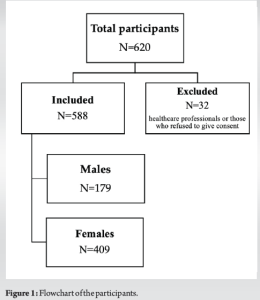
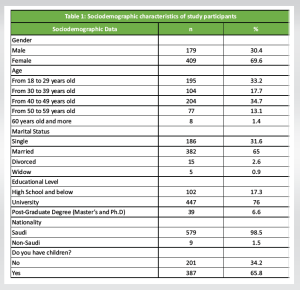
A total of 620 participants were initially invited to the study. Of these, 32 participants were excluded from the study. This included 1 participant who refused to participate and 31 participants who were healthcare professionals. Therefore, the final study sample comprised 588 participants (Fig. 1). The majority of the participants were female (69.6%), with the largest age group being 40–49 years old (34.7%). Most participants were married (65.0%) and had a university degree (76%), and 65.8% reported having children (Table 1).
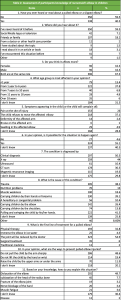
The study revealed that 59.5% of participants had not heard or read about NME. Similarly, 59.5% had never encountered information on this condition before. The majority (67.3%) believed incorrectly that both genders are affected at the same rate. Only 37.8% of participants identified that 1 to 6-year-old age group as the most affected, and 37.1% recognized that a child with this condition would refuse to move the affected elbow. A significant portion (55.1%) acknowledged that the situation could recur, and the condition will be primarily diagnose through clinical assessment (50.5%). In terms of causation, 41.3% of participants attributed the condition to pulling and swinging the child by their hands. Regarding treatment, 54.9% believed that a doctor would reduce the joint. For prevention, 48.6% recommended avoiding sharp pulling of the child’s arm. Lastly, 49.7% incorrectly described the condition as an elbow dislocation (Table 2).
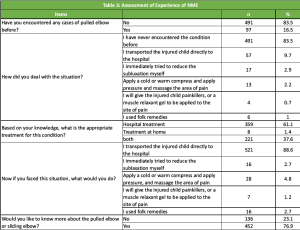
The study found that 83.5% of participants had not encountered any cases of NME before. In dealing with the situation, 9.7% indicated they transported the injured child directly to the hospital. When asked about the appropriate treatment, 61.1% believed hospital treatment was necessary. If faced with this situation, 88.6% would transport the injured child directly to the hospital. In addition, 76.9% of participants expressed a desire to learn more about NME (Table 3).
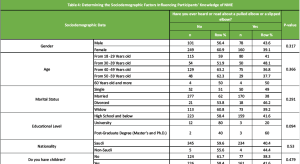
The sociodemographic factors examined in relation to participants’ knowledge of NME include gender, age, marital status, educational level, nationality, and having children. None of these factors were found to be significantly associated with knowledge of NME, as the P-values for all variables were greater than 0.05. Specifically, 43.6% of males and 39.1% of females reported having heard or read about NME, with a P-value of (P = 0.317). The percentage ranged from 37.7% (50–59 years old) to 50.0% (60 years and above) across different age groups, with a P-value of (P = 0.366). Similarly, knowledge of NME was reported by 49.0% of single, 38.0% of married, 46.2% of divorced, and 39.2% of widowed participants, with a P-value of (P = 0.291). Knowledge was reported by 41.6% of those with high school or lower education, 20.0% of university-educated, and 60.0% of those with a post-graduate degree, with a P-value of (P = 0.094). Furthermore, 40.4% of Saudi and 44.4% of non-Saudi participants (P-value of (P = 0.530)), and 38.3% of those without children and 41.6% of those with children (P-value of (P = 0.479)), reported having knowledge of this condition (Table 4).
As one of the common pediatric injuries, the importance of parental awareness about NME cannot be overstated. Timely and appropriate management of NME is crucial for preventing delays in seeking medical attention, thereby reducing pain and functional impairment of the child’s arm. Moreover, parental awareness is crucial in preventing its occurrence and reducing unnecessary emergency department visits for long hours and further unnecessary radiation exposure for children [16,17]. Furthermore, unfamiliarity with NME can cause parents to anxiety, fearing severe or long-term damage to their child’s arm. This anxiety can be mitigated through awareness and education. In our study, 40% of participants were aware of what NME is, compared to a slightly higher percentage of 47% in a study conducted in the western region of Saudi Arabia by. Junainah et al. [15]. This indicates a need for increased awareness in our study population. Low level of awareness could be attributed that there is limited access to information, where many parents might not have access to reliable sources of medical information or educational materials about pediatric injuries like NME. In our study, we found a positive attitude toward child injuries among participants, with 88.6% indicating that they would immediately transport an injured child to the hospital. In addition, 48.6% and 19.4% of participants, respectively, stated that to prevent this condition, one should avoid pulling a child sharply by the arm and not lift a child by the hand or wrist. The literature supports these findings, as parents generally exhibit a good attitude toward preventing child injuries. For example, a study by Santagati et al. [18] found that 70% of respondents were aware of safety measures to prevent pediatric injuries. Furthermore, a study conducted across 14 European countries revealed that 95% of parents reported personally taking measures to avoid accidental injuries to their children [19]. The primary source of knowledge among those who were aware of NME (n = 238) was friends and family, accounting for 44.9% (n = 107) of the participants, while 17.6% (n = 42) relied on social media as their source of information. However, only 5% (n = 12) cited doctors or other healthcare providers as their source of information. This finding suggests that informal networks play a significant role in disseminating information about pediatric injuries. A study conducted by Frey et al. [20]indicates that the utilization of social media for health information is increasing over time as it facilitates the exchange of timely and tailored information and enables substantial social support among users, these finding highlighting a substantial gap in professional medical communication. This disparity underscores a critical area for improvement in public health education. Health authorities and medical professionals must enhance their efforts to promote health and disseminate accurate and trustworthy information through both formal and informal channels. Our study found that 76.9% of participants expressed a desire to learn more about NME. Given the high incidence, this finding underscores the importance of providing targeted health information to increase public knowledge, and there we found there is gap in professional medical communication. This disparity underscores a critical area for improvement in public health education. Health authorities and medical professionals must enhance their efforts to promote health and disseminate accurate and trustworthy information through both formal and informal channels as social which were demonstrated to be one the highly cost-effective for expanding communication among stakeholders and coalition groups interested in supporting public health education and promotion issue [21,22]. Despite our study being the second one to explore awareness of NME in Saudi Arabia, it has several limitations. First, its cross-sectional design does not account for causality. In addition, the focus on a single region in Saudi Arabia limits the generalizability of the results. Furthermore, the study had a higher response rate from female participants, which may lead to self-selection bias. Future research should aim for a more diverse and larger sample size and include qualitative analyses to provide a deeper understanding of the factors influencing awareness and knowledge of NME.
There is an obvious lack of knowledge about NME among the population in the Al-Baha region. Increasing parental awareness is essential for timely management and prevention, thereby reducing the occurrence, recurrence, and severity of pediatric injuries. Healthcare providers should enhance communication through both formal and informal channels to bridge this knowledge gap. More awareness campaigns for society are needed to raise the level of understanding and preparedness.
Early recognition and proper handling of Nursemaid’s Elbow are crucial to prevent unnecessary delays in treatment. Raising public awareness can help reduce recurrence and avoid improper management. Healthcare professionals should emphasize prevention strategies and educate parents on safe handling techniques.
References
- 1.Mohd Miswan MF, Othman MS, Muhamad Effendi F, Ibrahim MI, Rozali KN. Pulled/nursemaid’s elbow. Malays Fam Physician 2017;12:26-8. eCollection 2017. [Google Scholar | PubMed]
- 2.Paluch LK. Nursemaid’s elbow: Radial head subluxation injuries in children. JAAPA 2024;37:18-21. [Google Scholar | PubMed]
- 3.Rudloe TF, Schutzman S, Lee LK, Kimia AA. No longer a “nursemaid’s” elbow: Mechanisms, caregivers, and prevention. Pediatr Emerg Care 2012;28:771-4. [Google Scholar | PubMed]
- 4.Wong K, Troncoso AB, Calello DP, Salo D, Fiesseler F. Radial head subluxation: Factors associated with its recurrence and radiographic evaluation in a tertiary pediatric emergency department. J Emerg Med 2016;51:621-7. [Google Scholar | PubMed]
- 5.Vitello S, Dvorkin R, Sattler S, Levy D, Ung L. Epidemiology of nursemaid’s elbow. West J Emerg Med 2014;15:554-7. [Google Scholar | PubMed]
- 6.Zhou JJ, Shah NV, Scheer RC, Newman JM, Hariri OK, Tretiakov M, et al. Trends and epidemiology of radial head subluxation in the United States from 2004 to 2018. Eur J Orthop Surg Traumatol 2022;32:1137-44. [Google Scholar | PubMed]
- 7.Li N, Khoo B, Brown L, Young T. Nonaxial traction mechanisms of nursemaid’s elbow. Pediatr Emerg Care 2021;37:e292-4. [Google Scholar | PubMed]
- 8.Sapkota K, Ranjeet N, Thapa P, Onta PR, Thapa UJ. The epidemiology and treatment of pulled elbow in pediatric population. Nepal J Med Sci 2022;7:30-4. [Google Scholar | PubMed]
- 9.Rodts MF. Nursemaid’s elbow: A preventable pediatric injury. Orthop Nurs 2009;28:163-6; quiz 167-8. [Google Scholar | PubMed]
- 10.Crowther M. Elbow pain in pediatrics. Curr Rev Musculoskelet Med 2009;2:83-7. [Google Scholar | PubMed]
- 11.Kunkler CE. Did you check your nursemaid’s elbow? Orthop Nurs 2000;19:49-52; quiz 53-5. [Google Scholar | PubMed]
- 12.Bexkens R, Washburn FJ, Eygendaal D, Van Den Bekerom MP, Oh LS. Response to effectiveness of reduction maneuvers in the treatment of nursemaid’s elbow: A systematic review and meta-analysis. Am J Emerg Med 2017;35:1016-7. [Google Scholar | PubMed]
- 13.Macias CG, Bothner J, Wiebe R. A comparison of supination/flexion to hyperpronation in the reduction of radial head subluxations. Pediatrics 1998;102:e10. [Google Scholar | PubMed]
- 14.Pirruccio K, Weltsch D, Baldwin KD. Reconsidering the “classic” clinical history associated with subluxations of the radial head. West J Emerg Med 2019;20:262-8. [Google Scholar | PubMed]
- 15.Junainah EM, Alsufyani AA, Alghuraibi AB, Aljuhani AF, Alsaqqa RM, Alzahrani HA. Knowledge and awareness level about radial head subluxation mechanism among Saudi population living in western region of Saudi Arabia. World Fam Med 2022;20:125-34. [Google Scholar | PubMed]
- 16.Toupin P, Osmond MH, Correll R, Plint A. Radial head subluxation: How long do children wait in the emergency department before reduction? CJEM 2007;9:333-7. [Google Scholar | PubMed]
- 17.Mojica ES, Gibon E, Castañeda P. Cost-effectiveness analysis of treatment of radial head subluxation. Bull Hosp Jt Dis (2023) 2013;81:208-11. [Google Scholar | PubMed]
- 18.Santagati G, Vezzosi L, Angelillo IF. Unintentional injuries in children up to six years of age and related parental knowledge, attitudes, and behaviors in Italy. J Pediatr 2016;177:267-72. [Google Scholar | PubMed]
- 19.Vincenten JA, Sector MJ, Rogmans W, Bouter L. Parents’ perceptions, attitudes and behaviours towards child safety: A study in 14 European countries. Int J Inj Contr Saf Promot 2005;12:183-9. [Google Scholar | PubMed]
- 20.Frey E, Bonfiglioli C, Brunner M, Frawley J. Parents’ use of social media as a health information source for their children: A scoping review. Acad Pediatr 2022;22:526-39. [Google Scholar | PubMed]
- 21.Obar JA, Zube P, Lampe C. Advocacy 2.0: An analysis of how advocacy groups in the United States perceive and use social media as tools for facilitating civic engagement and collective action. J Inform Policy 2012;2:1-25. [Google Scholar | PubMed]
- 22.Stellefson M, Paige SR, Chaney BH, Chaney JD. Evolving role of social media in health promotion: Updated responsibilities for health education specialists. Int J Environ Res Public Health 2020;17:1153. [Google Scholar | PubMed]
Related Articles in Journal of Orthopaedic Case Reports
 September 10, 2018 Avulsion Fracture of the Anterior Intercondylar Eminence in an Eight-year-old Child: ACase Report
 July 30, 2019 Partial Denervation for Neuroma Pain after Knee Anterior Tibial Tuberosity Exostectomy: A Case Report
- January 6, 2014 Fracture of the Femur of A Newborn after Cesarean Section for Breech Presentation and Fibroid Uterus : A Case Report and Literature Review
 February 10, 2023 Osteochondroma of the Acromion Process: A Rare Case with an Unusual Presentation