

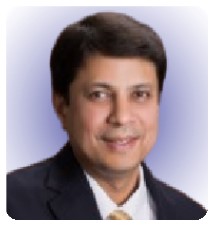
Dr. Ashok Shyam, Department of Orthopaedics, Sancheti Institute of Orthopaedics and Rehabilitation, Pune, Maharashtra, India; Indian Orthopaedic Research Group, Thane, Maharashtra, India. E-mail: drashokshyam@gmail.com
In orthopaedics, we are no strangers to repetition. We mark templates before surgery. We position implants with millimetric precision. We revise rehabilitation protocols repeatedly until they are just right. And we do it again the next day—and the next. To some, that might sound monotonous. To us, it is our calling.
Every repetitive act in our field—whether placing a screw, checking a suture, or counselling a patient—is an opportunity to deepen our mastery. These small, daily acts are not mundane. They are meditative. They reflect a mindset of care, of commitment, of character.
It takes strength to repeat with purpose. Anyone can do something well once. But to do it again, and again, and still bring your full attention, heart, and humility to it—that takes discipline. That takes integrity. That takes love.
The world tells us that to be creative or innovative, we must keep doing new things. I believe the opposite is often true. True creativity arises from deep familiarity. From knowing your craft so well, so intimately, that even the smallest variation is noticed. That is how evolution happens. That is how breakthroughs occur—not from chaos, but from structure.
When I perform a total knee replacement, it may be my thousandth, but for the patient, it is their first—and their only. That awareness is powerful. It anchors me in the moment. And it reminds me why monotony is not boring. It is sacred repetition with purpose.
In that sameness, I find opportunity—not just to refine technique, but to reflect, to rediscover, and to re-inspire.
You don’t need a crowd to build character. You need consistency. It’s not what we do in the spotlight that defines us—it’s what we do when no one’s watching.
The surgeon who double-checks implant sizes before every surgery.
The teacher who patiently explains the same concept to ten different students until each one understands.
The resident who wakes up at 5:00 a.m. every morning to read before rounds.
These acts may never make headlines. But they make heroes.
Monotony is where your values are tested—and strengthened. It teaches patience, focus, and humility. It keeps you grounded. It keeps you honest. It reveals who you truly are.
Let me be candid—there are days when the body is tired, when the calendar is full, and when the mind is stretched. On those days, monotony can feel heavy. But it is also on those days that monotony becomes your friend—your compass. It reminds you that excellence is not always about doing something new. Sometimes, it is about doing the same thing better.
The same osteotomy. The same post-op round. The same paperwork. Yet every time, we approach it with fresh eyes and a steady hand. That, to me, is the essence of a true professional.
There is no mastery without monotony. This is not just a belief—it’s a universal truth. Great musicians repeat their scales. Great athletes train the same movements. Great surgeons perform the same procedures. The difference lies in intention.
Monotony is the soil. Attention is the water. Purpose is the sunlight. And from this trio, greatness grows.
Even in our research lives, it’s the daily habit of reading, writing, re-reading, and rewriting that eventually creates a paper worth publishing. Not in a burst of brilliance—but in quiet, persistent effort.
So let us reclaim the word “monotony.” Let us not use it as an insult, but as a badge of honor. Let us teach the next generation that repetition is not a prison—it is a path. A path to proficiency, to precision, and to purpose. And let us lead by example. Let our consistency be our message. Let our devotion to detail become our legacy. Because in the end, what we do every day matters more than what we do once in a while. Monotony, when embraced with awareness, transforms from routine to ritual, from sameness to sacredness.
Monotony does not make us less human—it makes us more whole. It connects our hands to our hearts, and our craft to our character. In the silence of repetition, we discover our truest strength—not in loud declarations, but in quiet devotion.
As orthopaedic surgeons, educators, and leaders, let us celebrate this invisible power. Let us wear our monotony with pride. For it is not just the surgeries we do or the lectures we give—it is how we do them every single time that defines who we are.
And perhaps the most profound truth of all lies in the words of Khalil Gibran:
“Your daily life is your temple and your religion. Whenever you enter into it take with you your all.”
Let us enter every day’s monotony with reverence—and emerge with excellence.

Related Articles in Journal of Orthopaedic Case Reports
 April 1, 2025 Team Work in Orthopedics – The Winning Formula
 February 1, 2026 Blue Reviews: A New Educational Chapter in the 15-Year Journey of JOCR
 November 1, 2025 When Patients Rewrite the Textbooks
 October 10, 2025 The Rise of Minimally Invasive “DAA” Hip Replacements: Hype, Hope, and Reality