

Combined ACL avulsion with bilateral meniscal root tears is rare and should be suspected in high-energy trauma, and single-stage repair is feasible and effective.
Dr. Deem Alsedais, Department of Orthopedic, Prince Sultan Military Medical City, Riyadh, Saudi Arabia. E-mail: deemalsudais@gmail.com
Abstract
Introduction: Anterior cruciate ligament (ACL) avulsion fractures are uncommon injuries in adults and are frequently associated with concomitant intra-articular pathology. Posterior meniscal root tears, particularly of the lateral meniscus, may coexist with ACL injuries; however, simultaneous involvement of both medial and lateral posterior meniscal roots in the setting of an ACL avulsion fracture is exceedingly rare.
Case Report: A 29-year-old male presented with acute knee pain and swelling following a pivot-shift injury sustained during a low-velocity scooter accident. Radiographs and computed tomography demonstrated a displaced tibial spine avulsion fracture. Diagnostic arthroscopy revealed an ACL avulsion fracture combined with complete posterior root tears of both the medial and lateral menisci. The patient underwent single-stage arthroscopic fixation of the ACL avulsion and simultaneous transtibial pull-out repair of both meniscal roots using independent tibial tunnels. Post-operatively, a structured rehabilitation protocol was followed, resulting in restoration of the knee range of motion and stability.
Conclusion: This case highlights a rare but clinically significant injury pattern that may be overlooked without careful imaging and arthroscopic evaluation. Failure to recognise associated bilateral meniscal root tears in ACL avulsion injuries may result in persistent instability, meniscal extrusion, and early degenerative changes. Simultaneous anatomic repair can restore knee biomechanics and avoid the need for staged procedures. Clinicians managing ACL avulsion fractures should maintain a high index of suspicion for concomitant posterior meniscal root tears. Early diagnosis and single-stage anatomical repair may optimise knee stability and functional outcomes in active patients.
Keywords: Arthroscopy, anterior cruciate ligament avulsion, meniscus root tear, knee, medial meniscus root tear, lateral meniscus root tear.

Displaced anterior cruciate ligament (ACL) avulsion fractures represent an uncommon injury, comprising approximately 1–5% of all knee injuries. Although traditionally considered a condition predominantly affecting younger individuals, such fractures may also occur in adults, frequently in association with concomitant injuries involving the menisci, joint capsule, or collateral ligaments. The mechanism of injury typically involves high-energy trauma, such as road traffic accidents or sports-related incidents, and less commonly, domestic or occupational accidents [1]. Root tears constitute a distinct subset of meniscal injuries, with the mechanisms of injury varying between the medial and lateral meniscal roots due to their unique anatomical and biomechanical characteristics. Traumatic causes are more commonly seen with lateral meniscus posterior root tears, which are associated with ACL injuries, with a reported incidence of concomitant lesions ranging from 7% to 12% [2]. In contrast, traumatic medial meniscus posterior root tears are less common and are typically observed in the context of multi-ligamentous knee injuries [2]. Concurrent tears involving both posterior meniscal roots in association with an ACL avulsion are exceedingly rare. To date, several reports have described bilateral posterior meniscal root avulsion fractures occurring in conjunction with ACL tears or avulsion fractures [1,3,4,5,6]. In this report, we present a rare case of an ACL avulsion fracture combined with bilateral posterior meniscal root tears. The patient was treated arthroscopically using a transtibial pullout suture technique for both meniscal roots and the avulsed ACL fragment, with separate tibial tunnels utilized for each repair.
We present the case of a 29-year-old male with no past medical history and a body mass index of 28 who presented to the hospital with severe left knee pain and swelling one day after sustaining a twisting injury to his left knee during a low-velocity scooter accident. The injury occurred when he attempted to arrest the scooter’s motion by planting his left foot firmly on the ground, creating a pivot-shift mechanism in the knee. On initial assessment, the patient exhibited knee joint swelling and tenderness and held the knee in a semiflexed position. He was unable to bear weight on the affected limb. Further detailed clinical tests, such as ligamentous stress examinations, were deferred due to acute pain and swelling. Anteroposterior and lateral radiographs revealed a tibial spine avulsion fracture. Subsequently, a computed tomography scan was obtained to further delineate the fracture morphology, which confirmed a displaced tibial spine avulsion fracture with posterior comminution and a rotational component (Fig. 1).
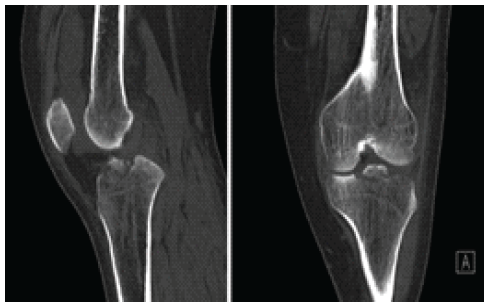
Figure 1: Knee computed tomography coronal and sagittal cuts showing displaced tibial eminence avulsion with posterior comminution and rotation.
Therapeutic intervention:
Standard anterolateral and anteromedial arthroscopic portals were established. Diagnostic arthroscopy identified a displaced avulsion of the tibial spine, along with a posterior root tear of both the medial and lateral menisci. No other intra-articular pathologies were noted (Figs. 2 and 3).
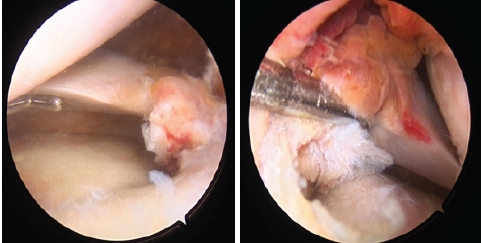
Figure 2: Arthroscopic image showing the posterior root of the medial and lateral meniscus tear.
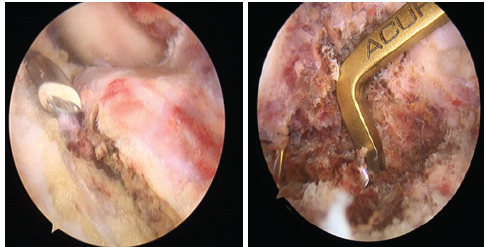
Figure 3: Arthroscopic image showing bony avulsion of anterior cruciate ligament inser-tion, and transtibial tunnel drilled through the avulsed fragment bed.
The ACL avulsion was addressed first. Three non-absorbable multi-braided sutures (#2) were passed distally through the ACL fibres using FirstPass Mini (Smith and Nephew). The suture limbs were distributed circumferentially around the fracture fragment and then passed through a bone tunnel drilled from the anteromedial cortex of the proximal tibia to the tibial footprint. This was facilitated by an ACL Aimer, using a 5 mm cannulated drill. The sutures were tensioned to achieve an anatomical reduction of the tibial spine and were fixed with a knotless suture anchor (4.5 footprint [Smith and Nephew]) (Figs. 3 and 4).
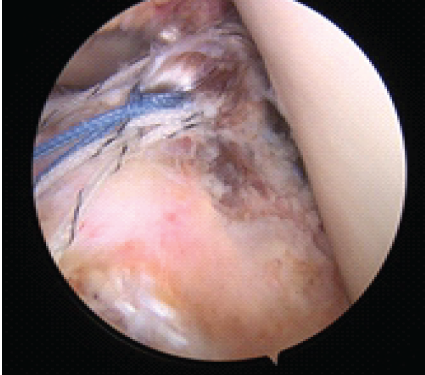
Figure 4: Arthroscopic image showing multiple cinch sutures through anterior cruciate lig-ament and passed in the prepared transtibial tunnel.
Next, the meniscal root tears were repaired. A non-absorbable multi-braided #2 suture was passed through the medial meniscal root using a FirstPass Mini (Smith and Nephew) and shuttled through a separate trans-tibial tunnel drilled medial to the ACL tunnel, again using the ACL aimer. The same technique was replicated for the lateral meniscal root, with its tunnel positioned lateral to the ACL tunnel (Fig. 5). A final arthroscopic assessment confirmed stable fixation of the ACL avulsion and both meniscal roots. The knee demonstrated a full range of motion, including full extension, without impingement of the reduced tibial eminence.
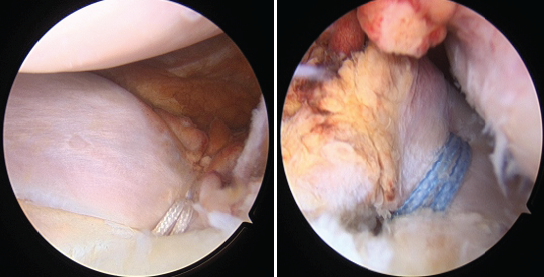
Figure 5: Arthroscopic image showing repair of posterior root medial meniscus (a) posteri-or root lateral meniscus (b) with cinch knot to the anatomical footprint through a transtibial tunnel.
Follow-up and outcomes:
The patient was placed in a knee immobilizer for 1 week and maintained a non-weight-bearing status for 6 weeks. Physical therapy was initiated, with the range of motion advanced by 20° weekly, achieving a full range of motion by the 6th week. At this point, full weight-bearing was permitted. The rehabilitation protocol was then progressed to include gradual strengthening exercises for the hamstrings, quadriceps, and core muscles, with an emphasis on eccentric and closed-chain exercises. By the 3-month follow-up, the patient had achieved a range of motion (0–130°). Clinical stability was confirmed by a negative Lachman test and an otherwise stable knee examination. The patient reported no pain, instability, or mechanical symptoms; in addition, he had successfully progressed to running in a straight line, and anteroposterior and lateral radiographs of the knee revealed healing of the fracture (Fig. 6).
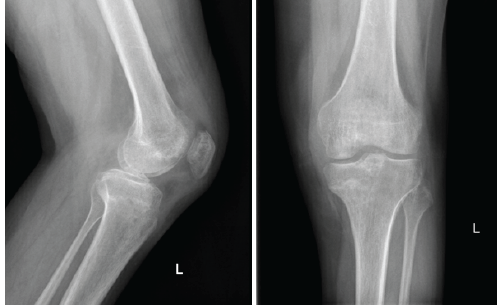
Figure 6: Anteroposterior and lateral X-ray images of the knee 3 months post-operative showing healing of the fracture evident by obliteration of the fracture line.
Acute ACL avulsion associated with bilateral meniscal root tears represents an exceptionally rare constellation of knee injuries. The menisci play a crucial role in maintaining knee joint function and integrity by contributing to load transmission and joint stabilization [7]. Their anchorage to the tibial plateau at the meniscal roots converts axial loads transmitted from the femur into circumferential hoop stresses, thereby ensuring uniform distribution of forces across the articular cartilage [7,8]. Disruption of the meniscal root attachment leads to meniscal extrusion and altered biomechanics equivalent to those observed following total meniscectomy. This markedly increases tibiofemoral contact pressures and accelerates the development of early osteoarthritis [9,10]. When such a disruption coexists with an ACL avulsion, knee stability is further compromised, and surgical management becomes significantly more complex. Posterior root tears of the lateral meniscus are typically traumatic and commonly occur in association with ACL injuries. In contrast, medial meniscal root tears are more often degenerative, predominantly affecting middle-aged women [11]. Traumatic medial root tears usually arise in the setting of multi-ligament knee injuries [12]. Lateral root tears are often caused by strong rotational forces; in ACL injuries, anterior tibial translation can displace the lateral meniscus and detach the meniscofemoral ligament from its femoral attachment, as described by Park et al. [13]. The mechanism of medial root tears is less straightforward, typically resulting from axial compression combined with external rotation, which causes impingement of the femoral condyle on the posterior horn of the medial meniscus [14]. To our knowledge, no previous reports have described a displaced tibial eminence avulsion injury occurring simultaneously with both medial and lateral posterior meniscal root tears. Only a few studies have outlined techniques for treating combined avulsion fractures of both meniscal roots with concurrent ACL rupture, and the optimal surgical approach remains a subject of debate. Bisping et al. [6] reported good clinical outcomes with delayed ACL reconstruction, whereas Gallacher et al. [15] observed higher failure rates with delayed rather than concurrent repair. Conversely, Chernchujit and Prasetia [16] demonstrated that simultaneous fixation of both meniscal roots with ACL reconstruction is both effective and time-efficient. In the present case, simultaneous fixation of the tibial spine avulsion and both meniscal root tears was performed using a transtibial technique. Independent tibial tunnels were carefully created for each repair. This approach restored joint stability and anatomical alignment while minimizing the risk of post-operative meniscal extrusion. However, it also increased the technical complexity of the procedure, particularly due to the need to avoid tunnel convergence during drilling. Overall, this case highlights the importance of recognizing the potential coexistence of bilateral meniscal root tears with ACL avulsion fractures. Early diagnosis through careful imaging assessment and prompt anatomical repair are critical to restoring normal knee biomechanics and preventing the progression of degenerative joint changes.
This report presents the management of a rare combined injury: An ACL avulsion fracture with bilateral meniscal root tears. This triad profoundly disrupts knee biomechanics, compromising both primary stability and the meniscal hoop-stress mechanism; our approach of simultaneous anatomical repair was therefore critical. By addressing the ACL avulsion and repairing both meniscal roots to restore native knee kinematics and load distribution.
Concurrent ACL avulsion fracture with bilateral meniscal root tears, though uncommon, can lead to profound biomechanical instability of the knee. Timely diagnosis and single-stage anatomical repair of all components are crucial to re-establish joint congruity, optimize function, and minimize the risk of early osteoarthritis.
References
- 1. Dung TT, Du HG, Long NH, Son LM, Thanh DX, Son DN, et al. Arthroscopic fixa-tion of ACL avulsion fracture in the Saint Paul Hospital: A review of treatment out-comes. Ann Med Surg (Lond) 2019;48:91-4. [Google Scholar] [PubMed]
- 2. Pang Y, Xu S, Xiang G, Zhang K, Sun T. Anterior cruciate ligament reconstruction simultaneously with trans-tibial pull-out fixation of avulsion fracture of medial and lateral meniscus posterior roots: A case report and eight-year follow-up. BMC Mus-culoskelet Disord 2025;26:622. [Google Scholar] [PubMed]
- 3. Mariani PP, Iannella G, Cerullo G, Giacobbe M. Avulsion of both posterior meniscal roots associated with acute rupture of the anterior cruciate ligament. J Orthop Trau-matol 2015;16:259-62. [Google Scholar] [PubMed]
- 4. Lee JH, Hwang BY, Lim YJ, Kim KH, Song JH. Radial tears in the roots of the pos-terior horns of both the medial and lateral menisci combined with anterior cruciate ligament tear: A case report. Knee Surg Sports Traumatol Arthrosc 2009;17:1340-3. [Google Scholar] [PubMed]
- 5. Feucht MJ, Salzmann GM, Pestka JM, Südkamp NP, Niemeyer P. Simultaneous avulsion fracture of the posterior medial and posterior lateral meniscus root: A case report and review of the literature. Arch Orthop Trauma Surg 2014;134:509-14. [Google Scholar] [PubMed]
- 6. Bisping L, Lenz R, Lutter C, Schenck RC, Tischer T. Hyperflexion knee injury with anterior cruciate ligament rupture and avulsion fractures of both posterior meniscal attachments: A case report. JBJS Case Connect 2020;10:e19.00541. [Google Scholar] [PubMed]
- 7. Banovetz MT, Roethke LC, Rodriguez AN, LaPrade RF. Meniscal root tears: A dec-ade of research on their relevant anatomy, biomechanics, diagnosis, and treatment. Arch Bone Jt Surg 2022;10:366-80. [Google Scholar] [PubMed]
- 8. Dean RS, DePhillipo NN, Monson JK, LaPrade RF. Peripheral stabilization suture to address meniscal extrusion in a revision meniscal root repair: Surgical technique and rehabilitation protocol. Arthrosc Tech 2020;9:e1211-8. [Google Scholar] [PubMed]
- 9. Feucht MJ, Kühle J, Bode G, et al. Meniscal root tears: Significance, diagnosis, and treatment. Orthop Res Rev 2019;11:59-67. [Google Scholar] [PubMed]
- 10. Lee DW, Ha JK, Kim JG. Meniscal root tears: Current concepts review. Knee Surg Relat Res 2020;32:12. [Google Scholar] [PubMed]
- 11. Hwang BY, Kim SJ, Lee SW, Lee HE, Lee CK, Hunter DJ, et al. Risk factors for medial meniscus posterior root tear. Am J Sports Med 2012;40:1606-10. [Google Scholar] [PubMed]
- 12. Kim YJ, Kim JG, Chang SH, Shim JC, Kim SB, Lee MY. Posterior root tear of the medial meniscus in multiple knee ligament injuries. Knee 2010;17:324-8. [Google Scholar] [PubMed]
- 13. Park LS, Jacobson JA, Jamadar DA, Caoili E, Kalume M, Wojtys E. Posterior horn lateral meniscal tears simulating meniscofemoral ligament attachment in the setting of ACL tear: MRI findings. Skelet Radiol 2007;36:399-403. [Google Scholar] [PubMed]
- 14. Markolf KL, Jackson SR, McAllister DR. Force measurements in the medial menis-cus posterior horn attachment: Effects of anterior cruciate ligament removal. Am J Sports Med 2011;40:332-8. [Google Scholar] [PubMed]
- 15. Gallacher PD, Gilbert RE, Kanes G, Roberts SN, Rees D. Outcome of meniscal re-pair prior compared with concurrent ACL reconstruction. Knee 2012;19:461-3. [Google Scholar] [PubMed]
- 16. Chernchujit B, Prasetia R. Both posterior root lateral-medial meniscus tears with an-terior cruciate ligament rupture: The step-by-step systematic arthroscopic repair technique. Arthrosc Tech 2017;6:e1937-43. [Google Scholar] [PubMed]
Related Articles in Journal of Orthopaedic Case Reports
 August 1, 2026 Intra-articular Ganglionic Cysts of Knee: A Cause for Anterior Knee Pain
 April 1, 2026 Bucket Handle Tear of the Medial Meniscus with a New Magnetic Resonance Imaging Sign: The “Head in the Sand Sign” – A Case Report
 February 1, 2026 Gouty Arthritis Versus Chondrocalcinosis in a Stiff Knee, A Diagnostic Dilemma – A Case Report
 July 1, 2025 Locked Knee and Inferior Patellar Dislocation in an Elderly Patient: A Case Report and Review of the Literature