

Early arthroscopic removal of retained bullets embedded in the humeral head is a safe and effective minimally invasive approach that enables thorough joint irrigation, minimizes cartilage injury, and may avoid the need for more extensive open surgery.
Dr. Swaroop Patel, Department of Orthopaedics, Apex Super Speciality Hospital & PGI, Varanasi, Uttar Pradesh, India. E-mail: drswarooppatel@gmail.com
Abstract
Introduction: Retained intra-articular bullets embedded within the humeral head are rare injuries that present significant diagnostic and surgical challenges. Failure to remove these retained projectiles may result in progressive cartilage damage, chondrolysis, infection, lead arthropathy, and, rarely, systemic lead toxicity. Although arthroscopic retrieval of retained intra-articular bullets has been reported, cases involving bullets deeply embedded within the humeral head remain uncommon, and the optimal surgical approach has not been clearly established. We report the successful arthroscopic removal of a large bullet embedded in the posterosuperior humeral head, highlighting the technical considerations and advantages of a minimally invasive approach.
Case Report: A 33-year-old male presented with a gunshot injury to the left shoulder. Initial trauma assessment confirmed no life-threatening injuries. Radiographs and computed tomography (CT) demonstrated a retained bullet measuring 1.5 × 0.6 cm embedded within the posterosuperior humeral head. After careful pre-operative planning, the patient underwent arthroscopic irrigation, debridement, and bullet retrieval in the lateral decubitus position. The bullet was successfully removed arthroscopically without conversion to an open procedure. The minimally invasive approach provided excellent visualization of the glenohumeral joint, facilitated thorough irrigation and debridement, and enabled safe retrieval of the embedded projectile while minimizing additional soft-tissue and cartilage injury.
Conclusion: This case demonstrates that arthroscopic retrieval is a safe and effective treatment option for retained bullets embedded within the humeral head, even when the projectile is large and deeply impacted. Careful pre-operative CT evaluation and meticulous surgical planning are essential for successful management. By adding to the limited literature on this uncommon injury, this report supports arthroscopy as a valuable first-line approach that can reduce surgical morbidity, preserve shoulder stability, and provide practical guidance for orthopedic trauma and shoulder surgeons faced with similar injuries.
Keywords: Arthroscopy, foreign object, humeral head, gunshot wounds, shoulder.

Retained intra-articular bullets are infrequent but may result in significant joint morbidity due to mechanical cartilage damage, chondrolysis, periarticular fibrosis, hypertrophic arthropathy, and, rarely, systemic lead toxicity from dissolution of lead within synovial fluid. Consequently, early removal of retained intra-articular bullets is recommended to prevent these complications and preserve joint function [1]. Although open arthrotomy has traditionally been the standard approach for bullet retrieval, advances in arthroscopic techniques have enabled minimally invasive management with reduced surgical morbidity, superior visualization of intra-articular structures, thorough irrigation and debridement, and faster post-operative recovery [2]. Arthroscopic retrieval of retained bullets embedded within the humeral head remains rarely reported and presents a unique technical challenge because of their location and the need to minimize iatrogenic cartilage injury.
A 33-year-old male presented to the emergency department after sustaining a gunshot wound. Emergency assessment according to Advanced Trauma Life Support guidelines confirmed the absence of life-threatening injuries. Clinical examination revealed a gunshot entry wound over the left shoulder, inferior to the acromion margin. Imaging revealed retained bullet fragments lodged in the posterolateral left humeral head, as shown in Figs. 1 and 2.
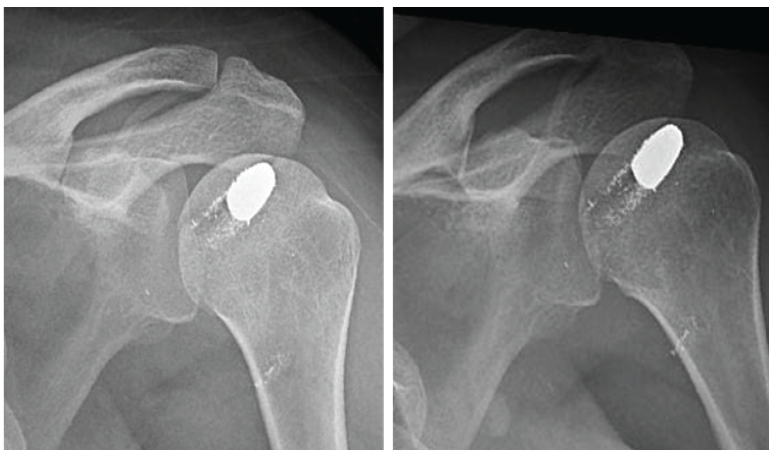
Figure 1: Anteroposterior and lateral radiographs of the left shoulder demonstrating a retained bullet embedded within the humeral head.
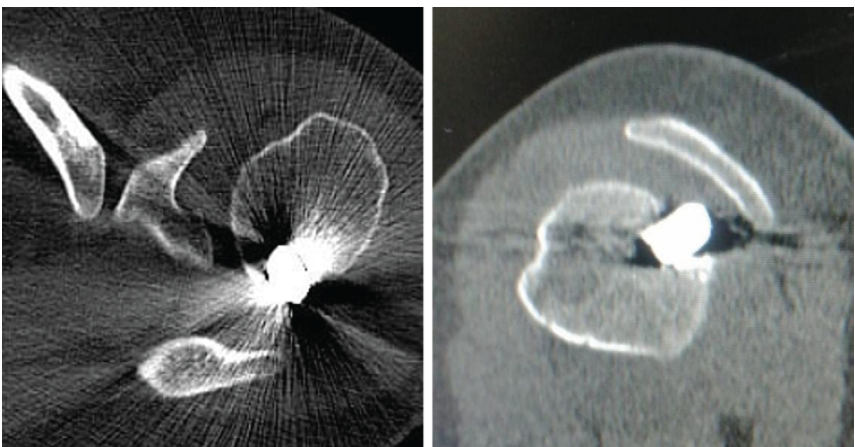
Figure 2: Axial and coronal computed tomography images demonstrating a retained bullet impacted within the posterosuperior humeral head.
As the patient was hemodynamically stable, arthroscopic removal of the retained bullet from the left humeral head was planned. In consultation with the surgical and intensive teams, the decision was made to continue intravenous antibiotic therapy until it was deemed safe to proceed with surgery. Pre-operative computed tomography (CT) of the shoulder was carefully reviewed and confirmed that the bullet was embedded in the posterosuperior humeral head. The bullet measured 1.5 cm in length and 0.6 cm in diameter.
The patient was positioned in the lateral decubitus position, with the arm placed under 3–6 kg of traction. The bullet was arthroscopically removed as shown in Fig. 3.
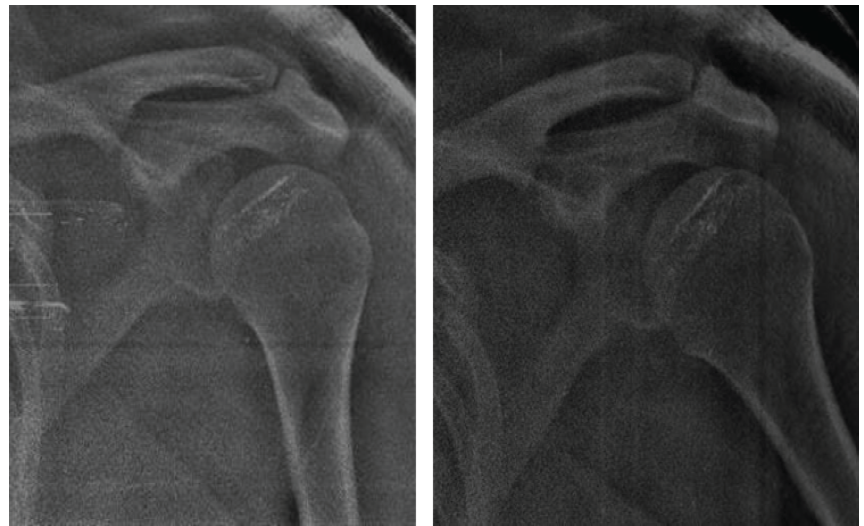
Figure 3: Post-operative anteroposterior and lateral radiographs confirming complete removal of the retained bullet.
Gunshot injuries involving the shoulder account for approximately 9% of all gunshot wounds and may be associated with retained intra-articular bullet fragments [3]. Patients presenting with these injuries should undergo a thorough clinical evaluation, including detailed documentation of neurovascular status. Standard radiographs are essential to assess associated fractures and estimate the location of retained metallic fragments, while CT angiography provides more precise localization and facilitates pre-operative planning. Although there is no clear consensus regarding the optimal management of intra-articular gunshot injuries, retained bullets are generally recommended for removal because of the risk of mechanical cartilage damage, chondrolysis, infection, and systemic lead toxicity, which has been reported in severe cases [2].
Existing literature supports the use of arthroscopy for the management of retained intra-articular bullets following gunshot injuries to the shoulder [4,5,6]. Tarkin et al. [7] successfully managed two patients arthroscopically, including one with a retained bullet within the glenohumeral joint and another with a proximal humeral fracture secondary to a gunshot wound. Similarly, Guevara et al. [8] described successful arthroscopic retrieval of a retained bullet lodged in the posterosuperior quadrant of the glenoid following a left shoulder gunshot injury, while Mahirogullari et al. [1] and Nassar et al. [9] also reported favorable outcomes with arthroscopic management of retained bullets involving the shoulder. Collectively, these reports support arthroscopic management as a safe and effective minimally invasive alternative. Furthermore, retained intra-articular bullets should be removed whenever feasible because delayed retention has been associated with progressive chondral damage, lead arthropathy, and, in rare instances, fatal systemic lead toxicity, as reported by Linden et al. [10]
Even in the presence of a large embedded bullet or retained foreign body, we recommend an arthroscopic approach for irrigation, debridement, and foreign body removal following a gunshot wound to the shoulder. Arthroscopy provides unmatched visualization, allows thorough irrigation of all accessible joint spaces, and facilitates the safe removal of even large retained foreign bodies. Given the posterior location of the bullet, an open procedure may have required an alternative posterior approach. However, with careful pre-operative planning, the bullet was safely retrieved arthroscopically. In our case, the procedure did not result in shoulder instability, despite the patient relying primarily on the upper extremities for weight-bearing. This favorable outcome was likely due to the penetrating nature of the injury, which caused minimal soft-tissue disruption (unlike shoulder dislocations), and the location of the humeral and glenoid bone defects, which preserved joint stability.
This single-patient report cannot be generalized to all shoulder gunshot injuries. Without a control group, arthroscopic retrieval cannot be compared with open arthrotomy or other techniques. Follow-up duration and standardized functional scores were not clearly documented. Objective post-operative range-of-motion measurements, cartilage injury, long-term assessment for post-traumatic arthritis or chondrolysis, infection surveillance, blood lead levels, and formal neurovascular and stability assessments were not reported. Associated fractures and rotator cuff, labral, or other soft-tissue injuries should be described from available imaging and operative records. Successful retrieval in this hemodynamically stable patient does not establish suitability for injuries with extensive bone loss, major neurovascular injury, severe contamination, or complex fractures. Reproducibility may depend on surgeon expertise, equipment, projectile location, and accessibility. Further reports with complete clinical assessments and longer follow-up are needed.
Retained intra-articular bullets of the shoulder, particularly those embedded within the humeral head, present a rare but technically challenging injury with the potential for progressive cartilage damage, infection, and lead toxicity if left untreated. This case demonstrates that, with meticulous pre-operative CT planning and appropriate arthroscopic expertise, even a large bullet embedded in the posterosuperior humeral head can be safely retrieved arthroscopically. The report reinforces arthroscopy as a valuable first-line treatment strategy because it provides superior visualization, comprehensive irrigation and debridement, and successful foreign body removal while minimizing surgical morbidity and preserving shoulder stability.
References
- 1. Mahirogullari M, Cilli F, Akmaz I, Pehlivan O, Kiral A. Acute arthroscopic removal of a bullet from the shoulder. Arthroscopy 2007;23:676.e1-3. [Google Scholar] [PubMed]
- 2. Galvin JW, Johnson C, Shin E, Rooney P, Egan A, Miller L, et al. Arthroscopic removal of extra-articular foreign bodies from the shoulder: Inside-out technique. Arthrosc Tech 2023;12:e1115-9. [Google Scholar] [PubMed]
- 3. Ordog GJ, Wasserberger J, Balasubramanium S, Shoemaker W. Civilian gunshot wounds–outpatient management. J Trauma 1994;36:106-11. [Google Scholar] [PubMed]
- 4. Otero F, Cuartas E. Arthroscopic removal of bullet fragments from the subacromial space of the shoulder. Arthroscopy 2004;20:754-6. [Google Scholar] [PubMed]
- 5. Galland A, Lunebourg A, Airaudi S, Gravier R. A bullet in the supraspinatus compartment successfully removed by arthroscopy: Case report and review of the literature. Case Rep Orthop 2015;2015:806735. [Google Scholar] [PubMed]
- 6. Lee GH, Virkus WW, Kapotas JS. Arthroscopically assisted minimally invasive intraarticular bullet extraction: Technique, indications, and results. J Trauma 2008;64:512-6. [Google Scholar] [PubMed]
- 7. Tarkin IS, Hatzidakis A, Hoxie SC, Giangara CE, Knight RQ. Arthroscopic treatment of gunshot wounds to the shoulder. Arthroscopy 2003;19:85-9. [Google Scholar] [PubMed]
- 8. Guevara J, Chinnakkannu K, Raju S. Acute arthroscopic removal of a bullet embedded in the glenoid: A case report. J Orthop Case Rep 2021;11:59-62. [Google Scholar] [PubMed]
- 9. Nassar JE, Tfayli Y, Issa M, Ramlawi AA, Naja A. Arthroscopic removal of shoulder joint embedded gunshot bullet: A case report. Arch Clin Med Case Rep 2023;7:129-32. [Google Scholar] [PubMed]
- 10. Linden MA, Manton WI, Stewart RM, Thal ER, Feit H. Lead poisoning from retained bullets. Pathogenesis, diagnosis, and management. Ann Surg 1982;195:305-13. [Google Scholar] [PubMed]
Related Articles in Journal of Orthopaedic Case Reports
 December 10, 2023 Osteonecrosis of the Humeral Head Following Arthroscopic Repair of Rotator Cuff Tears: A Case Report
 August 1, 2026 Isolated Calcific Deposition in the Subacromial Bursa: A Rare Case Report and Arthroscopic Management
 October 1, 2026 Evaluation of Functional Outcome of Extended Flexor Carpi Radialis Approach for Fracture Fixation of Distal End Radius Fracture
 October 1, 2026 Myositis Ossificans Affecting the Rotator Cuff Muscles and Proximal Humerus: A Rare Clinical Entity