


Introduction
High-energy orthopedic trauma, such as motor vehicle collisions, falls from height and blast injuries, creates open fractures of the diaphysis, critical segmental bone defects, and peri-implant infections, which significantly affect both patients and health systems. The most difficult subset is open fractures, especially Gustilo-Anderson Type IIIB and IIIC, which are associated with soft tissue loss, periosteal stripping, devascularized bone fragments, and gross contamination, which are risk factors for fracture-related infection (FRI). In non-contaminated tibial fractures that are treated with systemic antibiotics, the deep infection rate is about 14.5%, and in contaminated combat injuries, it is 27–43%. The treatment is significantly longer with FRI, often a series of surgical debridements, antibiotics, coverage of the free flap, and in a small number of patients, amputation [1,2,3].
In 2018, the FRI Consensus Group established a diagnostic schema that divides the criteria into confirmatory (purulence, sinus tract, positive intraoperative culture) and suggestive (wound dehiscence, erythema, fever) for cross-study comparison, and to develop management protocols for FRI [4]. In a population-based study of 111,402 Queensland trauma patients, FRI was associated with an 8-fold increase in length of hospital stay (24 vs. 3 days) and a 2.8-fold increase in mean cost (AU$56,565 vs. AU$19,773) with a 10-year total cost of AU$156.9 m [5]. This is equivalent to billions of dollars in direct and indirect costs, globally, every year [6].
The traditional approach to infection prevention in open fracture was based on systemic antibiotic prophylaxis, prompt debridement, and coverage of the wound. Local antibiotic delivery with dissolvable carriers (calcium sulfate beads [Stimulan] and biphasic calcium sulfate/hydroxyapatite composites [CERAMENT G and V, BONESUPPORT AB, Lund, Sweden]) provided a very attractive pharmacokinetic benefit because the local tissue levels of antibiotics were 10–100 times higher than minimum inhibitory concentrations (MICs) without systemic toxicity [7,8]. Further, bioactive glass S53P4 (BonAlive, Turku, Finland) showed intrinsic, non-antibiotic antibacterial activity by pH and osmotic effect, which is suitable for the era of antimicrobial resistance [9].
There is a lot of enthusiasm but not much uniformity in the evidence base. Most of the key studies have been retrospective analyses of cohorts or case series with no well-powered multi-center randomized controlled trial (RCT) proving the superiority of open fracture FRI prevention over systemic prophylaxis alone. The controversy of the single-stage versus two-stage (Masquelet) reconstruction of FRI-associated segmental defects, what is the best antibiotic to use, and whether bioactive glass/autograft combinations should be used or not, remains ongoing [10,11].
Another knowledge gap is the limited and inconsistent reporting of adverse events, such as the dissolution of calcium sulfate, wound drainage, development of heterotopic ossification, and the risk of inducing local antibiotic resistance, found in available case series and cohorts. Further, the widespread exclusion of patients from low-resource and middle-income countries in published trials is an important equity issue, as they comprise the majority of the global high-energy trauma burden and will have limited access to high-cost synthetic biocomposite implants [4,6]. The article critically synthesizes material science, pharmacokinetics, clinical evidence, adverse event profile, and future directions of the elution of local antibiotics with synthetic bone graft substitutes, with the goal of preventing and treating FRI in high-energy open fractures and segmental bone defects.
Materials and Methods
The databases and date range searched were PubMed/MEDLINE, Embase, Cochrane Library, and Scopus from January 2019 to September 2026. Included for pre-2019 foundational references were those for pharmacokinetics, material science, and classification by the FRI Consensus Group.
MeSH terms and free text keywords: Bone graft substitute OR calcium sulfate OR CERAMENT OR Stimulan OR Herafill OR bioactive glass S53P4 OR BonAlive OR tricalcium phosphate OR hydroxyapatite composite AND local antibiotic OR antibiotic elution OR antibiotic delivery AND open fracture OR “fracture-related infection” OR FRI OR osteomyelitis OR segmental defect OR Masquelet OR bone defect. Secondary Searches: “Gustilo IIIB deep infection rate,” “PMMA beads vs calcium sulfate,” “antibiotic-coated intramedullary nail infection,” “calcium sulfate wound drainage adverse event,” “smart-release scaffold bone infection,” “bacteriophage bone.”
Inclusion criteria
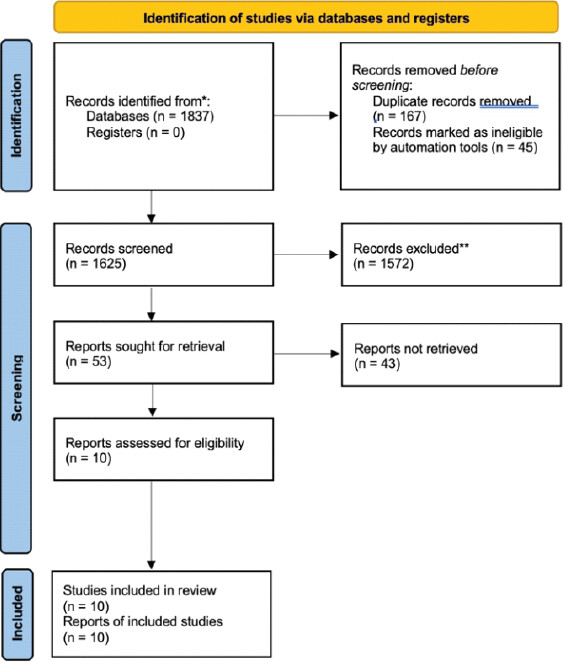
The inclusion criteria were original clinical studies, systematic reviews, in vitro pharmacokinetic studies, and published consensus statements from PubMed-indexed journals. English language only. Studies reporting deep infection, FRI, union or antibiotic tissue concentration as primary outcome were given priority (Fig. 1).
Exclusion criteria
Pre-prints, conference abstracts without full text, opinion pieces without primary data, predatory journal sources, applications of dental/maxillofacial bone substitutes, and animal studies not clearly supporting human translational arguments.
Adherence to Scale for the Assessment of Narrative Review Articles (SANRA)
This review focuses on six different areas: Justification of importance, Concrete aims, description of the literature search, references, scientific reasoning, and appropriate data presentation as part of the SANRA [12]. Evidence is categorized by type of study design at the point of citation and classified as follows: RCTs first, systematic reviews and meta-analyses second, and other studies last.
Results
Treatment of high-energy trauma, open fractures, segmental bone loss (SBL) and FRI
There are about 4.5 million open fractures/year worldwide, with the highest numbers in low- and middle-income countries, where road traffic accidents are responsible for about 1.4 million deaths each year [6]. Open tibia fractures comprise 17–25% of all lower limb fractures in level-1 trauma centers, and Gustilo-Anderson IIIB fractures account for 10–20% of fractures that are open in high-income countries [2]. The incidence of SBL is up to 8% in Gustilo IIIB injuries. It is associated with a significant risk of non-union (up to 78%), FRI (up to 10%), and amputation (up to 8%) [5,13].
There is a 2.5% incidence of FRI in all orthopedic trauma patients undergoing surgery, and a significant incidence of FRI (5–30%) with open fractures with varying comorbidities. Factors associated with the risk of developing non-union are the presence of an open fracture (odds ratio [OR] 14.2; 95% confidence interval [CI] 7.6–26.5) and the need for soft tissue coverage (OR 8.8), injury severity score ≥16, and diabetes mellitus [5]. In European trauma centers, the hospital costs for FRI range from €24,000 to €62,000 per episode [6,14].
The oldest and most used resorbable bone graft substitute carriers for local antibiotic delivery are calcium sulfate (CS) (CaSO4.½H2O, hemihydrate form). It has a very fast resorption rate in vivo: Pharmaceutical-grade CS resorbs within 4-8 weeks, offering a short-term antibiotic reservoir and temporary structural support for bone in-growth. The biphasic elution profile (burst release in the first 24–72 h followed by sustained exponential decline over 42 days) allows for peak local concentrations of 10,000 mcg/mL for the aminoglycosides in the initial burst, and sustained supra-MIC concentrations throughout the resorption period [8]. One major drawback is that there is no structural support, and 20–58% of cases may have a characteristic calcium-rich or serosanguineous fluid drainage, which may be confused with infection [15].
The combination of rapid elution kinetics of CS and the osteoconductive scaffold properties of HA in an injectable, low-viscosity form is provided by the biphasic calcium sulfate/hydroxyapatite (HA) composites (CERAMENT G and CERAMENT V) [2,7]. The CS phase is dissolved over a few weeks and allows the antibiotic to be released, and HA is left to facilitate bone ingrowth over 12–18 months. CERAMENT G contains gentamicin (1.7 mg/mL) and CERAMENT V contains vancomycin (66.7 mg/mL). Our in vitro data also demonstrate that gentamicin tissue levels are above the 100× MIC for Staphylococcus aureus for the first 14 days after injection, and that gentamicin serum levels are not nephrotoxic or ototoxic. CERAMENT G is the only local antibiotic-eluting bone substitute to be FDA 510(k) cleared specifically for the treatment of a bone infection associated with an open extremity fracture [7,16].
Tricalcium phosphate (TCP) has a slower rate of resorption than CS (3–18 months), and it is a long-lasting osteoconductive scaffold, but has a slow release of pre-loaded antibiotics, which is not sufficient for FRI prevention; it is used post-infection for defect filling [17]. The intrinsic antibacterial effect of bioactive glass S53P4 (SiO253%, Na2O 23%, CaO 20%, P2O5 4% w/w; BonAlive, Turku, Finland) is caused by the localized alkaline pH shift (>11) from ion exchange, higher osmotic pressure, and hydroxyapatite precipitation on the surface. These mechanisms act against multidrug-resistant (MDR) Pseudomonas aeruginosa, S. aureus, and Staphylococcus epidermidis bacteria that form biofilms, without any risk of antibiotic resistance developing. S53P4 has no eluted antibiotic, but only has a physicochemical antibacterial effect [9,17]. The key studies included in the review are presented in Table 1, while Table 2 gives a comparative profile of local antibiotic delivery carriers and synthetic bone graft substitutes.
Summary of pivotal studies on antibiotic-eluting bone graft substitutes in high-energy trauma and FRI
| Author (year) | Design | n | Intervention | Comparator | Primary outcome | Follow-up | Key finding |
|---|---|---|---|---|---|---|---|
| Asano et at. [2] (2025) | Retrospective cohort | 78 fractures (76 patients) | CERAMENT G + fix and-flap + systemic ABx | – Historical controls (14.5% infection rate) | Osteomyelitis rate, union, amputation | Mean 88.7 months | Osteomyelitis 5.1%; primary union 83.3%; no ototoxicity/nephrotoxicity |
| Masdeu et at. [10] (2026) | Retrospective cohort | 209 TPF (75 Stimulan, 134 no LAD) | Stimulan (V+G) + systemic ABx | Systemic ABx alone | FRI rate at 21 months | Mean 21 months | FRI 18.9% vs. 18.2%; P =0.896. No significant benefit; high-energy grade dominant predictor |
| Fung et at. [20] (2021) | Retrospective cohort | 214 open femur/tibia (66 AICS, 148 systemic only) | AICS beads + systemic ABx | Systemic ABx alone | Acute infection and osteomyelitis | 7 years | No significant difference (42% vs. 43%); AICS not effective for primary prevention |
| Nguyenet at. [27] (2025) | Systematic review + meta-analysis | 1,122 patients (28 studies) | S53P4 bioactive glass | Historical controls, PMMA, CS | Infection eradication at >12 months | >12 months | Pooled eradication 88.1% (95% CI 85.4–90.4%); I2=0%; effective vs. MDR organisms |
| Frese et at. [23] (2024) | Retrospective cohort | 171 patients, 195 septic defects | Masquelet IMT with PMMA spacer | None (registry cohort) | Full weight bearing at 2 years | Median 2 years | 89% full weight bearing; defects >62 mm had worse outcomes |
| Garabano et at. [24] (2023) | Retrospective case series | 30 patients | Definitive fixation at Stage 1 of IMT | — | Bone healing, reoperation rate | Median 42 months | Success 93.3%; reoperation 10% for infection recurrence |
| Hernández et al. [21] (2023) | Meta-analysis | 5 studies; ACIN vs. control | Antibiotic-coated IM nail | Standard IM nail | Deep infection, union rates | Variable | Deep infection RR=0.17 (0.02–1.31); non-union RR=0.14 — protective trend, non-significant |
| Auregan et at. [25] (2022) | Multicenter retrospective | 8 patients | S53P4 inside induced membrane (IMT) | Prior IMT failure | Bone union, infection recurrence | Mean 16 months | All healed without infection recurrence; promising for high-risk defects |
| O’Toole et al. [33] (2024) | RCT | 88 patients | Topical vancomycin powder + systemic | Systemic ABx alone | FRI incidence at 6 weeks | 6 weeks | No significant difference (0% vs. 4.5%); lysis 2.3% vs. 15.9% in favour of intervention |
| Stravinskas et at. [16] (2019) | Prospective pharmacokinetic | 15 patients (major hip surgery) | CERAMENT V (vancomycin) | — | Serum, drain vancomycin, urine | 7 days | Peak serum 3.1 mg/L (sub-toxic); local drain 80–200 mg/L sustained; no nephrotoxicity |
Abx: Antibiotics, AICS: Antibiotic-impregnated calcium sulfate, ACIN: Antibiotic-coated intramedullary nail, FRI: Fracture-related infection, IMT: Induced membrane technique, LAD: Local antibiotic delivery, MDR: Multidrug-resistant, PMMA: Polymethylmethacrylate, TPF: Tibial plateau fracture, V+G: Vancomycin + gentamicin, IM: Intramedullary
Comparative profile of local antibiotic delivery carriers and synthetic bone graft substitutes
| Parameter | Pure calcium sulfate beads (Stimulan) | CS/HA composite — CERAMENT G (Gentamicin) | CS/HA composite — CERAMENT V (Vancomycin) | Bioactive glass S53P4 | PMMA antibiotic beads |
|---|---|---|---|---|---|
| Composition | 100% CaSO4 hemihydrate | 60% CS/40% HA | 60% CS/40% HA | SiO2, Na2O, CaO, P2O5 | PMMA + antibiotic |
| Antibiotic | Vancomycin, gentamicin, tobramycin (user-loaded) | Gentamicin pre-loaded (1.7 mg/mL) | Vancomycin pre-loaded (66.7 mg/mL) | None (physicochemical ABx mechanism) | Variable |
| Elution profile | Burst + 42-day sustained release | Burst + 4–8 week sustained | Burst + 4-8 week sustained | pH/osmotic, not elution | Burst (24-72 h) |
| Resorption | 4-8 weeks (complete) | CS phase: 4–8 weeks; HA phase: 12–18 months | CS phase: 4–8 weeks; HA phase: 12–18 months | Non-resorbable scaffold (osteoconductive) | Non-resorbable (must be removed) |
| Osteoconductivity | Low (transient scaffold only) | Moderate-high (HA phase) | Moderate-high (HA phase) | Moderate-high (hydroxyapatite layer) | None |
| Osteoinductivity | None | None | None | None | None |
| Wound drainage | 20-58% | Reported; likely similar to beads | Reported | Uncommon | Not applicable |
| FDA clearance | 510(k) — bone void filler | 510(k) — open fracture infection reduction | 510(k) — surgical site infection reduction | CE marked; FDA 510(k) cleared | Not cleared for bone void filling |
| Key indication | FRI prevention, bone voids | Gustilo IIIB FRI prevention, prophylaxis | PJI treatment, bone voids | FRI treatment, osteomyelitis, IMT | Two-stage FRI treatment (must be removed) |
| Resistance risk | Theoretical | Theoretical (aminoglycoside) | Theoretical (glycopeptide) | None (non-antibiotic mechanism) | Theoretical |
CS: Calcium sulfate, HA: Hydroxyapatite, PMMA: Polymethylmethacrylate, FRI: Fracture-related infection, PJI: Periprosthetic joint infection, IMT: Induced membrane technique, ABx: Antibacterial
Pharmacokinetics of local antibiotics: Tissue levels, MIC, systemic toxicity and combinations
Local delivery of antibiotic agents from dissolvable carriers has the basic pharmacokinetic benefit of allowing local tissue concentrations that are well above the MIC of target pathogens without the peaks seen in the bloodstream that could be associated with drug toxicity. When combined with gentamicin, the peak local concentration of calcium sulfate is close to 10,000 mcg/mL at 24 h. It stays above 42 days with local concentrations that remain above the S. aureus gentamicin MIC (≤1 mcg/mL). Following a single dose of vancomycin from CS, the peak concentration is around 6,000–8,000 mcg/mL, and remains above the vancomycin MIC for methicillin-resistant S. aureus (MRSA; MIC ≤2 mcg/mL) for ≥14 days. Tobramycin has similar kinetics to gentamicin and has been shown to peak at 24 h [8].
Local antibiotics have been demonstrated to be absorbed systemically in a prospective manner. In major hip surgery, the peak serum concentration of vancomycin that was observed at 72 h after elution from biphasic CS/HA (CERAMENT V) was 3.1 mg/L (well below the nephrotoxicity threshold of 15–20 mg/L), while the concentration in the local drains was sustained at 80–200 mg/L during the 1st week [16]. In published series with systematic laboratory monitoring, there have been no nephrotoxic or ototoxic effects from delivery of local gentamicin or vancomycin from resorbable carriers. However, in a review by Pedrazzini et al. in J Bone Joint Infect in 2026, it was confirmed that the absorbed fraction from CS carriers is not enough to cause systemic toxicity in patients with normal renal function; however, monitoring of patients with creatinine clearance <30 mL/min is recommended [18].
Combination loading of gentamicin with vancomycin has been used to cover all Gram-positive (including MRSA) and Gram-negative bacteria, especially important for polycontaminated open fractures. Competitive displacement kinetics could affect elution profiles in vitro, and there are no prospective clinical trials to demonstrate clinical superiority of combination local delivery over a single agent [7,8].
FRI prevention in Gustilo IIIB open tibia fractures – Comparative evidence
In a retrospective study of 76 patients (78 fractures) followed for a mean of 88.7 months (up to 10 years) [1] was evaluated the use of CERAMENT G as an adjunct to the fix-and-flap protocol for Gustilo-Anderson IIIB open tibia fractures. The rate of primary bone union was 83.3%, and there were only 4 cases of osteomyelitis (5.1%), which is much better than the historical weighted mean rate of 14.5% with systemic prophylaxis alone. In 4 cases, amputation was necessary. No evidence of local or systemic ototoxicity or nephrotoxicity could be found with CERAMENT G. The study has limitations, including being retrospective, single-arm, with no concurrent comparator group, and may have been subject to selection bias [2,19].
A 2026 series of 209 tibial plateau fractures (TPF) compared calcium sulfate beads loaded with vancomycin/gentamicin to systemic prophylaxis; no difference in FRI rates was found (18.9 vs. 18.2%, P = 0.896), and high-energy Schatzker IV-VI grade remained the most important FRI predictor regardless of antibiotic use at the local level [10]. A 2021 BJS analysis of 214 open femur and tibia fractures also revealed no significant difference in acute infection rates (42% compared to 43%; P > 0.05) [20].
Initiatives to assess the effectiveness of antibiotic-coated intramedullary nails (ACIN; such as Expert Tibial Nail with gentamicin coating, DePuy Synthes) in open tibia fractures continue with a comparative study meta-analysis published in 2023. There was no significant difference between global infection rate (8.4% vs. 22%), between deep infection rate (5.4% vs. 14%), or between non-union rate (3.7% vs. 14%) between coated and non-coated nails.[1.1] However, the differences were small, due to sample sizes and study heterogeneity [21].
FRI treatment, single-stage versus two-stage protocols and the principles of debridement
The principle of FRI treatment is radical debridement to viable bleeding bone (paprika sign), implant exchange, and antibiotic therapy [4,13]. The currently accepted treatment for FRI-related segmental defects is the Masquelet induced membrane technique (IMT): Placing a polymethylmethacrylate (PMMA) cement spacer at 0–6 weeks and exchanging the spacer for a bone graft at 6–8 weeks, creating a periosteal-like membrane [22]. At 2 years, 89% of patients with 195 infected bone defects were able to achieve full weight bearing; defects greater than 62 mm were more likely to fail, indicating a practical threshold for failure [23]. An emerging paradigm is single-stage reconstruction with antibiotic-loaded biocomposites (CERAMENT V), which can decrease second-stage morbidity. The success rate was 93.3%, with a 10% reoperation rate for recurrent infection in 30 cases in a 2023 analysis of IMT for septic segmental defects (first-stage definitive fixation). Single-stage methods can only be used for defects ≤5 cm, well-vascularized hosts, and culture-sensitive organisms [24]. Evidence-based indications and decision criteria for synthetic bone graft substitutes with local antibiotic elution are presented in Table 3.
Evidence-based indications and decision criteria for synthetic bone graft substitutes with local antibiotic elution
| Clinical scenario | Preferred agent | Systemic antibiotic | Evidence level | Special considerations |
|---|---|---|---|---|
| Gustilo IIIB open tibia — primary FRI prevention | CERAMENT G (injectable) | Cephalosporin+aminogly coside±metronidazole | Level III–IV (retrospective cohort) | Combine with fix-and-flap; 5.1% osteomyelitis rate |
| Gustilo IIIB with MRSA risk/high contamination | CERAMENT V or CS beads (V+G) | Vancomycin-based | Level IV | Select based on culture/intraoperative findings |
| FRI treatment — Stage 1 debridement with dead space management | CS/HA composite or PMMA antibiotic spacer | Pathogen-directed | Level III | PMMA if second stage planned; CERAMENT V if single-stage intended |
| FRI treatment — Stage 2 bone grafting | S53P4 ± RIA autograft | Oral suppression post-operative | Level II (meta-analysis) | S53P4 for MDR or recurrent infection risk |
| Segmental defect (<5 cm, non-infected host) | CERAMENT G/V+autograft | Systemic prophylaxis | Level IV | Good vascular supply required for single-stage |
| Segmental defect (>5 cm, infected) | Masquelet IMT+S53P4 at Stage 2 | Pathogen-directed systemic | Level III | Two-stage; consider RIA harvest for autograft volume |
| Osteomyelitis — chronic, MDR organisms | S53P4 granules | Pathogen-directed, oral where possible | Level II (meta-analysis) | No antibiotic resistance concern; 88.1% eradication |
CS: Calcium sulfate, HA: Hydroxyapatite, FRI: Fracture-related infection, MRSA: Methicillin-resistant Staphylococcus aureus, MDR: Multidrug-resistant, RIA: Reamer-Irrigator-Aspirator, IMT: Induced membrane technique, V+G: Vancomycin + gentamicin
In Europe, a preliminary series of a few centers (n = 8 patients with a mean defect of 68 mm) has shown that after the second stage of IMT, the bioactive glass S53P4 has been used in patients with a high risk of infection, resulting in the healing of all patients at the 16-month follow-up examination without any infection recurrence. This suggests that S53P4 might be used alongside IMT second-stage grafting to improve the safety of IMT grafting in infected and/or high-risk defects [25].
Bioactive scaffolds and combination with autograft/RIA, and comparators – Segmental defect management
Synthetic bone graft substitutes are used in addition to autologous bone graft, which typically comes from the iliac crest or the intramedullary canal of the opposite femur using the Reamer-Irrigator-Aspirator (RIA) technique. The harvest of cancellous bone and marrow from RIA can range from 40 mL to 90 mL of biologically active marrow and bone that can be combined with S53P4 granules or TCP to increase both quantity and bacterial resistance. The synergistic effect of RIA autograft and S53P4 is the osteoinductive growth factors and viable progenitor cells (autograft) together with the physicochemical antibacterial effect (S53P4), without the need for an exogenous antibiotic loading [9,13,26].
In the context of osteomyelitis (28 studies, n = 1,122 patients, ≥12 months follow-up), a meta-analysis of the S53P4 showed a pooled infection eradication of 88.1% (95% CI 85.4–90.4%; I²=0%) and was effective against polymicrobial and MDR infections, such as MRSA and P. aeruginosa. There are no studies that required supplemental local antibiotic use with S53P4, confirming its antibiotic-independent mechanism [27].
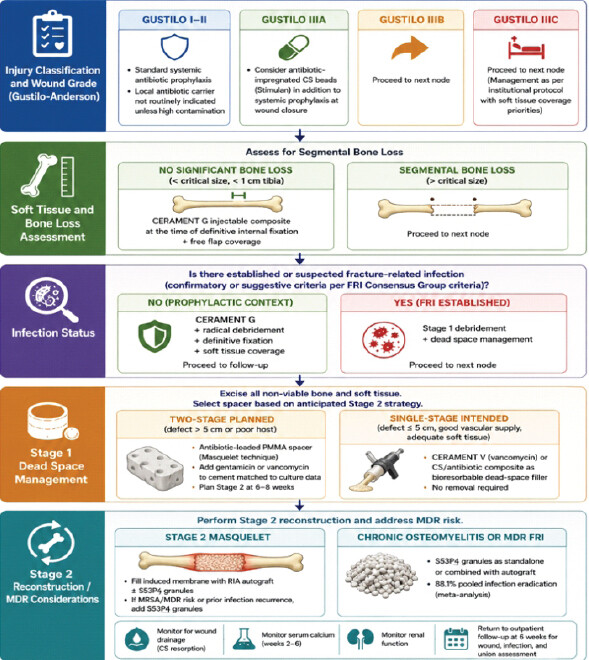
In areas with limited resources – as well as defects >6–8 cm – The Ilizarov-based bone transport and distraction osteogenesis are still relevant comparators, as multimodal biocomposite approaches are too expensive to be used in these areas. The Masquelet/free flap technique and the Ilizarov method had comparable union rates for tibial defects (89% vs. 85%), the former being associated with a shorter treatment time [28]. A visual decision algorithm for synthetic bone graft substitute selection in high-energy open fractures and FRI is presented in Fig. 2.
Adverse events – Wound drainage, hypocalcaemia, resistance concerns and biofilm
The most frequently reported adverse event for CS dissolution is wound drainage, which happens in 20–58% of patients based on defect size and formulation of the CS. Serous or serosanguineous drainage at 2–6 weeks (time of peak CS resorption) may be confused with FRI and lead to re-exploration. Risk factors are implantation volumes >20mL, poorly vascularized wound beds, and anticoagulation. A 2023 retrospective study found that defect size, sub-optimal soft tissue coverage and high body mass index were significant predictors [15].
The hypocalcaemia that is caused by resorption of CS is usually a transitory state (2–6 weeks), and is more likely to occur when there are more than 30 mL of CS. Experience suggests that the calcium level should be monitored in serum at 2, 4, and 6 weeks for volumes >20 mL and in patients with renal insufficiency [16,29]. Heterotopic ossification has been reported in 17.6% of patients in a landmark military trauma series of antibiotic-impregnated CS use in combat-related open fractures. It is a surgical indication in a subset. It is a phenomenon observed because of the osteoinductive signaling that occurs in the periosteal environment when CS resorbs, and it is more of a phenomenon in high-energy wounds involving large periosteal disruption [30,31].
Theoretical risk of antimicrobial resistance: Local use of antimicrobial agents, such as aminoglycosides and glycopeptides may potentially lead to resistance, especially in poorly vascularized wound bed sites where subinhibitory concentrations can be achieved for long periods. This is a concern, especially for local use of vancomycin, as vancomycin-resistant S. aureus and vancomycin-intermediate S. aureus are becoming more common worldwide. Long-term monitoring of resistance is currently lacking in most studies, and there are no clinical series to document resistance emergence from local antibiotic-eluting carriers [29,32].
Outcomes evidence
The most compelling evidence has been from retrospective cohorts: The CERAMENT G Gustilo IIIB (n = 76) had 83.3% primary union and 5.1% osteomyelitis at 10 years [1], and the S53P4 meta-analysis (n = 1,122) had 88.1% infection eradication, and the Masquelet cohort (n = 195 infected defects) had 89% full weight bearing at 2 years. There is a lack of a well-powered, blinded randomized controlled trial comparing antibiotic-eluting graft substitutes to systemic antibiotic prophylaxis alone for Gustilo IIIB fractures [2,23,27]. The IDEAL framework suggests that the field move on to stage 3 (assessment) randomized trials before widespread use [13]. The VANCO trial (NCT05312034), testing local vancomycin powder (but mainly unbound powder) in operative fractures, is underway and will yield level I evidence [33].
Cost-effectiveness modeling of CERAMENT G demonstrated a €9,400 to €14,800 per patient reduction of costs associated with FRI-related reoperation in Gustilo IIIB injuries, with the results to be confirmed in the future [14]. Smart-release scaffolds that respond to bacterial proteases or the pH of a wound biofilm are being developed, as are bacteriophage-loaded carriers for MDR FRI, and artificial intelligence-driven scaffold personalization [34].
Discussion
Observational evidence bases favor the use of antibiotic-eluting synthetic bone graft substitutes as adjuncts to systemic antibiotic prophylaxis and radical debridement of Gustilo IIIB open fractures and FRI management. With a weighted mean of 14.5% in a cohort of 1,122 patients with clinically homogeneous data, with I² = 0%, the S53P4 meta-analysis shows infection eradication at almost 90-month follow-up with CERAMENT G in the Injuries of Gustilo type IIIB is a clinically meaningful reduction. These findings are all indicative of a robust translational signal, yet must be explored in the background of a lack of RCT-level evidence for FRI prevention in open fractures with carrier-integrated antibiotic delivery [2].
When compared to previous reviews, a significant shift has been noted. The 2015–2020 data mainly consisted of reviews focusing on the pharmacokinetic characterization of CS-antibiotic elution and small case series. The 2019 recommendations for local antimicrobial strategies based on evidence stated that there was no level I evidence [13]. These are now the two highest quality studies, both of which are below the level of an RCT, available through a 10-year CERAMENT G cohort [2] and a 2025 S53P4 meta-analysis [27].
There are four fronts of controversy. The first question is whether the wound drainage from CS resorption is a true complication or a predictable (and controllable) effect of the pharmacokinetics of this procedure. It is still controversial, with reported occurrences ranging from 20% to 58% and, depending on the methods used for collecting the drainage. Second, the 2026 TPF cohort [10] and the 2021 BJS open fracture analysis [18] were unable to show any significant advantage for AICS in primary FRI prevention, which is in direct contrast to the CERAMENT G cohort data, and may be due to differences in CS formulation (pure CS versus biphasic CS/HA), delivery format (beads versus injectable composite), and patient selection. Third, whether to reconstruct with a single- or two-stage approach for FRI-associated segmental defects is still not clear, and there is no direct RCT comparing them. Fourth, there is no monitoring of resistance in published series, although there is a theoretical concern [13,15,35,36].
The limitations of the literature are: Near-universal single-center retrospective study design; short-term and medium-term follow-up in many series (which underestimates the number of late FRI recurrences); reporting of outcomes based on different criteria (not using the criteria used by the FRI Consensus Group in all studies); and the marked underrepresentation of populations in low-resource, middle-resource and resource-poor countries where the greatest trauma burden exists [37,38,39].
Conclusion
Synthetic bone graft substitutes containing antibiotic elution, calcium sulfate beads loaded with vancomycin and gentamicin, and non-antibiotic antibacterial bioactive glass S53P4 have been a major step forward in the management of Gustilo IIIB open fracture, FRI treatment, and segmental defect reconstruction. However, large, well-powered prospective RCTs comparing antibiotic-eluting carriers to systemic antibiotic prophylaxis alone are urgently needed. At present, selective use in Gustilo IIIB and FRI cases, depending on wound grade, defect size, local microbiology, and soft tissue status, within a multidisciplinary orthoplastic approach, is the most supported strategy.
Clinical Message
Adjunctive use of antibiotic-eluting bone graft substitutes can significantly reduce deep infection rates in Gustilo IIIB open fractures and FRIs compared to systemic antibiotics alone.
Adverse events, such as wound drainage, transient hypocalcaemia, and heterotopic ossification are common with calcium sulfate resorption and must be anticipated, monitored, and explained to patients to avoid unnecessary re-exploration.
Evidence is promising but limited: Most data are from retrospective cohorts and meta-analyses, with a lack of adequately powered RCTs; selective use based on wound grade, defect size, microbiology, and soft tissue status within a multidisciplinary orthoplastic approach is currently the most supported strategy.
References
- Gustilo RB, Anderson JT. Prevention of infection in the treatment of one thousand and twenty-five open fractures of long bones: Retrospective and prospective analyses. J Bone Joint Surg Am 1976;58:453-8. [Google Scholar] | [PubMed]
- Asano E, Hemat H, Bin Sahl A, Pillai A. Adjuvant local antibiotic prophylaxis in Gustilo-Anderson IIIb open fractures: Up to 10 years follow-up on clinical outcomes and complications. J Orthop Surg 2025;20:610. [Google Scholar] | [PubMed]
- Court-Brown CM, Bugler KE, Clement ND, Duckworth AD, McQueen MM. The epidemiology of open fractures in adults. A 15-year review. Injury 2012;43:891-7. [Google Scholar] | [PubMed]
- Metsemakers WJ, Kuehl R, Moriarty TF, Richards RG, Verhofstad MH, Borens O. Infection after fracture fixation: Current surgical and microbiological concepts. Injury 2018;49:511-22. [Google Scholar] | [PubMed]
- Foster AL, Warren J, Vallmuur K, Jaiprakash A, Crawford R, Tetsworth K. A population-based epidemiological and health economic analysis of fracture-related infection. Bone Joint J 2024;106 -B:77-85. [Google Scholar] | [PubMed]
- Metsemakers WJ, Moriarty TF, Morgenstern M, Marais L, Onsea J, O'Toole RV. The global burden of fracture-related infection: Can we do better?. Lancet Infect Dis 2024;24:e386-93. [Google Scholar] | [PubMed]
- Bidossi A, Bottagisio M, Logoluso N, De Vecchi E. In vitro evaluation of gentamicin or vancomycin containing bone graft substitute in the prevention of orthopedic implant-related infections. Int J Mol Sci 2020;21:9250. [Google Scholar] | [PubMed]
- Aiken SS, Cooper JJ, Florance H, Robinson MT, Michell S. Local release of antibiotics for surgical site infection management using high-purity calcium sulfate: An in vitro elution study. Surg Infect (Larchmt) 2015;16:54-61. [Google Scholar] | [PubMed]
- Lindfors NC, Hyvönen P, Nyyssönen M, Kirjavainen M, Kankare J, Gullichsen E. Bioactive glass S53P4 as bone graft substitute in treatment of osteomyelitis. Bone 2010;47:212-8. [Google Scholar] | [PubMed]
- Gómez-Masdeu M, De Caso Rodríguez J, Billi AM, Zuriarrain SW, Gelber PE, Fernández IC. Local use of antibiotic-impregnated calcium sulfate for infection prophylaxis: A novel study. Injury 2026;57:113173. [Google Scholar] | [PubMed]
- Foster AL, Moriarty TF, Trampuz A, Jaiprakash A, Burch MA, Crawford R. Fracture-related infection: Current methods for prevention and treatment. Expert Rev Anti Infect Ther 2020;18:307-21. [Google Scholar] | [PubMed]
- Baethge C, Goldbeck-Wood S, Mertens S. SANRA-a scale for the quality assessment of narrative review articles. Res Integr Peer Rev 2019;4:5. [Google Scholar] | [PubMed]
- Metsemakers WJ, Fragomen AT, Moriarty TF, Morgenstern M, Egol KA, Zalavras C. Evidence-based recommendations for local antimicrobial strategies and dead space management in fracture-related infection. J Orthop Trauma 2020;34:18-29. [Google Scholar] | [PubMed]
- Woffenden H, Yasen Z, Burden E, Douthwaite A, Elcock SB, Mclean L. Fracture-related infection: Analysis of healthcare utilisation and associated costs. Injury 2023;54:111109. [Google Scholar] | [PubMed]
- Sheridan GA, Falk DP, Fragomen AT, Rozbruch SR. Calcium sulfate in the management of osteomyelitis: A systematic review and meta-analysis of comparative studies. Medicine (Baltimore) 2022;101:e31364. [Google Scholar] | [PubMed]
- Stravinskas M, Nilsson M, Vitkauskiene A, Tarasevicius S, Lidgren L. Vancomycin elution from a biphasic ceramic bone substitute. Bone Joint Res 2019;8:49-54. [Google Scholar] | [PubMed]
- Ferguson J, Diefenbeck M, McNally M. Ceramic biocomposites as biodegradable antibiotic carriers in the treatment of bone infections. J Bone Jt Infect 2017;2:38-51. [Google Scholar] | [PubMed]
- Pedrazzini A, Suravaram V, Lu VYZ, Hoch A, Zingg PO, Andronic O. Outcomes and safety of antibiotic-loaded calcium sulfate beads in orthopaedics: A systematic review and meta-analysis. J Orthop 2026;76:359-76. [Google Scholar] | [PubMed]
- Morgenstern M, Vallejo A, McNally MA, Moriarty TF, Ferguson JY, Nijs S. The effect of local antibiotic prophylaxis when treating open limb fractures: A systematic review and meta-analysis. Bone Jt Res 2018;7:447-56. [Google Scholar] | [PubMed]
- Fung A, Ward A, Patel K, Krkovic M. 1005 Antibiotic-impregnated calcium sulfate beads are not effective in the primary prevention of infection in open femur and tibia fractures. BJS 2021;108. znab134.596. [Google Scholar] | [PubMed]
- Vargas-Hernández JS, Sánchez CA, Renza S, Leal JA. Effectiveness of antibiotic-coated intramedullary nails for open tibia fracture infection prevention. A systematic review and meta-analysis. Injury 2023;54 Suppl 6:110857. [Google Scholar] | [PubMed]
- Masquelet AC, Fitoussi F, Begue T, Muller GP. Reconstruction of the long bones by the induced membrane and spongy autograft. Ann Chir Plast Esthet 2000;45:346-53. [Google Scholar] | [PubMed]
- Frese J, Schulz AP, Kowald B, Gerlach UJ, Frosch KH, Schoop R. Treatment outcome of the Masquelet technique in 195 infected bone defects-a single-center, retrospective case series. Injury 2023;54:110923. [Google Scholar] | [PubMed]
- Garabano G, Pesciallo CA. Definitive fixation in the first stage of the induced membrane technique for septic segmental bone defects. Why not? J Clin Orthop Trauma 2023;37:102089. [Google Scholar] | [PubMed]
- Aurégan JC, Villain B, Glombitza M, Blokhuis T, Heinänen M, Bégué T. Utilisation of bioactive glass S53P4 inside an induced membrane for severe bone defect with high risk of infection: A multi-center preliminary experience. Injury 2022;53 Suppl 2:S13-9. [Google Scholar] | [PubMed]
- Yee MA, Hundal RS, Perdue AM, Hake ME. Autologous bone graft harvest using the reamer-irrigator-aspirator. J Orthop Trauma 2018;32 Suppl 1:S20-1. [Google Scholar] | [PubMed]
- Nguyen AT, Li RA, Galiano RD. Safety and efficacy of S53P4 bioactive glass in osteomyelitis management: A systematic review and meta-analysis. J Biomed Mater Res B Appl Biomater 2025;113:e35597. [Google Scholar] | [PubMed]
- Zhang Q, Kang Y, Wu Y, Ma Y, Jia X, Zhang M. Masquelet combined with free-flap technique versus the Ilizarov bone transport technique for severe composite tibial and soft-tissue defects. Injury 2024;55:111521. [Google Scholar] | [PubMed]
- Vanvelk N, Van Lieshout EM, Nugteren LH, Plaisier AC, Van Der Pot R, Bethlehem C. Safety of locally applied antibiotics in orthopaedic trauma surgery: Descriptive results from a prospective cohort study. J Bone Jt Infect 2026;11:95-103. [Google Scholar] | [PubMed]
- Tarar MY, Khalid A, Usman M, Javed K, Shah N, Abbas MW. Wound leakage with the use of calcium sulphate beads in prosthetic joint surgeries: A systematic review. Cureus 2021;13:e19650. [Google Scholar] | [PubMed]
- Helgeson MD, Potter BK, Tucker CJ, Frisch HM, Shawen SB. Antibiotic-impregnated calcium sulfate use in combat-related open fractures. Orthopedics 2009;32:323. [Google Scholar] | [PubMed]
- Moriarty TF, Kuehl R, Coenye T, Metsemakers WJ, Morgenstern M, Schwarz EM. Orthopaedic device-related infection: Current and future interventions for improved prevention and treatment. EFORT Open Rev 2016;1:89-99. [Google Scholar] | [PubMed]
- OʼToole RV, Joshi M, Carlini AR, Murray CK, Allen LE, Scharfstein DO. Local antibiotic therapy to reduce infection after operative treatment of fractures at high risk of infection: A multicenter, randomized, controlled trial (VANCO study). J Orthop Trauma 2017;31 Suppl 1:S18-24. [Google Scholar] | [PubMed]
- Kalelkar PP, Riddick M, García AJ. Biomaterial-based delivery of antimicrobial therapies for the treatment of bacterial infections. Nat Rev Mater 2022;7:39-54. [Google Scholar] | [PubMed]
- Jacob CC, Daw JH, Santiago-Torres J. The efficacy of antibiotic-impregnated calcium sulfate (AICS) in the treatment of infected non-union and fracture-related infection: A systematic review. J Bone Jt Infect 2023;8:91-7. [Google Scholar] | [PubMed]
- Shi X, Wu Y, Ni H, Li M, Zhang C, Qi B. Antibiotic-loaded calcium sulfate in clinical treatment of chronic osteomyelitis: A systematic review and meta-analysis. J Orthop Surg Res 2022;17:104. [Google Scholar] | [PubMed]
- Govaert GA, Kuehl R, Atkins BL, Trampuz A, Morgenstern M, Obremskey WT. Diagnosing fracture-related infection: Current concepts and recommendations. J Orthop Trauma 2020;34:8-17. [Google Scholar] | [PubMed]
- Bezstarosti H, Van Lieshout EM, Voskamp LW, Kortram K, Obremskey W, McNally MA. Insights into treatment and outcome of fracture-related infection: A systematic literature review. Arch Orthop Trauma Surg 2019;139:61-72. [Google Scholar] | [PubMed]
- Obremskey WT, Metsemakers WJ, Schlatterer DR, Tetsworth K, Egol K, Kates S. Musculoskeletal infection in orthopaedic trauma: Assessment of the 2018 international consensus meeting on musculoskeletal infection. J Bone Joint Surg Am 2020;102:e44. [Google Scholar] | [PubMed]
© 2026 Journal of Orthopaedic Case Reports - Published by Indian Orthopaedic Research Group
About the Authors
-

Sanjeevi Bharadwaj
-

Naveen Jeyaraman
-

Subasri Balasubramanian
-

Arunagiri Gunasekar
-

Arulkumar Nallakumarasamy
-

Madhan Jeyaraman
Related Articles in Journal of Orthopaedic Case Reports
 July 1, 2026 Continuous Local Antibiotic Perfusion for Refractory Musculoskeletal Infections: Functional and Patient-reported Outcomes in a 13-Case Series
 November 1, 2025 Microbial Profile and Antibiotic Sensitivity Patterns in Open Fractures: A Retrospective Study from a Tertiary Care Center
 February 10, 2021 Management of Grade 3C Compound Injury of Lower Limb with Floating Knee – Salvage versus Amputation (Case Series)
 May 1, 2025 Functional Outcome of Hydrodilation in Adhesive Capsulitis of Shoulder