

Ilizarov external fixation is an effective limb-salvage method for managing infected tibial shaft non-union after implant removal, even in the presence of persistent infection and soft-tissue complications.
Md. Sulaiman, Department of Orthopedic Surgery, Trauma General Hospital and Diagnostic Center, Brahmanbaria, Bangladesh. E-mail: dr.sulaiman.ortho@gmail.com
Abstract
Introduction: Infected tibial shaft non-union after internal fixation is a difficult orthopedic problem because infection control, fracture stability, and bone healing must be achieved simultaneously. Ilizarov external fixation is a valuable limb salvage option in such complex cases. This case is important because a successful union was achieved despite persistent infection, skin necrosis, and the need for subsequent skin grafting.
Case Report: A 26-year-old Bangladeshi male presented with an infected non-union of the left tibial shaft after plate fixation performed at a private clinic. Postoperatively, infection developed with wound breakdown and exposed implant. The plate was removed under spinal anesthesia. One month later, Ilizarov external fixation with autogenous iliac crest bone grafting was performed. After surgery, the patient developed a severe infection with skin necrosis, which was managed with regular dressing and later skin grafting. Although infection persisted for several months, the Ilizarov frame was maintained. The infection gradually settled, and the frame was removed after 9 months. Final radiographs demonstrated satisfactory union.
Conclusion: This case demonstrates that Ilizarov external fixation can successfully salvage infected tibial shaft non-union after implant removal, even when prolonged infection and soft-tissue complications occur. The clinical impact of this report lies in showing that stable circular fixation, combined with persistent wound care and staged management, can achieve infection control and union in a difficult limb salvage situation.
Keywords: Infected tibial non-union, Ilizarov external fixation, implant removal, limb salvage.

Infected tibial shaft nonunion is a difficult complication in orthopedic trauma because it involves persistent infection, instability, and failure of bone healing [1,2]. It may develop after internal fixation when infection compromises both the implant and the biological environment necessary for union [1,3]. Successful treatment requires control of infection, thorough debridement, stable fixation, and support of bone healing [3,4]. The Ilizarov method has been widely used as a limb salvage technique for infected tibial non-union because it provides stable external fixation while allowing continued management of infection and promotion of union [2,5,6,7]. This case is important because a successful union was achieved despite severe persistent infection, skin necrosis, and the need for subsequent skin grafting, demonstrating the value of staged management in a complex infected tibial non-union.
A 26-year-old Bangladeshi male presented with an infected non-union of the left tibial shaft. He had initially sustained a tibial shaft fracture in 2025 and underwent plate fixation at a private clinic. In the post-operative period, he developed an infection at the operative site, which gradually progressed to wound breakdown with exposed implant (Fig. 1).
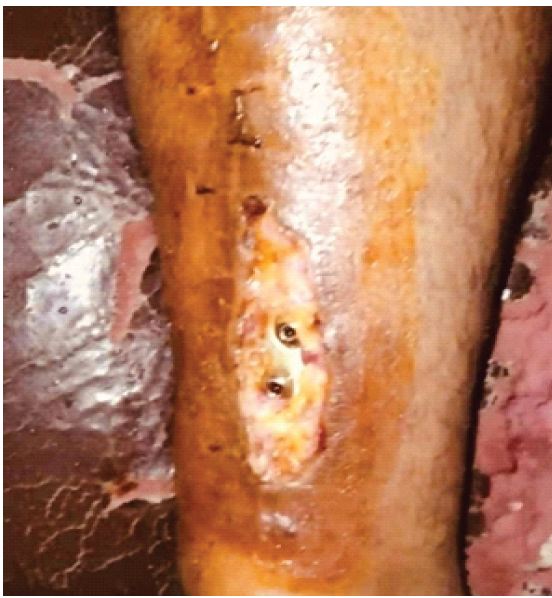
Figure 1: Clinical photograph showing infected tibial wound with exposed implant before definitive treatment.
On presentation, the patient had persistent wound discharge, local infection, and an exposed plate over the left tibia. Pre-treatment radiographs demonstrated tibial shaft non-union with signs of infection (Fig. 2).
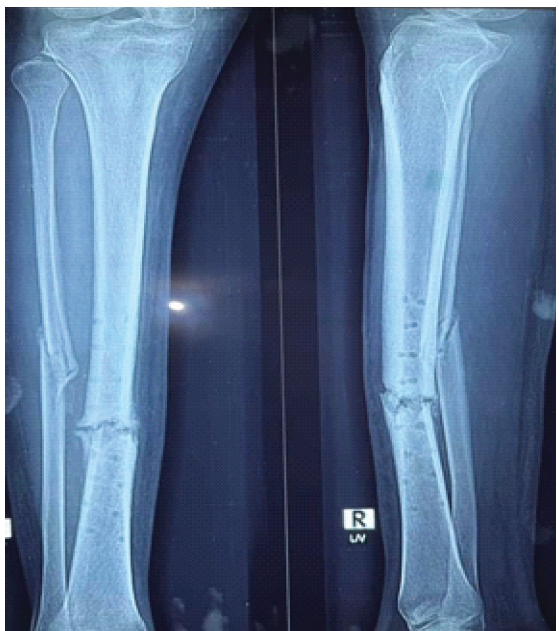
Figure 2: Pre-treatment radiograph of the leg demonstrating tibial shaft non-union with signs of infection.
The implant was removed under spinal anesthesia, and debridement was performed. One month later, definitive stabilization was carried out using Ilizarov external fixation along with autogenous iliac crest bone grafting. Follow-up radiographs showed the Ilizarov circular external fixator with maintained alignment of the tibial shaft fracture (Fig. 3).
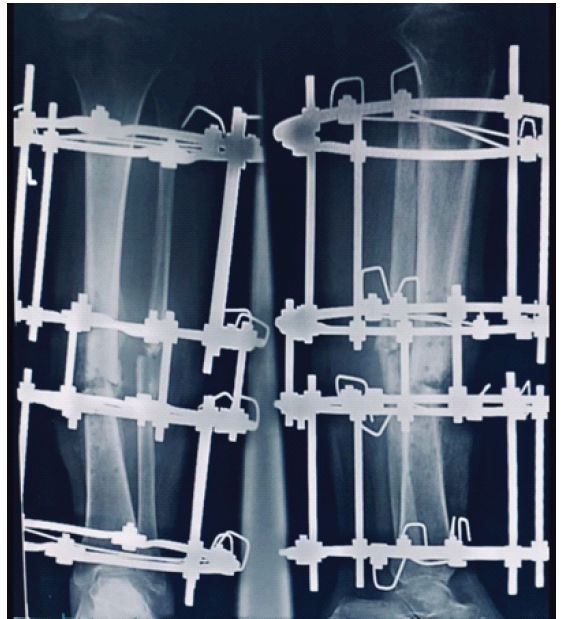
Figure 3: Follow-up radiograph showing the Ilizarov circular external fixator applied to the tibia with maintained alignment.
A clinical photograph during treatment demonstrated the Ilizarov external fixator applied to the tibia (Fig. 4).
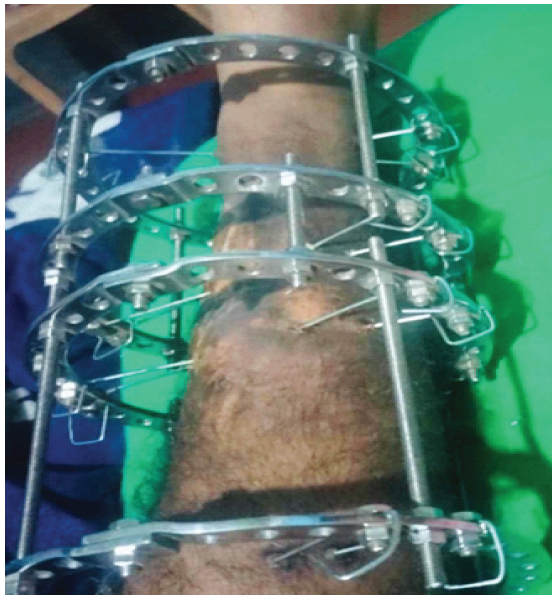
Figure 4: Clinical photograph demonstrating the Ilizarov external fixator applied to the tibia during treatment.
After Ilizarov application, the patient developed a severe infection with skin necrosis around the affected area (Fig. 5).
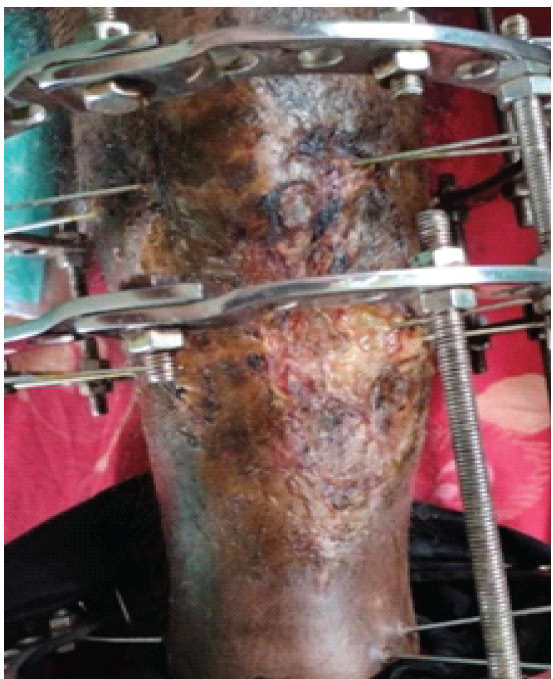
Figure 5: Clinical photograph showing soft-tissue necrosis and wound condition during treatment with the Ilizarov frame.
This was managed with regular dressing and wound care. Due to the soft-tissue defect, skin grafting was subsequently performed. Although infection persisted for 4–5 months, the Ilizarov frame was maintained, and the patient continued regular follow-up and dressing. Gradually, the infection came under control, and the fracture progressed to union. Follow-up radiographs demonstrated progressing union of the tibial fracture with the Ilizarov frame in situ (Fig. 6).
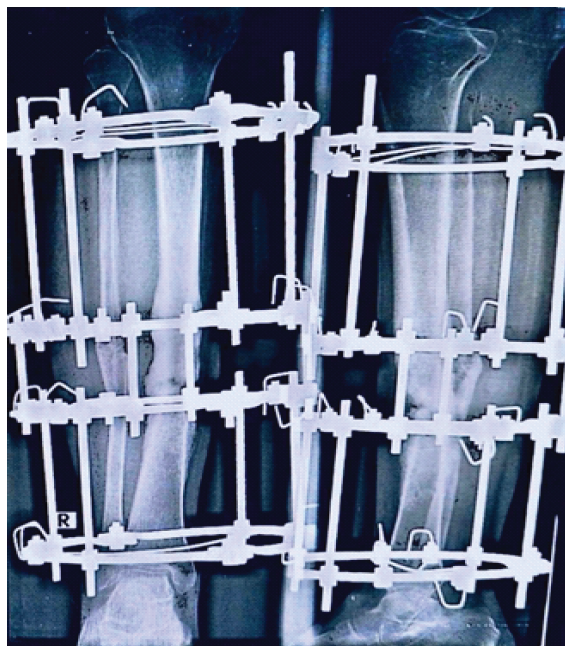
Figure 6: Follow-up radiograph demonstrating the progressing union of the tibial fracture with the Ilizarov frame in situ.
The Ilizarov frame was removed after 9 months. At final follow-up, the patient had achieved clinical and radiological union, as demonstrated on the final post-removal radiograph (Fig. 7).
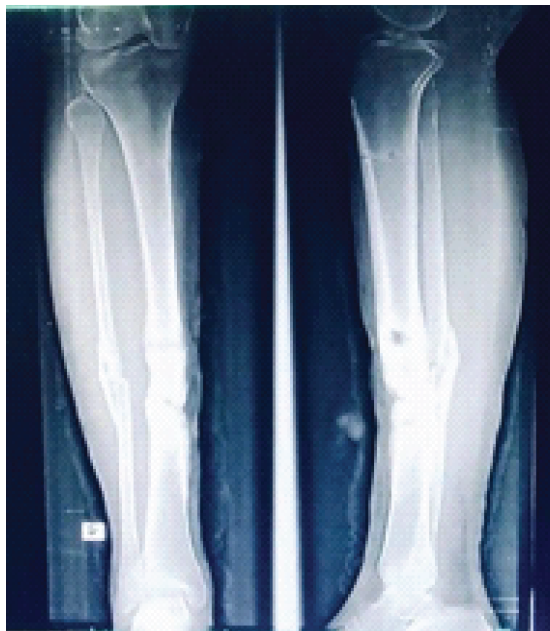
Figure 7: Final radiograph after removal of the Ilizarov external fixator demonstrating satisfactory union of the tibial shaft fracture.
Infected tibial shaft non-union remains one of the most challenging problems in orthopedic trauma because treatment must address infection, mechanical instability, impaired bone healing, and associated soft-tissue compromise at the same time [1,3,7]. Standard management principles include removal of infected implants, radical debridement, control of infection, stable fixation, and biological support for union [3,6,7]. In such situations, circular external fixation using the Ilizarov method has been widely used as a limb salvage technique because it allows stability without retaining internal hardware at the infected site [1,2,8]. The important feature of this case is that a successful union was achieved despite a prolonged and complicated post-operative course. After implant removal, the patient underwent Ilizarov fixation with autogenous iliac crest bone grafting, but severe infection persisted and was followed by skin necrosis requiring repeated dressing and later skin grafting. Even with these soft-tissue complications, the frame was maintained, infection was gradually controlled, and union was ultimately achieved. This highlights the value of persistence with staged management in selected cases when limb salvage remains feasible. Previous studies have shown that the Ilizarov technique can provide high rates of infection control and union in infected tibial non-union [1,2,4,6,8,9]. The method offers stable fixation, permits weight-bearing, avoids new internal implants in an infected field, and can be continued even when wound management is still ongoing [5,7,8]. In addition, bone grafting may improve the biological environment for healing when non-union is established [3]. In the present case, the combination of implant removal, debridement, circular fixation, bone grafting, and continued wound care contributed to eventual success. Another noteworthy point is the associated soft-tissue problem. Persistent infection with skin necrosis often threatens limb salvage and may push treatment toward repeated debridement or even more radical options [5,10]. In this patient, however, regular wound care and subsequent skin grafting allowed soft-tissue recovery while the Ilizarov construct maintained stability. This emphasizes that management of infected non-union is not only a bony procedure but also a soft-tissue problem requiring patience and sequential intervention. Final radiographs after removal of the frame demonstrated satisfactory union, supporting the clinical success of staged Ilizarov-based limb salvage in this complex infected tibial non-union.
This case demonstrates that infected tibial shaft non-union can be successfully salvaged with staged management using implant removal, debridement, Ilizarov external fixation, and continued soft-tissue care. Even in the presence of persistent infection, skin necrosis, and the need for subsequent skin grafting, limb salvage and union can still be achieved with careful follow-up and stable external fixation. The importance of this case lies in showing that the Ilizarov method remains a valuable option for complex infected tibial non-union, especially when both bony and soft-tissue complications are present.
Ilizarov external fixation remains an effective limb salvage option for infected tibial shaft non-union after implant removal. Even when severe infection, skin necrosis, and prolonged wound problems occur, persistent staged management with stable circular fixation and appropriate soft-tissue care can still achieve union.
References
- 1. Meselhy MA, Kandeel M, Halawa AS, Siger MS. Infected tibial nonunion: Assessment of compression distraction Ilizarov technique without debridement. Orthop Traumatol Surg Res 2021;107:102881. [Google Scholar] [PubMed]
- 2. Testa G, Vescio A, Aloj DC, Costa D, Papotto G, Gurrieri L, et al. Treatment of infected tibial non-unions with Ilizarov technique: A case series. J Clin Med 2020;9:1352. [Google Scholar] [PubMed]
- 3. Li J, Li M, Wang W, Li B, Liu L. Evolution and development of Ilizarov technique in the treatment of infected long bone nonunion with or without bone defects. Orthop Surg 2022;14:824-30. [Google Scholar] [PubMed]
- 4. Bakhsh K, Atiq-Ur-Rehman, Zimri FK, Mohammad E, Ahmed W, Saaiq M. Presentation and management outcome of tibial infected non-union with Ilizarov technique. Pak J Med Sci 2019;35:136-40. [Google Scholar] [PubMed]
- 5. Shastov AL, Mikhailov AG, Kliushin NM, Malkova TA. Limb salvage and functional recovery in infected nonunion of the distal tibia treated with the Ilizarov techniques. J Clin Orthop Trauma 2023;44:102255. [Google Scholar] [PubMed]
- 6. Khan MS, Rashid H, Umer M, Qadir I, Hafeez K, Iqbal A. Salvage of infected non-union of the tibia with an Ilizarov ring fixator. J Orthop Surg (Hong Kong) 2015;23:52-5. [Google Scholar] [PubMed]
- 7. McNally M, Ferguson J, Kugan R, Stubbs D. Ilizarov treatment protocols in the management of infected nonunion of the tibia. J Orthop Trauma 2017;31 Suppl 5:S47-54. [Google Scholar] [PubMed]
- 8. Dendrinos GK, Kontos S, Lyritsis E. Use of the Ilizarov technique for treatment of non-union of the tibia associated with infection. J Bone Joint Surg Am 1995;77:835-46. [Google Scholar] [PubMed]
- 9. Pearson RL, Perry CR. The Ilizarov technique in the treatment of infected tibial nonunions. Orthop Rev 1989;18:609-13. [Google Scholar] [PubMed]
- 10. Atef A, El-Tantawy A. Management of open infected comminuted tibial fractures using Ilizarov concept. Eur J Orthop Surg Traumatol 2014;24:403-8. [Google Scholar] [PubMed]

Related Articles in Journal of Orthopaedic Case Reports
 October 1, 2026 Early Surgical Escalation and Structured Multidisciplinary Pathways Improve Limb-Salvage Outcomes in Necrotizing Fasciitis: A Two-Cycle Quality Improvement Project
 October 1, 2026 Development of a Non-ossifying Fibroma in the Same Femur 6 Years after Limb-Salvage Surgery for Osteosarcoma: A Case Report
 October 1, 2026 Soft-Tissue Closure through Acute Deformation and Gradual Correction Using Taylor Spatial Frame in a Gustilo-Anderson Type IIIB Open Tibial Pilon Fracture: A Case Report
 September 1, 2026 Limb Salvage for Entire Tibial Ewing Sarcoma in a 4-year-Old Child Using Extracorporeal Irradiation and Free Flap Reconstruction: A Case Report and Surgical Technique