


Introduction
The knee joint is one of the most frequently injured joints in the human body, with the anterior cruciate ligament (ACL) being the most commonly injured ligament requiring surgical intervention [1]. The ACL plays a key role in maintaining knee stability by preventing anterior tibial translation and controlling rotational and valgus stresses [1,2,3].
ACL injuries are commonly associated with sports activities, road traffic accidents, and non-contact twisting mechanisms. Untreated ACL deficiency results in recurrent instability, secondary meniscal injury, chondral damage, and early-onset osteoarthritis [4,5]. Arthroscopic ACL reconstruction has evolved as the gold standard treatment, offering anatomical restoration, minimal invasiveness, faster rehabilitation, and improved functional outcomes [6,7].
Various graft options have been described for ACL reconstruction, including bone–patellar tendon–bone, hamstring tendon, quadriceps tendon, and allografts [7]. Although bone–patellar tendon–bone graft was once considered the gold standard, complications such as anterior knee pain, patellar fracture, and extensor mechanism dysfunction have limited its use [8].
Hamstring tendon autografts have gained popularity due to reduced donor site morbidity and satisfactory functional outcomes [9]. Recently, the peroneus longus tendon has been explored as an alternative autograft owing to its adequate length, comparable tensile strength, and minimal functional deficit at the donor site [10,11,12]. Biomechanical studies have shown no significant difference in tensile strength between hamstring and peroneus longus tendons [13].
This study aims to compare the functional outcomes and donor site morbidity of hamstring tendon and peroneus longus tendon autografts used in arthroscopic ACL reconstruction.
Materials and Methods
Study design and setting
This prospective randomized controlled study was conducted in the Department of Orthopaedics, SVMCH and RC, Puducherry, from February 2021 to August 2022, after obtaining Institutional Ethical Committee approval (No:15/SVMCH/IEC-Cert/Feb21).
Sample size
A total of 40 patients were included and randomly allocated into:
-
Group A: Hamstring tendon autograft (n = 20)
-
Group B: Peroneus longus tendon autograft (n = 20).
Inclusion criteria
-
Age between 18 and 55 years
-
Clinically and radiologically confirmed ACL tear
-
Symptomatic knee instability
-
Partial or complete ACL tears involving >30% fibers.
Exclusion criteria
-
Bilateral ACL tears
-
Revision ACL reconstruction
-
Associated fractures around the knee.
Surgical technique
All patients underwent arthroscopic single-bundle ACL reconstruction under spinal anesthesia using standard portals. Femoral fixation was done using an endobutton and tibial fixation using an interference screw. A standardized rehabilitation protocol was followed for both groups.
Outcome measures
-
Functional outcome: International Knee Documentation Committee (IKDC) score and Tegner Lysholm score
-
Donor site morbidity: Foot and ankle disability index (FADI).
Statistical analysis
Data were analyzed using IBM Statistical Package for the Social Sciences version 22. Independent-samples t-test and Chi-square test were used. A P < 0.05 was considered statistically significant.
Results
A total of 40 patients who underwent arthroscopic ACL reconstruction were included in the study, with 20 patients in each group. Group A underwent reconstruction using hamstring tendon autograft, while Group B underwent reconstruction using peroneus longus tendon autograft.
Demographic profile
The mean age of patients in the hamstring tendon group was 31.65 ± 9.4 years, whereas in the peroneus longus tendon group it was 29.3 ± 6.62 years. The difference in mean age between the two groups was not statistically significant (P = 0.366), indicating comparable age distribution.
Gender distribution was also similar between groups. In the hamstring group, 55% were males and 45% were females, while in the peroneus longus group, 70% were males and 30% were females. The difference was not statistically significant (P > 0.05), suggesting homogeneity between the study groups.
Mode of injury
Slip and fall was the most common mode of injury in both groups, followed by sports-related injuries and road traffic accidents. No statistically significant difference was observed between the groups regarding the mode of injury (P = 0.747) (Table 1).
Comparison of mode of injury between study group (n=40)
| Mode of injury | Study group | Chi-square | P-value | |
|---|---|---|---|---|
| Hamstring tendon autograft (n=20) (%) | Peroneus longus tendon autograft (n=20) (%) | |||
| Road traffic accidents | 5 (25) | 7 (35) | 0.583 | 0.747 |
| Slip and fall | 9 (45) | 7 (35) | ||
| Sports | 6 (30) | 6 (30) | ||
The mean pre-operative IKDC score was low in both groups, indicating poor knee function prior to surgery. Progressive improvement in IKDC scores was noted in both groups at post-operative day 10, 6 weeks, and 6 months.
At 6 months follow-up, the mean IKDC score in the hamstring tendon group was 0.80 ± 0.05, while in the peroneus longus tendon group it was 0.82 ± 0.05. The difference between the two groups at final follow-up was not statistically significant (P > 0.05), indicating comparable functional outcomes (Table 2).
Comparison of mean of international knee documentation committee score at different follow-up time between study group (n=40)
| Parameter | Study group (Mean±standard deviation) | P-value | |
|---|---|---|---|
| Hamstring tendon autograft (n =20) | Peroneus longus tendon autograft (n =20) | ||
| Pre-operative | 0.24±0.07 | 0.33±0.19 | 0.055 |
| POD 10 | 0.23±0.03 | 0.2±0.06 | 0.086 |
| 6 weeks | 0.53±0.09 | 0.6±0.09 | 0.013 |
| 6 months | 0.8±0.05 | 0.82±0.05 | 0.221 |
POD: Post-operative day
A statistically significant difference in IKDC scores was observed at the 6-week follow-up, with slightly better scores in the peroneus longus group (P < 0.05). However, this difference was not sustained at the final follow-up.
Functional outcome – Tegner Lysholm score
Both groups showed significant improvement in Tegner Lysholm scores postoperatively. Early post-operative scores showed marginal differences between the groups; however, by 6 months, both groups achieved comparable scores, with no statistically significant difference (P > 0.05).
Donor site morbidity – FADI score
Donor site morbidity was assessed using the FADI in the peroneus longus tendon group. The mean FADI score was 1.0 ± 0.0 preoperatively, decreased to 0.57 ± 0.12 at post-operative day 10, improved to 0.95 ± 0.05 at 6 weeks, and returned to baseline (1.0 ± 0.0) by 6 months (Table 3).
Descriptive analysis of FADI score in pre-operative, 10 days, 6 weeks, and 6 months in peroneus longus group
| FADI score parameter | Mean±standard deviation |
|---|---|
| Pre-operative | 1±0 |
| 10 days | 0.57±0.12 |
| 6 weeks | 0.95±0.05 |
| 6 months | 1±0 |
FADI: Foot and ankle disability index
This indicates that harvesting the peroneus longus tendon resulted in only temporary functional impairment of the ankle, with complete recovery by 6 months. No cases of infection or long-term donor site complications were noted in either group.
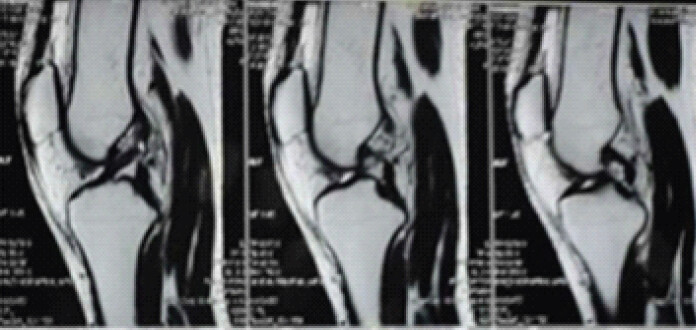
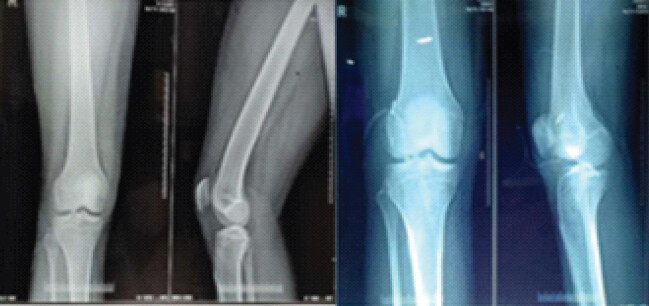
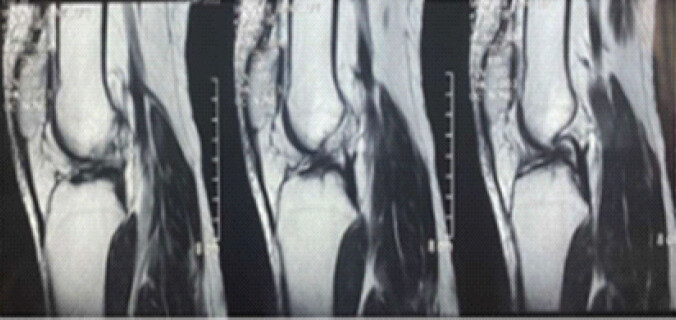
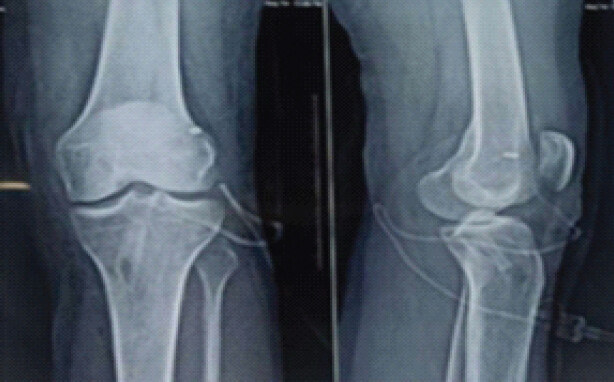
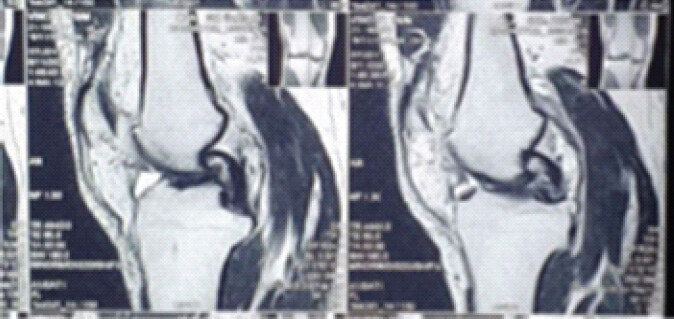
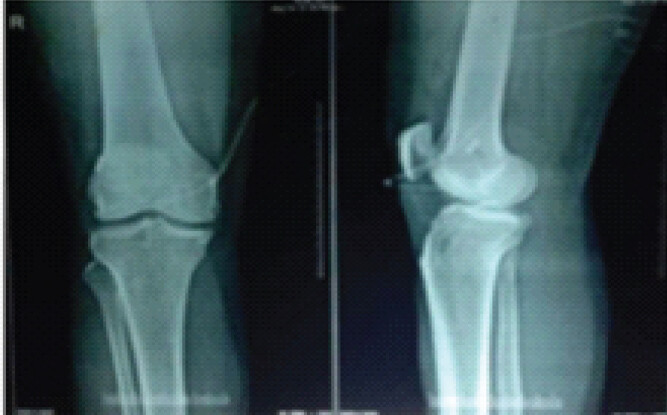
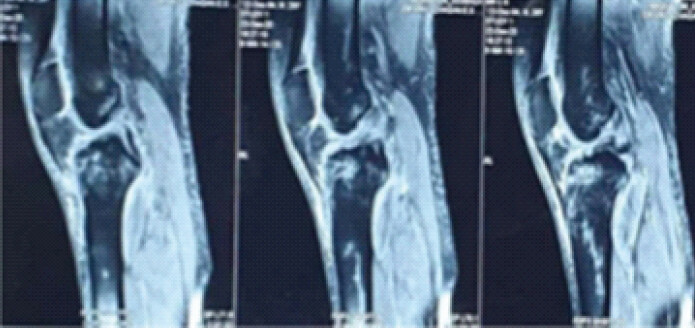
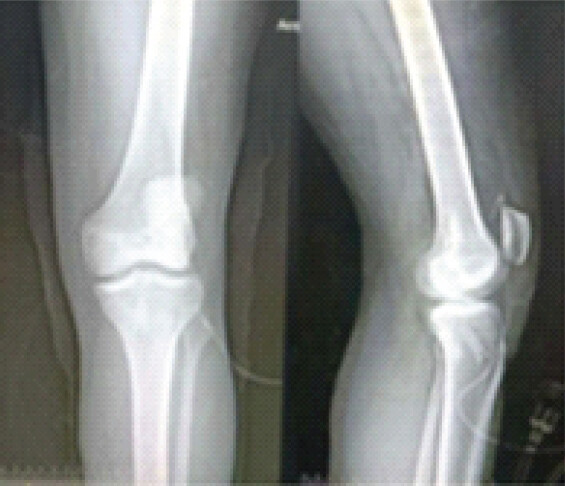
Case illustrations are shown in (Fig. 1–8).
Discussion
ACL reconstruction aims to restore knee stability, prevent secondary intra-articular damage, and enable patients to return to pre-injury activity levels. The choice of graft plays a critical role in determining post-operative outcomes and donor site morbidity.
In the present study, both hamstring tendon and peroneus longus tendon autografts demonstrated significant improvement in knee function following arthroscopic ACL reconstruction. At final follow-up, there was no statistically significant difference between the two groups in terms of IKDC and Tegner Lysholm scores, indicating that peroneus longus tendon autograft provides functional outcomes comparable to the traditionally used hamstring tendon autograft.
These findings are consistent with previous studies that reported satisfactory clinical outcomes with hamstring tendon autografts due to their adequate strength, ease of harvest, and reduced anterior knee pain when compared to bone–patellar tendon–bone grafts [9].
The increasing interest in peroneus longus tendon as an autograft is supported by biomechanical and clinical studies. Rudy et al. demonstrated that the tensile strength of the peroneus longus tendon is comparable to that of the hamstring tendon, making it a suitable graft choice for ACL reconstruction [13]. Similarly, Rhatomy et al. reported no significant difference in functional outcomes between peroneus longus and hamstring tendon grafts [11].
In the present study, early post-operative IKDC scores at 6 weeks were marginally better in the peroneus longus group. This may be attributed to preservation of hamstring muscle strength, which plays a crucial role in knee flexion and dynamic stabilization of the knee joint. Harvesting hamstring tendons has been associated with transient hamstring weakness, which can delay early rehabilitation [13,14].
Donor site morbidity is a major concern when introducing alternative graft options. In our study, donor site morbidity following peroneus longus tendon harvest was minimal and temporary, as evidenced by FADI scores returning to baseline by 6 months. This observation supports the findings of Angthong et al. and Xu et al., who reported preserved ankle function due to the compensatory action of the peroneus brevis muscle, which is the primary evertor of the ankle [12,15].
No long-term ankle instability, gait abnormalities, or functional limitations were observed in patients who underwent peroneus longus tendon harvest. This supports the anatomical and functional rationale that the peroneus brevis adequately compensates for the loss of the peroneus longus tendon.
The absence of significant differences in final functional outcomes between the two grafts suggests that peroneus longus tendon autograft can be considered a reliable alternative, particularly in cases where hamstring tendons are inadequate, previously harvested, or need to be preserved.
Conclusion
Peroneus longus tendon autograft is a safe, effective, and reliable alternative to hamstring tendon autograft for arthroscopic ACL reconstruction. It provides comparable functional outcomes with minimal donor site morbidity and can be considered especially in cases where hamstring tendons are inadequate or previously harvested.
Clinical Message
For patients requiring ACL reconstruction, the peroneus longus tendon represents a better alternative to the hamstring graft in terms of graft properties, harvesting time, donor site morbidities, and using a single tendon instead of two hamstring tendons.
Conflict of Interest:
Nil
Source of Support:
Nil
Consent:
The authors confirm that informed consent was obtained from the patient for publication of this article
How to Cite this Article
Manikkumaran A, Manikandan A, Vaishnav Kumar B. A Comparative Study of Functional Outcomes Following Arthroscopic Anterior Cruciate Ligament Reconstruction Using Hamstring Tendon versus Peroneus Longus Tendon Autograft. J Orthop Case Rep. 2026 November;16(11): 477-482. doi: 10.13107/jocr.2026.v16.i11.4530.
References
- Butler DL, Noyes FR, Grood ES. Ligamentous restraints to anterior-posterior drawer in the human knee. A biomechanical study. J Bone Joint Surg Am 1980;62:259-70. [Google Scholar] | [PubMed]
- Girgis FG, Marshall JL, Monajem A. The cruciate ligaments of the knee joint. Anatomical, functional and experimental analysis. Clin Orthop Relat Res 1975;106:216-31. [Google Scholar] | [PubMed]
- Amis AA, Dawkins GP. Functional anatomy of the anterior cruciate ligament. Fibre bundle actions related to ligament replacements and injuries. J Bone Joint Surg Br 1991;73:260-7. [Google Scholar] | [PubMed]
- Lohmander LS, Englund PM, Dahl LL, Roos EM. The long-term consequence of anterior cruciate ligament and meniscus injuries: Osteoarthritis. Am J Sports Med 2007;35:1756-69. [Google Scholar] | [PubMed]
- Shelbourne KD, Gray T. Results of anterior cruciate ligament reconstruction based on meniscus and articular cartilage status at the time of surgery. Five- to fifteen-year evaluations. Am J Sports Med 2000;28:446-52. [Google Scholar] | [PubMed]
- Fu FH, Bennett CH, Ma CB, Menetrey J, Lattermann C. Current trends in anterior cruciate ligament reconstruction. Part II. Operative procedures and clinical correlations. Am J Sports Med 2000;28:124-30. [Google Scholar] | [PubMed]
- Frank CB, Jackson DW. The science of reconstruction of the anterior cruciate ligament. J Bone J Surg Am 1997;79:1556-76. [Google Scholar] | [PubMed]
- Hardy A, Casabianca L, Andrieu K, Baverel L, Noailles T. Junior French Arthroscopy Society. Complications following harvesting of patellar tendon or hamstring tendon grafts for anterior cruciate ligament reconstruction: Systematic review of literature. Orthop Traumatol Surg Res 2017;103:S245-8. [Google Scholar] | [PubMed]
- Corry IS, Webb JM, Clingeleffer AJ, Pinczewski LA. Arthroscopic reconstruction of the anterior cruciate ligament. A comparison of patellar tendon autograft and four-strand hamstring tendon autograft. Am J Sports Med 1999;27:444-54. [Google Scholar] | [PubMed]
- Kerimoğlu S, Aynaci O, Saraçoğlu M, Aydin H, Turhan AU. Anterior cruciate ligament reconstruction with the peroneus longus tendon. Acta Orthop Traumatol Turc 2008;42:38-43. [Google Scholar] | [PubMed]
- Rhatomy S, Asikin AI, Wardani AE, Rukmoyo T, Lumban-Gaol I, Budhiparama NC. Peroneus longus autograft can be recommended as a superior graft to hamstring tendon in single-bundle ACL reconstruction. Knee Surg Sports Traumatol Arthrosc 2019;27:3552-9. [Google Scholar] | [PubMed]
- Angthong C, Chernchujit B, Apivatgaroon A, Chaijenkit K, Nualon P, Suchao-in K. The anterior cruciate ligament reconstruction with the peroneus longus tendon: A biomechanical and clinical evaluation of the donor ankle morbidity. J Med Assoc Thai 2015;98:555-60. [Google Scholar] | [PubMed]
- Rudy, Mustamsir E, Phatama KY. Tensile strength comparison between peroneus longus and hamstring tendons: A biomechanical study. Int J Surg Open 2017;9:41-4. [Google Scholar] | [PubMed]
- Williams BR, Ellis SJ, Deyer TW, Pavlov H, Deland JT. Reconstruction of the spring ligament using a peroneus longus autograft tendon transfer. Foot Ankle Int 2010;31:567-77. [Google Scholar] | [PubMed]
- Xu C, Zhao J, Xie G. Medial patella-femoral ligament reconstruction using the anterior half of the peroneus longus tendon as a combined procedure for recurrent patellar instability. Asia Pac J Sports Med Arthrosc Rehabil Technol 2016;4:21-6. [Google Scholar] | [PubMed]
© 2026 Journal of Orthopaedic Case Reports - Published by Indian Orthopaedic Research Group
About the Authors
-

A Manikkumaran
-

A Manikandan
-

B Vaishnav Kumar
Related Articles in Journal of Orthopaedic Case Reports
 July 1, 2026 Clinical and Donor-site Outcomes of Full-thickness Peroneus Longus Autograft in Arthroscopic Anterior Cruciate Ligament Reconstruction: A Prospective Indian Cohort Study
 May 1, 2026 Comparative Evaluation of Peroneus Longus Tendon and Hamstring Tendon Autografts in Primary Anterior Cruciate Ligament Reconstruction: A Randomized Controlled Trial
 November 1, 2024 Randomized Controlled Study Comparing Hamstring Graft and Peroneus Longus Tendon Graft in Arthroscopic ACL Reconstruction
 September 1, 2026 From Ankle to Knee: Donor-Site Morbidity after Peroneus Longus Tendon Graft for ACL Reconstruction Assessed by the Kitaoka Ankle-Hindfoot Score – A Prospective Cohort Study