


Introduction
Intertrochanteric femur fractures are common in older adults and are frequently associated with osteoporosis, frailty, and medical comorbidity [1,2,3,4,5,6,7,8,9,10,11,12,13]. Unstable and comminuted fracture patterns are particularly difficult to manage because loss of posteromedial support and poor bone quality compromise fixation. Mechanical complications after internal fixation may include excessive collapse, limb shortening, implant migration, and cut-out, while prolonged restricted mobility in this population contributes to deconditioning and medical complications.
Internal fixation remains the established treatment for most intertrochanteric fractures, and intramedullary devices, such as the proximal femoral nail and proximal femoral nail antirotation have shown biomechanical advantages over older extramedullary implants, particularly for unstable fracture patterns [14,15,16]. However, primary arthroplasty has been proposed for selected elderly patients with highly comminuted or unstable fractures when early weight-bearing is considered an important treatment objective. Cemented bipolar hemiarthroplasty provides immediate fixation of the femoral stem and avoids dependence on fracture healing for initial mechanical stability, which may be particularly relevant in patients unlikely to tolerate a period of protected weight-bearing [17,18,19].
Previous prospective studies have reported acceptable functional outcomes following cemented hemiarthroplasty for unstable intertrochanteric fractures, although the evidence remains limited and heterogeneous [19,20,21]. Randomized and comparative studies have reported early functional advantages of hemiarthroplasty over proximal femoral nailing in some elderly patients, with differences becoming less apparent with longer follow-up [20,22,23,24]. The role of primary hemiarthroplasty in this setting therefore remains controversial, with limited large-scale data available.
The present study evaluated functional outcome, perioperative parameters, complications, limb shortening, and time to full weight-bearing following primary cemented bipolar hemiarthroplasty in elderly patients with comminuted intertrochanteric fractures.
Materials and Methods
Study design and setting
This prospective observational study was conducted in the Department of Orthopaedics, Ballari Medical College and Research Centre, Karnataka, a tertiary-care teaching hospital. Patient recruitment was conducted over 18 months, from May 2023 to February 2025, with post-operative follow-up extending to 6 months.
Participants
Thirty patients aged 60 years or older with comminuted intertrochanteric femur fractures were enrolled. Fractures were classified according to the Boyd and Griffin classification. Patients were included if they were aged 60 years or older, were independently ambulatory before injury, and had a fracture classified as Boyd and Griffin type II or III. Patients younger than 60 years, those who were non-ambulatory before injury, those considered unfit for surgery, and patients with pathological or open fractures were excluded. All eligible patients received the same treatment; there was no internal-fixation comparison group.
Surgical technique
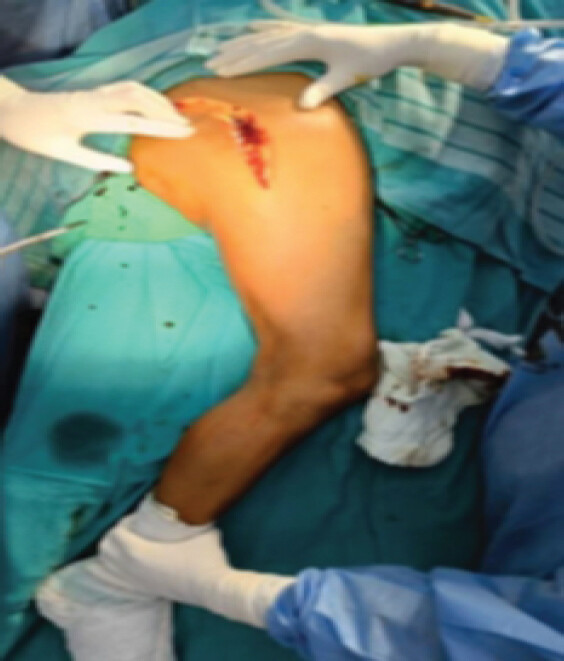
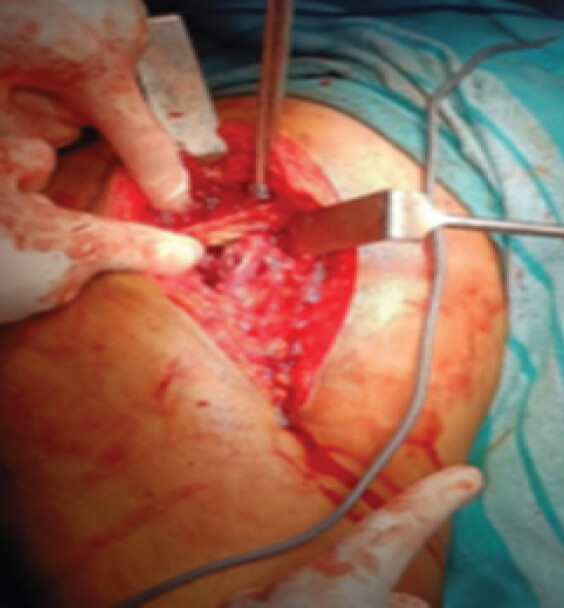
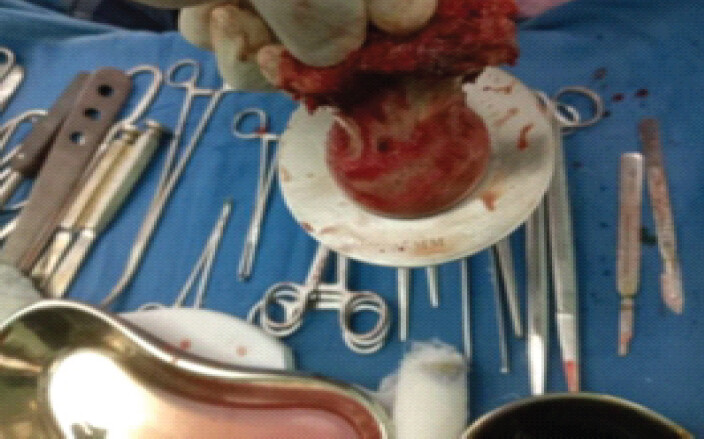
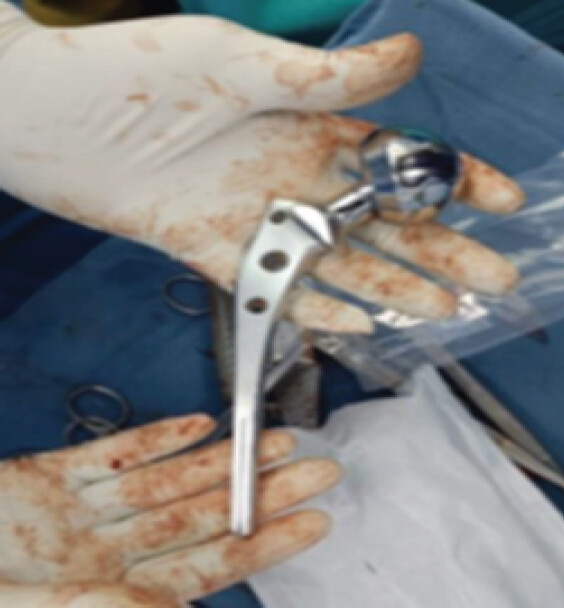
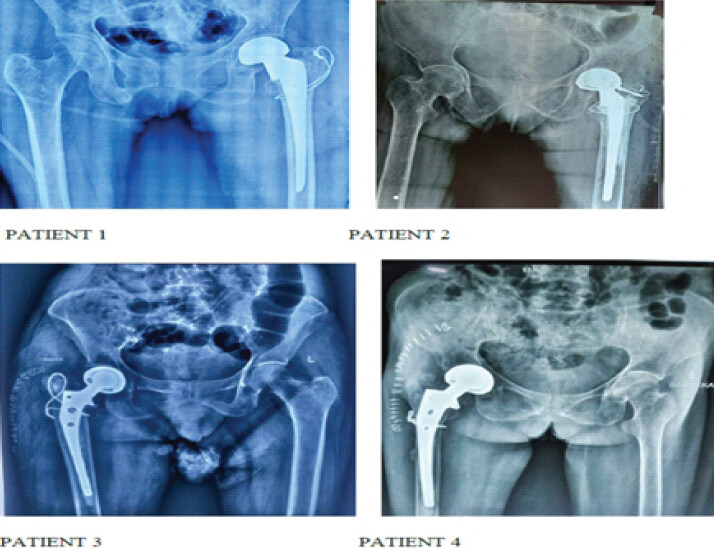
All patients underwent primary cemented bipolar hemiarthroplasty under spinal or general anesthesia through a posterolateral approach (Figs. 1 and 2). The fractured femoral head was excised (Fig. 3) and the femoral canal was prepared by sequential broaching. A cemented femoral stem was inserted after canal preparation, and the bipolar head was assembled and reduced (Fig. 4). The articular capsule and short external rotators were repaired before closure, and post-operative radiographs were obtained to confirm implant position (Fig. 5).
Post-operative protocol
Physiotherapy and mobilization began on the 1st post-operative day, with weight-bearing as tolerated using appropriate support. Analgesia was multimodal according to clinical requirement. Antibiotic prophylaxis was continued for 72 h, and low-molecular-weight heparin was administered for thromboprophylaxis for 2 weeks per protocol.
Outcome assessment
Patients were evaluated clinically and radiographically at 2 weeks, 1 month, 4 months, and 6 months. Functional outcome was assessed using the Harris Hip Score. Operative time, estimated blood loss, transfusion requirement, post-operative complications, limb shortening, and time to full weight-bearing were recorded.
Statistical analysis
Descriptive statistics summarized demographic and clinical characteristics; categorical variables were expressed as frequencies and percentages, and continuous variables as means with standard deviations. Comparisons between patients with and without recorded post-operative complications were performed using independent-samples testing. A P < 0.05 was considered statistically significant.
Ethical considerations
The study was approved by the Institutional Ethics Committee, and written informed consent was obtained from all participants or their legal guardians before enrolment. The study was conducted in accordance with the principles of the Declaration of Helsinki.
Results
Thirty patients were included in the study; the mean age was 71.3 years, with 15 males and 15 females. The largest age group was 66–70 years (13 patients, 43.3%), followed by the 60–65-year group (7 patients, 23.3%). The most common mechanism of injury was a fall while walking (23 patients, 76.7%). Eighteen fractures (60%) involved the right side. Twenty-seven patients (90%) had Boyd and Griffin type II fractures and three (10%) had type III fractures. Diabetes mellitus was present in 10 patients (33.3%), hypertension in eight (26.7%), and both conditions in seven (23.3%); five patients (16.7%) had no recorded comorbidity. Demographic and clinical characteristics are summarized in Table 1.
Demographic and clinical characteristics of the participants.
| Characteristic | n | % |
|---|---|---|
| Mean age (years) | 71.3 | — |
| Sex—Male | 15 | 50 |
| Sex—Female | 15 | 50 |
| Age 60–65 years | 7 | 23.3 |
| Age 66–70 years | 13 | 43.3 |
| Age 71–75 years | 4 | 13.4 |
| Age 76–80 years | 3 | 10 |
| Age 81–85 years | 3 | 10 |
| Mechanism — Fall while walking | 23 | 76.7 |
| Mechanism — Fall from cot | 4 | 13.3 |
| Mechanism — Fall from bicycle | 2 | 6.7 |
| Mechanism — Fall from motorcycle | 1 | 3.3 |
| Side — Right | 18 | 60 |
| Side — Left | 12 | 40 |
| Boyd and Griffin Type II | 27 | 90 |
| Boyd and Griffin Type III | 3 | 10 |
| Diabetes mellitus | 10 | 33.3 |
| Hypertension | 8 | 26.7 |
| Diabetes and hypertension | 7 | 23.3 |
| No recorded comorbidity | 5 | 16.7 |
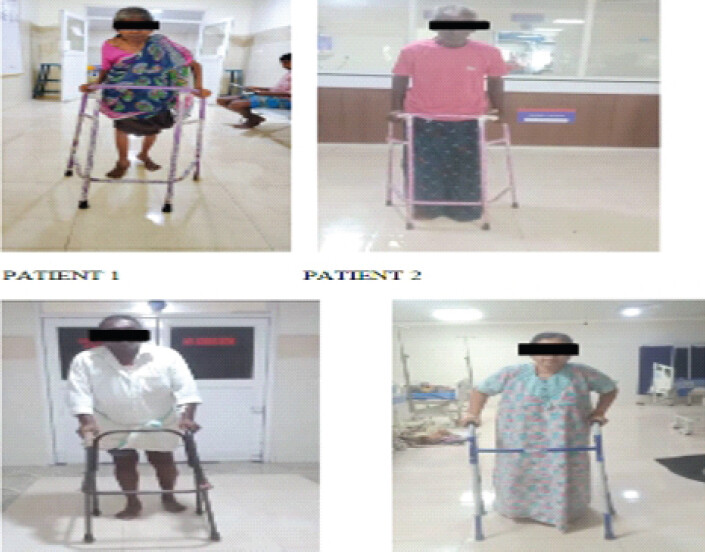
The mean operative time was 84.07 ± 10.26 min, and mean estimated blood loss was 287.67 ± 110.63 mL (range 100–450 mL); 14 patients (46.7%) required blood transfusion. Post-operative complications were recorded in six patients (20%): Abductor weakness in five (16.7%) and superficial infection in one (3.3%). Mean limb shortening was 0.98 ± 0.58 cm, with 86.7% of patients having 1 cm or less of shortening. Mean time to full weight-bearing was 6.21 ± 1.47 days; patients who developed complications achieved full weight-bearing earlier (5.33 ± 0.82 days) than those without complications (6.44 ± 1.53 days). Post-operative radiographs and clinical photographs of patients mobilizing with walker support are shown in Fig. 5 and 6.
At final functional assessment, four patients (13.3%) had excellent, nine (30%) good, eleven (36.7%) fair, and two (6.7%) poor outcomes by Harris Hip Score category; four patients (13.3%) died during follow-up. Patients with recorded complications had significantly greater mean blood loss (375.0 ± 51.28 mL vs. 265.83 ± 111.23 mL, P = 0.028) and were significantly more likely to require transfusion (P = 0.046). Differences in age, operative time, limb shortening, stem position, and functional outcome category between the two groups were not statistically significant. Outcome parameters are summarized in Table 2.
Outcome parameters
| Outcome parameter | n | % |
|---|---|---|
| Mean operative time (min) | 84.07±10.26 | — |
| Mean estimated blood loss (mL) | 287.67±110.63 | — |
| Blood transfusion required | 14 | 46.7 |
| Post-operative complications (any) | 6 | 20 |
| Abductor weakness | 5 | 16.7 |
| Superficial infection | 1 | 3.3 |
| Mean limb shortening (cm) | 0.98±0.58 | — |
| Mean time to full weight-bearing (days) | 6.21±1.47 | — |
| Harris Hip Score — Excellent | 4 | 13.3 |
| Harris Hip Score — Good | 9 | 30 |
| Harris Hip Score — Fair | 11 | 36.7 |
| Harris Hip Score — Poor | 2 | 6.7 |
| Mortality during follow-up | 4 | 13.3 |
Given the small sample size and the absence of a comparison group, the study did not identify a reliable independent predictor of functional outcome or complications; exploratory subgroup analyses by age, fracture type, and sex were limited by small numbers and were interpreted cautiously.
Discussion
The principal finding of this study was that primary cemented bipolar hemiarthroplasty permitted early post-operative mobilization in a selected group of elderly patients with comminuted intertrochanteric fractures, with a mean time to full weight-bearing of 6.21 days and predominantly fair-to-good functional outcomes at final assessment.
The rationale for primary arthroplasty in unstable intertrochanteric fractures differs from its established role in displaced femoral neck fractures. In a highly comminuted fracture with compromised bone stock, internal fixation must maintain alignment while the fracture heals, whereas cemented hemiarthroplasty transfers load through the prosthetic stem and provides immediate femoral stability — an advantage that may be particularly relevant in elderly patients unlikely to tolerate prolonged protected weight-bearing [16,17,18,19].
The present results are broadly consistent with prior prospective work evaluating cemented hemiarthroplasty for unstable intertrochanteric fractures, which has similarly reported good-to-excellent functional recovery in a majority of patients and a comparable profile of post-operative complications, including abductor weakness and superficial infection. A prospective randomized study comparing proximal femoral nailing with cemented bipolar hemiarthroplasty in elderly patients found that hemiarthroplasty was associated with better Harris Hip Scores during the first three post-operative months, although this early advantage diminished with longer follow-up [20,21,22,24]. This observation is relevant because the principal benefit of arthroplasty in this setting may be early functional recovery rather than a proven long-term superiority over fixation.
The mean blood loss in this series was 287.67 mL, and 46.7% of patients required transfusion; blood loss was significantly greater among patients who developed post-operative complications. This association should not be interpreted as evidence that blood loss caused the complications, given the observational design and small complication group, but it does emphasize the importance of perioperative blood management in elderly arthroplasty patients.
Abductor weakness was the most frequent post-operative complication (16.7%), which may be clinically relevant given the contribution of the abductor mechanism to gait stability and functional recovery after hip surgery; this incidence is directionally similar to that reported in other small prospective series of cemented hemiarthroplasty for comminuted intertrochanteric fractures.
Limb shortening was generally limited, with 86.7% of patients having 1 cm or less. A systematic review comparing cemented and cementless bipolar hemiarthroplasty for unstable intertrochanteric fractures found similar overall complication and mortality rates between the two approaches but reported a higher rate of limb-length discrepancy greater than 1 cm with cemented stems, consistent with the pattern observed in the present cohort.
The mortality rate in this study was 13.3% during follow-up. This is important when interpreting the functional results, because mortality reduces the number of patients available for functional assessment; the proportion of survivors achieving each Harris Hip Score category should therefore not be interpreted as a treatment success rate for the entire enrolled cohort.
This study has several limitations. First, the sample size was small (n = 30). Second, there was no internal-fixation control group, preventing direct comparison with contemporary fixation methods. Third, the study was conducted at a single center using purposive sampling, which limits generalizability. Fourth, follow-up was limited to 6 months, so late complications, such as acetabular erosion, stem loosening, or late functional decline could not be assessed. Fifth, the study did not include a robust multivariable analysis of factors associated with complications or functional outcome. Finally, an objective bone-density measurement was not obtained for every participant, although the cohort was clinically characterized as elderly and at high risk of osteoporosis; findings should therefore be generalized to these selected elderly fracture population rather than to a radiologically confirmed osteoporotic population.
Overall, these findings suggest that cemented bipolar hemiarthroplasty is a feasible treatment option for selected elderly patients with comminuted intertrochanteric fractures when early post-operative weight-bearing is an important objective, though the study does not establish its superiority over internal fixation.
Conclusion
Primary cemented bipolar hemiarthroplasty provided early weight-bearing and predominantly fair-to-good functional outcomes in this selected cohort of elderly patients with comminuted intertrochanteric femur fractures. The mean time to full weight-bearing was 6.21 days, the overall post-operative complication rate was 20%, and mortality during follow-up was 13.3%. Greater blood loss and transfusion requirement were associated with the occurrence of post-operative complications. Because of the small sample size, absence of a comparison group, and limited follow-up duration, these findings should be interpreted as observational evidence supporting the feasibility and early functional benefit of hemiarthroplasty rather than proof of its superiority over internal fixation.
Clinical Message
Primary cemented bipolar hemiarthroplasty may be considered in carefully selected elderly patients with comminuted intertrochanteric fractures when stable reconstruction and early post-operative weight-bearing are important treatment goals.
Conflict of Interest:
Nil
Source of Support:
Nil
Consent
The authors confirm that informed consent was obtained from the patient for publication of this article
How to Cite this Article
Kumar ASK, Vamshi BS, Chickle B. Functional Outcomes of Primary Cemented Bipolar Hemiarthroplasty for Comminuted Intertrochanteric Femur Fractures in Elderly Patients: A Prospective Study. J Orthop Case Rep. 2026 November;16(11):483-489. doi: 10.13107/jocr.2026.v16.i11.8532.
References
- Kannus P, Parkkari J, Niemi S, Palvanen M. Epidemiology of osteoporotic pelvic fractures in elderly people in Finland: Sharp increase in 1970-1997 and alarming projections for the new millennium. Osteoporos Int 2000;11:443-8. [Google Scholar] | [PubMed]
- Cummings SR, Melton LJ. Epidemiology and outcomes of osteoporotic fractures. Lancet 2002;359:1761-7. [Google Scholar] | [PubMed]
- Cooper C, Campion G, Melton LJ. Hip fractures in the elderly: A world-wide projection. Osteoporos Int 1992;2:285-9. [Google Scholar] | [PubMed]
- Johnell O, Kanis JA. An estimate of the worldwide prevalence, mortality and disability associated with hip fracture. Osteoporos Int 2004;15:897-902. [Google Scholar] | [PubMed]
- Leslie WD, O'Donnell S, Jean S, Lagacé C, Walsh P, Bancej C. Trends in hip fracture rates in Canada. JAMA 2009;302:883-9. [Google Scholar] | [PubMed]
- Parkkari J, Kannus P, Palvanen M, Natri A, Vuori I, Järvinen M. Major decrease in incidence of hip fractures in Finland. Bone 1999;25:257-60. [Google Scholar] | [PubMed]
- Kanis JA, Johnell O, De Laet C, Johansson H, Odén A, Delmas P. A meta-analysis of previous fracture and subsequent fracture risk. Bone 2004;35:375-82. [Google Scholar] | [PubMed]
- Rizzoli R, Reginster JY, Boonen S, Brandi ML, Burlet N, Delmas P. Adverse effects of the diseases and medications on bone metabolism in the elderly. Osteoporos Int 2012;23:891-910. [Google Scholar] | [PubMed]
- Kanis JA, Johnell O, Oden A, Johansson H, De Laet C, Eisman JA. The impact of risk factors on fracture risk: Results from the meta-analysis of the international osteoporosis risk factor study. Osteoporos Int 2005;16:1013-26. [Google Scholar] | [PubMed]
- Johnell O, Kanis JA, Oden A, Johansson H, De Laet C, Delmas P. Predictive value of BMD for hip and other fractures. J Bone Miner Res 2005;20:1185-94. [Google Scholar] | [PubMed]
- Lips P. Vitamin D deficiency and secondary hyperparathyroidism in the elderly: Consequences for bone loss and fractures and therapeutic implications. Endocr Rev 2001;22:477-501. [Google Scholar] | [PubMed]
- Neumann PJ, Goldie SJ, Weinstein MC. The cost-effectiveness of osteoporosis screening and hormone replacement therapy. Obstet Gynecol 2000;95:24-30. [Google Scholar] | [PubMed]
- Stevens JA, Rizzo JA. Preventing falls among older adults: Cost-effectiveness of a multifactorial intervention in a nursing home setting. J Am Geriatr Soc 2006;54:846-52. [Google Scholar] | [PubMed]
- Evans EM. The treatment of trochanteric fractures of the femur. J Bone Joint Surg Br 1949;31B:190-203. [Google Scholar] | [PubMed]
- Parker MJ, Handoll HH. Gamma and other cephalocondylic intramedullary nails versus extramedullary implants for extracapsular hip fractures in adults. Cochrane Database Syst Rev 2008;3:CD000093. [Google Scholar] | [PubMed]
- Kaufer H. Mechanics of the treatment of hip injuries. Clin Orthop Relat Res 1980;146:53-61. [Google Scholar] | [PubMed]
- Boopalan PR, Oh JK, Kim TY, Oh CW. Proximal femoral nail in intertrochanteric fractures-problems and complications. J Orthop Trauma 2012;26:e153-8. [Google Scholar] | [PubMed]
- Haidukewych GJ, Israel TA, Berry DJ. Long-term survival of cemented femoral components in hip arthroplasty for fractures of the femoral neck. Clin Orthop Relat Res 2002;403:100-5. [Google Scholar] | [PubMed]
- Stern MB, Angerman A. Comminuted intertrochanteric fractures treated with a bipolar prosthesis. Clin Orthop Relat Res 1987;218:75-80. [Google Scholar] | [PubMed]
- Roy S, Moaiyadi A, Salunkhe P, Vaidya SP, Warade N, Badole CM. A comparative study evaluating the outcomes of primary cemented bipolar hemiarthroplasty versus proximal femoral nail osteosynthesis for unstable intertrochanteric femur fractures in the elderly patient. J Orthop Case Rep 2024;14:225-31. [Google Scholar] | [PubMed]
- Jayaram G, Sudhakar MV, Kumar RA, Jijulal CU. Study of outcomes of cemented hemiarthroplasty for comminuted intertrochanteric fractures in the elderly. J Orthop 2023;41:67-72. [Google Scholar] | [PubMed]
- Lee YK, Ha YC, Chang BK, Kim KC, Koo KH. Cemented bipolar hemiarthroplasty compared with intramedullary fixation of unstable intertrochanteric fractures: A prospective randomized study. J Bone Joint Surg Am 2013;95:885-92. [Google Scholar] | [PubMed]
- Rahuman PR, Syed NH, Ebid KE, Zain MR. Bipolar hemiarthroplasty versus proximal femoral nailing in elderly patients with unstable intertrochanteric fractures: A systematic review and meta-analysis. Indian J Orthop 2026;60:1429-42. [Google Scholar] | [PubMed]
- Hongku N, Woratanarat P, Nitiwarangkul L, Rattanasiri S, Thakkinstian A. Fracture fixation versus hemiarthroplasty for unstable intertrochanteric fractures in elderly patients: A systematic review and network meta-analysis of randomized controlled trials. Orthop Traumatol Surg Res 2022;108:102838. [Google Scholar] | [PubMed]
© 2026 Journal of Orthopaedic Case Reports - Published by Indian Orthopaedic Research Group
About the Authors
-

A S Kiran Kumar
-

B Sai Vamshi
-

Bhushan Chickle
Related Articles in Journal of Orthopaedic Case Reports
 March 1, 2025 Evaluation of Functional and Radiological Outcome of Different Cephalomedullary Nail Designs in Intertrochanteric Fractures of Femur
 November 1, 2026 Positioning and Traction Application Technique in Patient with Below Knee Amputation Using the Patients Own Prosthesis for Intertrochanteric Femur Fracture Fixation Surgery: A Case Report with Review of Literature
 November 1, 2026 Retrieval of a Broken Cannulated Drill Bit from the Femoral Neck during Proximal Femoral Nailing: Case Report of a Novel Lever Technique Using a Depth Gauge
 October 1, 2026 Dual Mobility Total Hip Arthroplasty for Recurrent Dislocation After Femoral Neck Fracture in an Elderly Patient: A Case Report