


Introduction
The rotator cuff consists of four key musculotendinous components – the supraspinatus, the infraspinatus, the subscapularis, and the teres minor – that dynamically stabilize the glenohumeral joint [1]. Rotator cuff tears represent one of the most common causes of shoulder pain and functional disability in middle-aged and elderly patients [1,2]. Among them, isolated supraspinatus tears (35%) are the most prevalent, followed by combined supraspinatus and infraspinatus tendon tears (20–35%) [2]. Rotator cuff tears are typically progressive, as repetitive microtrauma and associated comorbidities can cause partial-thickness tears to propagate into full-thickness tears [2,3]. Without timely surgical intervention, these lesions may lead to irreversible rotator cuff arthropathy, tendon retraction [4], muscle atrophy, and advanced fatty infiltration (Goutallier grading) [5].
Arthroscopic rotator cuff repair (ARCR) has become the treatment of choice for symptomatic tears, while conservative management is generally reserved for low-demand, elderly patients with severe muscle degeneration [2,3]. Degenerative muscle changes are widely classified using the Goutallier grading system [5]. These structural alterations affect tendon characteristics and substantially diminish healing potential at the footprint [3,6]. Proper pre-operative staging using magnetic resonance imaging (MRI) is therefore critical for formulating an accurate surgical plan [7]. The primary goals of ARCR are the alleviation of pain and early functional restoration, with surgical modalities predominantly encompassing single-row and double-row repair constructs [8,9].
Double-row repairs provide a robust biomechanical construct with broader footprint coverage, but they entail increased operative time and substantially higher implant costs [8,10]. Single-row repair provides a more cost-effective modality and consistently yields comparable clinical and functional outcomes [9,11,12]. In resource-limited settings, single-row repair becomes the more practical and viable option [13]. Despite the widespread adoption of single-row ARCR in public-sector and resource-constrained hospitals across India, patients frequently present late with moderate-to-severe muscle degeneration (Goutallier grade II and III) [13]. While biomechanical studies suggest double-row constructs may offer superior footprint restoration in compromised tendons, doubling the anchor count imposes a prohibitive financial burden on lower-income patients. Furthermore, there is a paucity of clinical and radiological data evaluating whether single-row repair can achieve durable functional recovery and acceptable structural healing in tendons already compromised by Goutallier grade II or III fatty infiltration within the Indian population [13,14].
The present study evaluates the clinical and functional outcomes of arthroscopic single-row repair in patients with full-thickness supraspinatus and/or infraspinatus tears with Goutallier grade II or III fatty infiltration and objectively assesses structural integrity at mid-term follow-up using high-resolution ultrasound (HRUS) [15].
Aims and Objectives
-
1. To evaluate the clinical and functional outcomes of arthroscopic single-row repair in patients with full-thickness supraspinatus and/or infraspinatus tears with Goutallier grade II or III fatty infiltration.
-
2. To objectively assess the structural integrity of the repaired tendon at a minimum of 1 year post-operatively using high-resolution ultrasound (HRUS).
Materials and Methods
This ambispective cohort study was conducted in the Department of Orthopaedics at Nizam’s Institute of Medical Sciences, Hyderabad. Institutional Ethics Committee clearance was obtained before study commencement (EC Approval No.: 2068/2026, Date: May 01, 2026). The study evaluated the clinical and structural outcomes of arthroscopic single-row rotator cuff repairs by combining a retrospective review of historical cases with a prospective longitudinal follow-up.
Sample size calculation
This ambispective cohort study included patients who underwent arthroscopic single-row rotator cuff repair at our institution between May 2023 and April 2025 and met the eligibility criteria. Of the 42 eligible patients identified during the study period, 30 completed a minimum of 1 year of clinical and radiological follow-up, including high-resolution ultrasonography (HRUS), and were included in the final analysis. The final sample size was therefore determined by the number of eligible patients with available follow-up data.
The primary clinical outcome was the change in the American Shoulder and Elbow Surgeons (ASES) score and University of California, Los Angeles (UCLA) score between the pre- and post-operative assessments. Structural integrity was evaluated as a secondary outcome using HRUS. Given the retrospective determination of the final sample size, no prospective sample-size calculation was used to determine patient enrolment.
Patient selection
Patients with full-thickness isolated supraspinatus tears or combined supraspinatus and infraspinatus tears who were operated on between May 2023 and April 2025 were identified from clinical records and invited to the outpatient department for follow-up evaluation. Out of 42 patients operated on at our institute during this period, 30 patients returned for follow-up at a minimum of 1 year post-operatively. All participating patients had either Goutallier grade II or grade III fatty infiltration on pre-operative MRI. Written informed consent was obtained from all participants before enrollment.
Inclusion criteria
Patients aged ≥18 years presenting with symptomatic, full-thickness isolated supraspinatus tears or combined supraspinatus and infraspinatus tears confirmed on pre-operative MRI; pre-operative MRI demonstrating moderate fatty infiltration classified as Goutallier grade II (less fat than muscle) or grade III (equal fat and muscle) [5]; failure of structured conservative management (non-steroidal anti-inflammatory drugs, activity modification, and supervised physical therapy) for at least 3 months before surgery; and completion of a minimum post-operative follow-up of 12 months with both clinical scoring and HRUS structural evaluation.
Exclusion criteria
Partial-thickness rotator cuff tears or isolated subscapularis tears; normal/mild muscle quality (Goutallier grade 0 or I) or severe end-stage fatty degeneration (Goutallier grade IV); massive, irreparable rotator cuff tears with fixed retraction to the glenoid rim or severe cuff tear arthropathy (Hamada grade ≥3); concurrent advanced glenohumeral osteoarthritis, adhesive capsulitis refractory to release, calcific tendinitis, or active/prior shoulder infection; and history of previous fractures or surgical interventions on the ipsilateral shoulder.
Surgical technique
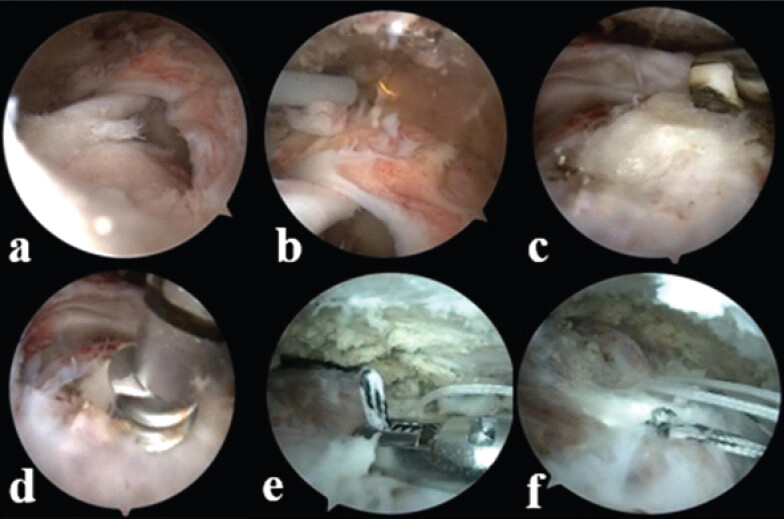
All surgical procedures were performed by a single experienced surgeon under combined general anesthesia and interscalene regional block in the lateral decubitus position. Diagnostic arthroscopy was carried out using standard posterior and anterior portals to confirm tear morphology and evaluate associated intra-articular pathology. Subacromial bursectomy and decompression were performed in all cases. The torn edges of the tendon were debrided and freshened to healthy tissue. The footprint at the greater tuberosity was identified and prepared using a motorized shaver and radiofrequency ablator. A pilot hole was created using an awl. Depending on tear configuration, 5.0-mm double-loaded suture anchors or 5.5-mm triple-loaded suture anchors were placed. Suture bites were passed through the torn tendon at appropriate intervals using a suture shuttling device, and simple sliding knots were secured to complete the repair. Concomitant procedures, such as acromioplasty or biceps tenotomy/tenodesis, were performed according to intraoperative pathology (Fig. 1).
Post-operative rehabilitation
Post-operative rehabilitation was identical for all patients. Strict immobilization in a shoulder abduction brace was maintained until suture removal (0–2 weeks). Thereafter, active-assisted range of motion exercises were initiated with the goal of regaining full passive motion by 4 weeks. During weeks 4–6, patients progressed to overhead active range of motion exercises. Targeted rotator cuff strengthening exercises were introduced between 8 and 10 weeks. Return to heavy manual labor or overhead sports was restricted until 6 months post-operatively.
Data collection and outcome measures
Functional outcomes were assessed using validated patient-reported scoring systems, including the ASES score and the UCLA score [16,17]. Pre- and post-operative assessments documented visual analog scale pain scores, active shoulder range of motion, activities of daily living performance, muscle strength testing, and provocative clinical tests (Jobe’s empty-can test, Neer impingement sign, Gerber lift-off test, and Hornblower test). Structural integrity was assessed by an independent musculoskeletal radiologist using HRUS at the follow-up visit [15].
Statistical analysis
Continuous variables are presented as medians and interquartile ranges (IQR). Categorical variables are expressed as numbers and percentages. Pre- and post-operative ASES and UCLA scores were compared using the Wilcoxon signed-rank test. Associations between clinical variables and structural re-tears were analyzed using the Fisher exact test or Mann-Whitney U test as appropriate. P > 0.05 were considered not significant, P ≤ 0.05 were considered significant, and P < 0.01 were considered highly significant.
Results
Patient characteristics
This study included 30 patients who met the inclusion criteria and underwent arthroscopic single-row repair. The median follow-up duration was 20 months (IQR 16–28.75). The median age was 52 years (IQR 47.5–55). Right-sided (dominant) tears accounted for 80.0% of cases. A male predominance of 22 patients (73.3%) was noted. The duration from symptom onset ranged from 3 to 12 months (median 3.5 months, IQR 3–6). Baseline demographic and clinical data are presented in Table 1 and Fig. 2.
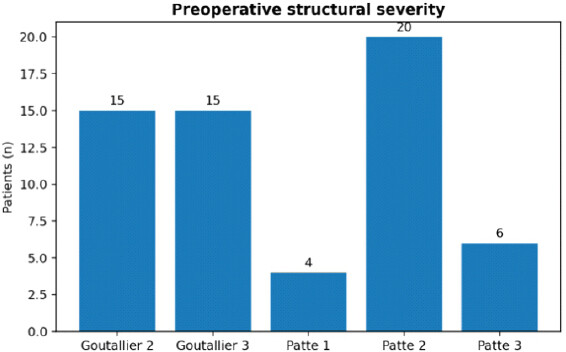
Demographic and baseline clinical characteristics of the study cohort (n=30)
| Parameter | Result |
|---|---|
| Sample size | 30 patients |
| Age | Median 52 years (IQR 47.5–55) |
| Male sex | 22 (73.3%) |
| Right-sided tear | 24 (80.0%) |
| Heavy/overhead activity | 19 (63.3%) |
| Diabetes mellitus | 8 (26.7%) |
| Goutallier grade II/III | 15 (50.0%)/15 (50.0%) |
| Patte grade I/II/III | 4 (13.3%)/20 (66.7%)/6 (20.0%) |
| Symptom duration | Median 3.5 months (IQR 3–6) |
| Follow-up duration | Median 20 months (IQR 16–28.75) |
IQR: Interquartile ranges
Functional outcomes
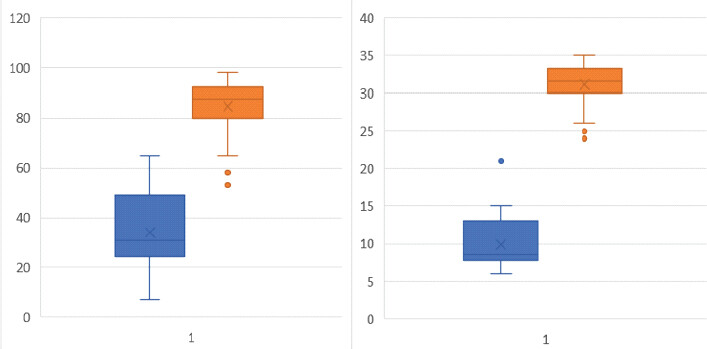
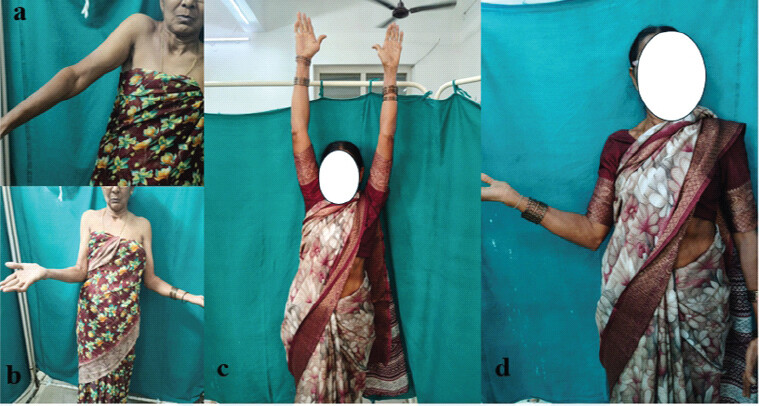
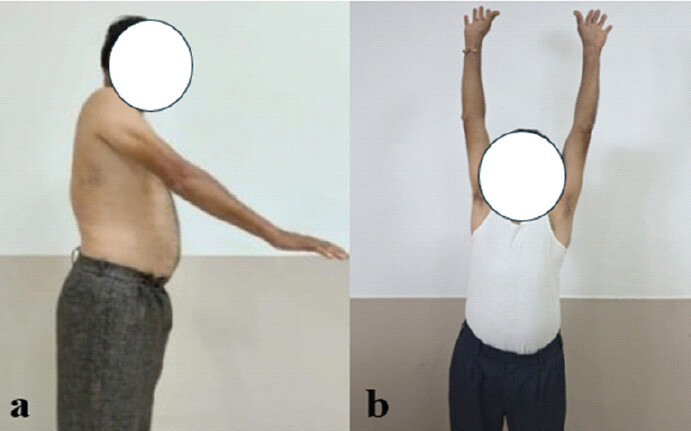
There was substantial improvement in both patient-reported outcome measures. The median ASES score increased from 31 (IQR 25–46.5) pre-operatively to 87.5 (IQR 80–91.5) post-operatively, while the median UCLA score increased from 8.5 (IQR 8–12.5) to 31.5 (IQR 30–33). Both improvements were statistically significant (Wilcoxon signed-rank test, P < 0.001; Table 2, Figs. 3, 4, 5).
Functional outcomes before and after arthroscopic single-row repair (n=30)
| Outcome measure | Pre-operative median (IQR) | Post-operative median (IQR) | Median change | P-value |
|---|---|---|---|---|
| ASES score | 31 (25–46.5) | 87.5 (80–91.5) | 56.5 | <0.001 |
| UCLA score | 8.5 (8–12.5) | 31.5 (30–33) | 23 | <0.001 |
ASES: American Shoulder and Elbow Surgeons, UCLA: University of California, Los Angeles, IQR: Interquartile ranges
Structural outcomes
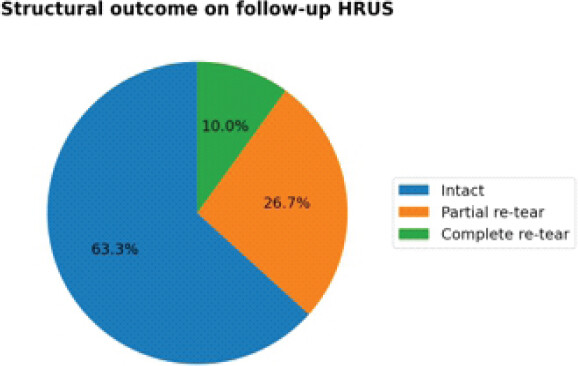
At follow-up HRUS examination, 19 patients (63.3%) had an intact repair, and 11 patients (36.7%) had a re-tear. Of the 11 re-tears, 8 (72.7%) were partial-thickness and 3 (27.3%) were complete full-thickness re-tears with medial retraction of the torn tendon (Fig. 6) [15]. Post-operative functional scores did not differ significantly between patients with intact repairs and those with re-tears (median ASES: 88 vs. 85; median UCLA: 32 vs. 31, respectively).
Factors associated with structural re-tear
Univariate analysis was conducted to determine potential clinical and demographic factors associated with structural re-tear. None of the evaluated factors showed a statistically significant association with repair failure (Table 3).
Factors evaluated for association with structural re-tear (n=30)
| Factor | Association with re-tear | P-value |
|---|---|---|
| Repair extent | Not significant | 0.425 |
| Diabetes mellitus | Not significant | 1 |
| Heavy/overhead activity | Not significant | 0.238 |
| Goutallier grade | Not significant | 1 |
| Age | Not significant | 0.253 |
| Symptom duration | Not significant | 0.794 |
| Follow-up duration | Not significant | 0.202 |
Post-operative clinical examination
The empty-can and Neer tests were negative in 90.0% and 83.3% of patients, respectively (Table 4). Positive findings were more commonly observed with the lift-off and Hornblower tests. In addition, supraspinatus power demonstrated a clinically and statistically significant association with structural integrity: Re-tears occurred in 80.0% of patients with grade 3/5 power, compared with 38.5% with grade 4/5 power and 16.7% with grade 5/5 power (P = 0.022).
Post-operative clinical examination findings (n=30)
| Clinical test | Negative findings (%) | Positive findings (%) |
|---|---|---|
| Empty-can test | 27 (90.0) | 3 (10.0) |
| Neer impingement test | 25 (83.%) | 5 (16.7) |
Discussion
Rotator cuff tears are the most common cause of persistent pain and functional impairment in the shoulder joint [1,2]. In modern orthopedic practice, ARCR has established itself as the gold standard modality of treatment [2,8]. Two primary surgical techniques are widely utilized: Single-row and double-row repair constructs [8,9,10,11]. In our setting, arthroscopic single-row repair is routinely performed, primarily driven by resource constraints, socioeconomic factors, and delayed presentation, which frequently contributes to tendon retraction and fatty infiltration [13,14]. Our findings demonstrate that despite moderate fatty infiltration (Goutallier grade II or III), arthroscopic single-row repair yields substantial and durable functional recovery [1,5,8,9,10,11,12,14].
The pivotal finding of this investigation was that patients achieved marked functional improvement following arthroscopic single-row rotator cuff repair despite a relatively high structural re-tear rate. In our cohort of 30 patients, the median ASES score improved markedly from 31 pre-operatively to 87.5 post-operatively, and the median UCLA score improved from 8.5 to 31.5, with both changes achieving high statistical significance (P < 0.001).
However, structural outcomes were less favorable. HRUS demonstrated an intact repair in 63.3% of patients and a structural re-tear in 36.7%, including 8 partial-thickness and 3 complete re-tears. Delayed clinical presentation along with moderate fatty infiltration may represent major contributing factors to this re-tear rate [6,18,19]. Half of our cohort had Goutallier grade III fatty infiltration, and 86.7% exhibited Patte grade II or III tendon retraction. Nevertheless, the re-tear rate observed in our series was lower than that reported in several landmark studies, such as DeHaan et al., who reported a re-tear rate of 43.1% [3,5,9,6,18].
Another noteworthy observation was that post-operative functional scores did not differ significantly between patients with intact repairs and those with structural re-tears. The median post-operative ASES score was 88 in the intact group versus 85 in the re-tear group, while median UCLA scores were 32 and 31, respectively. This observation strongly underscores that structural failure does not necessarily translate into clinical failure. Systematic reviews and meta-analyses have similarly observed that structural tendon integrity and patient-reported functional outcomes are related but not entirely concordant [14,20,21,22,23].
This apparent clinical-radiological dissociation is multifactorial. Subacromial decompression and bursectomy effectively eradicate pain-generating bursal tissue, while structured post-operative rehabilitation enhances deltoid recruitment and compensatory hypertrophy of the intact cuff musculature. Even in the presence of a persistent or recurrent structural defect, the deltoid and intact portions of the rotator cuff provide sufficient force couples to restore active elevation, glenohumeral compression, and functional stability.
Advanced fatty infiltration and tendon retraction have been repeatedly identified in the literature as strong negative predictors of tendon healing [6,18,19,24]. In our cohort, however, univariate analysis revealed no statistically significant association between re-tear and Goutallier grade, diabetes mellitus, heavy or overhead manual activity, repair extent, age, symptom duration, or follow-up duration. This discrepancy from larger multi-center registries – where age, diabetes, tear size, retraction, and fatty infiltration correlate strongly with structural failure – is likely attributable to the modest sample size and statistical power of our single-center series [3,5,6,18,19,24,25,26].
A significant clinical parameter identified in our study was post-operative supraspinatus power. Structural re-tears occurred in 80.0% of patients with grade 3/5 power, compared with 38.5% of those with grade 4/5 power and only 16.7% of patients with grade 5/5 power (P = 0.022). This finding is clinically valuable because supraspinatus strength is readily evaluable during routine outpatient follow-up. Prior literature has also highlighted the relationship between post-operative strength and tendon integrity [20,22]. However, because strength was assessed by manual muscle testing relative to the contralateral shoulder rather than with an objective dynamometer, this finding must be interpreted as an association rather than a definitive predictive biomarker.
Post-operative physical examination further supported the overall clinical improvement. Negative results were recorded on the empty-can test in 90.0% of patients and on the Neer impingement test in 83.3%. These findings reinforce the principle that clinical recovery and anatomical tendon continuity represent distinct clinical dimensions.
From a clinical standpoint, post-operative imaging should never be interpreted in isolation. A re-tear documented on HRUS does not inherently denote clinical treatment failure, particularly when the patient achieves meaningful pain relief and restoration of functional range of motion. Conversely, satisfactory functional scores should not be presumed as proof of complete tendon healing. Clinical examination and high-resolution imaging provide complementary insights and must be synthesized together during post-operative surveillance [15,20,21].
Limitations
This study has several limitations, including a small sample size (n = 30), a single-center ambispective design lacking a double-row comparison group, and a variable follow-up duration. Supraspinatus strength was evaluated clinically rather than with an objective dynamometer. Due to the limited sample size and event count, multivariable regression modeling was not feasible.
Conclusion
Arthroscopic single-row rotator cuff repair achieves substantial and durable clinical and functional improvements in patients with Goutallier grade II and III fatty infiltration, despite a 36.7% mid-term structural re-tear rate on HRUS. Post-operative functional scores were comparable between intact and re-torn repairs, confirming that a structural defect does not preclude satisfactory clinical recovery, although reduced post-operative supraspinatus strength was significantly associated with repair failure. Larger prospective comparative studies are warranted to further refine patient selection and post-operative surveillance protocols.
Clinical Message
In resource-constrained healthcare environments, cost-effective arthroscopic single-row repair remains a robust and viable surgical option for symptomatic rotator cuff tears with moderate fatty infiltration; post-operative ultrasound findings should always be interpreted in conjunction with clinical muscle strength rather than as an isolated indicator of failure.
Conflict of Interest:
Nil
Source of Support:
Nil
Consent
The authors confirm that informed consent was obtained from the patient for publication of this article
How to Cite this Article
Khaled M, Mohan CL, Kumar KK, Ramakrishna N. Khaled M, Mohan CL, Kumar KK, Ramakrishna N. Clinical and Structural Outcomes of Arthroscopic Single-Row Repair in Goutallier Grade II/III Rotator Cuff Tears. J Orthop Case Rep. 2026 November;16(11): 463-470. doi: 10.13107/jocr.2026.v16.i11.8526.
References
- May T, Garmel GM. Rotator cuff injury. In: StatPearls. Treasure Island, FL. StatPearls Publishing 2024. [Google Scholar] | [PubMed]
- Sambandam SN, Khanna V, Gul A, Mounasamy V. Rotator cuff tears: An evidence based approach. World J Orthop 2015;6:902-18. [Google Scholar] | [PubMed]
- Abtahi AM, Granger EK, Tashjian RZ. Factors affecting healing after arthroscopic rotator cuff repair. World J Orthop 2015;6:211-20. [Google Scholar] | [PubMed]
- Patte D. Classification of rotator cuff lesions. Clin Orthop Relat Res 1990;254:81-6. [Google Scholar] | [PubMed]
- Goutallier D, Postel JM, Bernageau J, Lavau L, Voisin MC. Fatty muscle degeneration in cuff ruptures. Pre- and postoperative evaluation by CT scan. Clin Orthop Relat Res 1994;304:78-83. [Google Scholar] | [PubMed]
- Gladstone JN, Bishop JY, Lo IK, Flatow EL. Fatty infiltration and atrophy of the rotator cuff do not improve after rotator cuff repair and correlate with poor functional outcome. Am J Sports Med 2007;35:719-28. [Google Scholar] | [PubMed]
- Roy JS, Braën C, Leblond J, Desmeules F, Dionne CE, MacDermid JC. Diagnostic accuracy of ultrasonography, MRI and MR arthrography in the characterisation of rotator cuff disorders: A systematic review and meta-analysis. Br J Sports Med 2015;49:1316-28. [Google Scholar] | [PubMed]
- Aydin N, Kocaoglu B, Guven O. Single-row versus double-row arthroscopic rotator cuff repair in small- to medium-sized tears. J Shoulder Elbow Surg 2010;19:722-5. [Google Scholar] | [PubMed]
- DeHaan AM, Axelrad TW, Kaye E, Silvestri L, Puskas B, Foster TE. Does double-row rotator cuff repair improve functional outcome of patients compared with single-row technique? A systematic review. Am J Sports Med 2012;40:1176-85. [Google Scholar] | [PubMed]
- Millett PJ, Warth RJ, Dornan GJ, Lee JT, Spiegl UJ. Clinical and structural outcomes after arthroscopic single-row versus double-row rotator cuff repair: A Systematic review and meta-analysis of level I randomized clinical trials. J Shoulder Elbow Surg 2014;23:586-97. [Google Scholar] | [PubMed]
- Chen M, Xu W, Dong Q, Huang Q, Xie Z, Mao Y. Outcomes of single-row versus double-row arthroscopic rotator cuff repair: A systematic review and meta-analysis of current evidence. Arthroscopy 2013;29:1437-49. [Google Scholar] | [PubMed]
- Sobhy MH, Khater AH, Hassan MR, El Shazly O. Do functional outcomes and cuff integrity correlate after single- versus double-row rotator cuff repair? A systematic review and meta-analysis study. Eur J Orthop Surg Traumatol 2018;28:593-605. [Google Scholar] | [PubMed]
- Tankala J, Parameswaran A, Yadav VK, Nori M, Eachempati KK, Apsingi S. Asymptomatic rotator cuff tears among the Indian population: Prevalence, risk factors, and tear characteristics. Indian J Orthop 2025;59:800-6. [Google Scholar] | [PubMed]
- Ponugoti N, Raghu A, Colaco HB, Magill H. Single-row versus double-row rotator cuff repair: A systematic review and meta-analysis of randomized controlled trials. J Orthop 2022;32:120-8. [Google Scholar] | [PubMed]
- Gyftopoulos S, Cardoso MDS, Rodrigues TC, Qian K, Chang CY. Postoperative imaging of the rotator cuff: A systematic review and meta-analysis. AJR Am J Roentgenol 2022;219:717-23. [Google Scholar] | [PubMed]
- Richards RR, An KN, Bigliani LU, Friedman RJ, Gartsman GM, Gristina AG. A standardized method for the assessment of shoulder function. J Shoulder Elbow Surg 1994;3:347-52. [Google Scholar] | [PubMed]
- Assunção JH, Malavolta EA, Gracitelli ME, Hiraga DY, Da Silva FR, Ferreira Neto AA. Clinical outcomes of arthroscopic rotator cuff repair: Correlation between the University of California, Los Angeles (UCLA) and American shoulder and elbow surgeons (ASES) scores. J Shoulder Elbow Surg 2017;26:1137-42. [Google Scholar] | [PubMed]
- Zhao J, Luo M, Pan J, Liang G, Feng W, Zeng L. Risk factors affecting rotator cuff retear after arthroscopic repair: A meta-analysis and systematic review. J Shoulder Elbow Surg 2021;30:2660-70. [Google Scholar] | [PubMed]
- Longo UG, Carnevale A, Piergentili I, Berton A, Candela V, Schena E. Retear rates after arthroscopic rotator cuff repair: A systematic review and meta-analysis. BMC Musculoskelet Disord 2023;24:649. [Google Scholar] | [PubMed]
- Haque A, Pal Singh HP. Does structural integrity following rotator cuff repair affect functional outcomes and pain scores? A meta-analysis. Shoulder Elbow 2018;10:163-9. [Google Scholar] | [PubMed]
- Slabaugh MA, Nho SJ, Grumet RC, Wilson JB, Seroyer ST, Frank RM. Does the literature confirm superior clinical results in radiographically healed rotator cuffs after rotator cuff repair?. Arthroscopy 2010;26:393-403. [Google Scholar] | [PubMed]
- Holtedahl R, Bøe B, Brox JI. The clinical impact of retears after repair of posterosuperior rotator cuff tears: A systematic review and meta-analysis. J Shoulder Elbow Surg 2023;32:1333-46. [Google Scholar] | [PubMed]
- Yang JJr, Robbins M, Reilly J, Maerz T, Anderson K. The Clinical Effect of a Rotator Cuff Retear: A Meta-analysis of Arthroscopic Single-Row and Double-Row Repairs. Am J Sports Med 2017;45:733-41. [Google Scholar] | [PubMed]
- Khair MM, Lehman J, Tsouris N, Gulotta LV. A systematic review of preoperative fatty infiltration and rotator cuff outcomes. HSS J 2016;12:170-6. [Google Scholar] | [PubMed]
- Yang L, Zhang J, Ruan D, Zhao K, Chen X, Shen W. Clinical and structural outcomes after rotator cuff repair in patients with diabetes: A meta-analysis. Orthop J Sports Med 2020;8:2325967120948499. [Google Scholar] | [PubMed]
- Khazzam M, Sager B, Box HN, Wallace SB. The effect of age on risk of retear after rotator cuff repair: A systematic review and meta-analysis. JSES Int 2020;4:625-31. [Google Scholar] | [PubMed]
© 2026 Journal of Orthopaedic Case Reports - Published by Indian Orthopaedic Research Group
About the Authors
-

Maaz Khaled
-

C Lalith Mohan
-

K Kiran Kumar
-

N Ramakrishna
Related Articles in Journal of Orthopaedic Case Reports
 July 1, 2026 Arthroscopic Rotator Cuff Repair with Versus Without Acromioplasty: A Comparative Clinical Outcome Study
 November 1, 2025 Functional Outcome of Arthroscopic Single-row Rotator Cuff Repair Using the PENN Shoulder Score – A Prospective Cohort Study
 October 1, 2026 Platelet-Rich Plasma as an Adjunct to Rehabilitation for Partial Rotator Cuff Tears in Recreational Athletes: A Comparative Study
 July 1, 2026 Humeral Avulsion of Glenohumeral Ligament Lesion – A Case Report and Surgical Considerations