

The FIFA 11+ program has been shown to be effective in improving shoulder strength, coordination, power, and reaction time in amateur badminton players. Thus, the FIFA 11+ program can be potentially used to improve upper limb performance and minimise the risk of shoulder injury in overhead racket sports․
Dr. Khushi Goyal, Department of Sports Physiotherapy, School of Physiotherapy, DY Patil Deemed to be University, Navi Mumbai, Maharashtra, India. E-mail: goyalkhushii31@gmail.com
Abstract
Introduction: Badminton is an overhead sport which requires concurrent upper limb strength, explosive power, coordination, and fast reflexes. The repetitive nature of overhead activities places high mechanical demand on the shoulder complex, leading to the potential for developing neuromuscular deficits and overuse injuries. The Federation of International Football Association (FIFA 11+) FIFA 11 shoulder (FIFA 11+ S) warm-up and injury prevention program (originally developed for upper extremity injury prevention in soccer players), consisting of strengthening, balance, core stabilization and plyometric exercises, has not been studied in amateur badminton players.
Materials and Methods: A pilot study was conducted on amateur badminton players of 18–30 years who met the inclusion criteria, and baseline measures were taken. Handheld dynamometer was used to measure the strength of shoulder internal and external rotators. Upper limb explosive power was assessed by the Seated Medicine Ball Throw Test (2 kg). Coordination and reaction time of the upper limbs were examined using the Alternate Hand Wall Toss Test and Ruler Drop Test, respectively. Participants completed the FIFA 11+ S training protocol for eight weeks, and post-intervention scores were statistically analysed using paired t-test.
Results: Shoulder internal and external rotators strength on the dominant and non-dominant side considerably increased following the 8-week rotator cuff-specific resistance training (P < 0.05). Explosive power, coordination, and reaction time of the upper limb also considerably improved following training (P < 0.05). All outcome measures improved, showing an improvement in the neuromuscular control and functional performance of the upper limb.
Conclusion: An 8-week FIFA 11+ Shoulder program effectively improves upper limb strength, power, coordination and reaction time in amateur college-level badminton players. These findings indicate that the FIFA 11+ Shoulder program is statistically and clinically effective in improving the performance of Amateur college level badminton players.
Keywords: Federation of international football association 11+shoulder program, badminton, upper limb strength, explosive power, coordination, reaction time.

Badminton is played as a recreational activity in much of Europe and Asia and most of the rest of the world. At the elite level, the sport is considered a competitive sporting activity requiring physical fitness, technical skill and neuromuscular coordination [1]. Badminton is played in five formats. The game is played with a shuttlecock and racket, with players hitting the shuttlecock over the net into the opponent’s court [2,3]. The shuttlecock can only be struck once on each side, and in high-level play, speeds can exceed 400 km/h, with a need for quick reflexes and agile movement. Badminton requires several short bursts of acceleration, deceleration, multidirectional movement and frequent change of direction during a rally․ The ability to produce a high level of performance therefore requires high levels of anaerobic power, agility, strength and coordination and aerobic endurance․ Players are required to cover a distance of over 1300 meters in a match, at varying speeds, imposing high neuromuscular and metabolic loading for both the upper and lower limbs [3].
Badminton is a non-contact sport, but upper limb injuries are frequently seen, with rates ranging from 0․9 to 7․38 injuries per 1000 h․ About 18–32% of these injuries are located at the shoulder, elbow or wrist․ Factors related to shoulder injuries include poorer conditioning, muscle strength, biomechanics, neuromuscular control, proprioception, scapular stabilization and rotator cuff endurance, which in turn affect stability, overload, performance and recovery [4,5].
Successful strokes such as the smash, clear and drive rely on good upper limb biomechanics, involving coordinated movements of the shoulder, elbow, forearm, and wrist․ Energy transfer from the lower limbs and trunk through the kinetic chain is important in producing powerful strokes․ Fundamental components of racquet head velocity and shot accuracy require rapid shoulder, elbow, forearm and wrist movements․ Repetitive overhead motions in badminton expose the shoulder complex to high concentric and eccentric loads, which can precipitate rotator cuff tendinopathy/subacromial impingement, scapular dyskinesis, and muscle imbalances [3].
Such preventive measures should also address the biomechanical and neuromuscular demands imposed by repetitive overhead activity․ Strengthening the rotator cuff, scapular stabilizers, and the posterior shoulder musculature helps to ensure appropriate scapulohumeral rhythm and reduce glenohumeral loading․ Neuromuscular training that focuses on proprioception, reaction time, dynamic stability, and coordinated kinetic chain activation has the potential to improve upper limb function and decrease injury risk [1,4,6].
Federation of International Football Association 11+ Shoulder (FIFA 11+S) is an evidence-based multi-component injury prevention program, designed for soccer goalkeepers, who are exposed to repetitive overhead movements and high forces on the shoulder joint and upper extremities․ FIFA 11+S consists of warm-up, scapular stabilization, rotator cuff strengthening, balance training, proprioceptive training, and plyometric exercises․ The FIFA 11+S program has been found to considerably increase strength, neuromuscular control, and dynamic shoulder stability among overhead athletes thereby reducing the incidence of upper extremity injury [7].
The similarities between the high velocity shoulder movements and the deceleration phase in goalkeeping and badminton indicate that the FIFA 11+S program is appropriate for improving upper extremity performance and injury prevention in badminton players [7,8]. However, generic strength training principles have been widely investigated but the effects of a periodized, multimodal neuromuscular warm-up program such as the FIFA 11+S on badminton populations have not been elucidated․ The purpose of the present study was to investigate the effects of an 8-week FIFA 11+ Shoulder program on upper limb strength, power, coordination and reaction time outcomes in amateur badminton players within the existing sports rehabilitation and performance literature․
The study aims to investigate the effectiveness of an 8-week FIFA 11+ Shoulder program on upper limb strength, power, coordination and reaction time in amateur-level college badminton players.
The study was conducted at the Badminton court of DY Patil Sports Academy.
Study population
The study included amateur college-level badminton players of both genders between 18 and 30 age group.
Study design
This is a pilot study (experimental) conducted in DY Patil sports academy to evaluate the effectiveness of FIFA 11+ Shoulder program.
Data source
The study investigated amateur college-level badminton players. The study was approved by the Institutional Ethics Committee (IEC) for Biomedical and Health research of Dr. D. Y. Patil Medical College and Hospital, Navi Mumbai (IEC reference number – DYP/IECBH/2025/092). The study was also registered for CTRI and got approved from it, CTRI reference number- CTRI/2026/02/102652.
Patient preferences
The study included players of age 18–30 years of both genders. It included players who have been playing badminton for at least 6 months and are not engaged in any other fitness training program targeting the upper limb. The study excluded players having any recent upper limb injury or recent upper limb surgery. The sample size for the study was calculated based on the assumption of 85% effectiveness of the FIFA 11+ Shoulder program; the required sample size is 12 participants[8].
Data collection
The demographic details of all participants were collected (age, sex, height, weight, body mass index [BMI], and dominance). At baseline, the upper limb strength, power, coordination and reaction time of each subject were assessed․ The shoulder internal-external rotators strength was assessed using Push-Pull Dynamometer․ The Seated medicine ball throw test (2 kg) was used to assess upper limb power and explosive power, the Ruler Drop Test was used to assess reaction time, and the Alternate Hand Wall Toss Test was used to assess upper limb coordination․ After baseline measures were performed, the subjects participated in the FIFA 11+ Shoulders training program for a total duration of 8 weeks (Fig. 1). Sessions were conducted 3 times/week. Post-intervention assessment was conducted at the end of the training program using outcome measures․ The data were recorded and analysed. The pre and post-intervention were statistically analysed to determine the effect of the FIFA 11+ Shoulder program on the upper limb performance of amateur college-level badminton players․
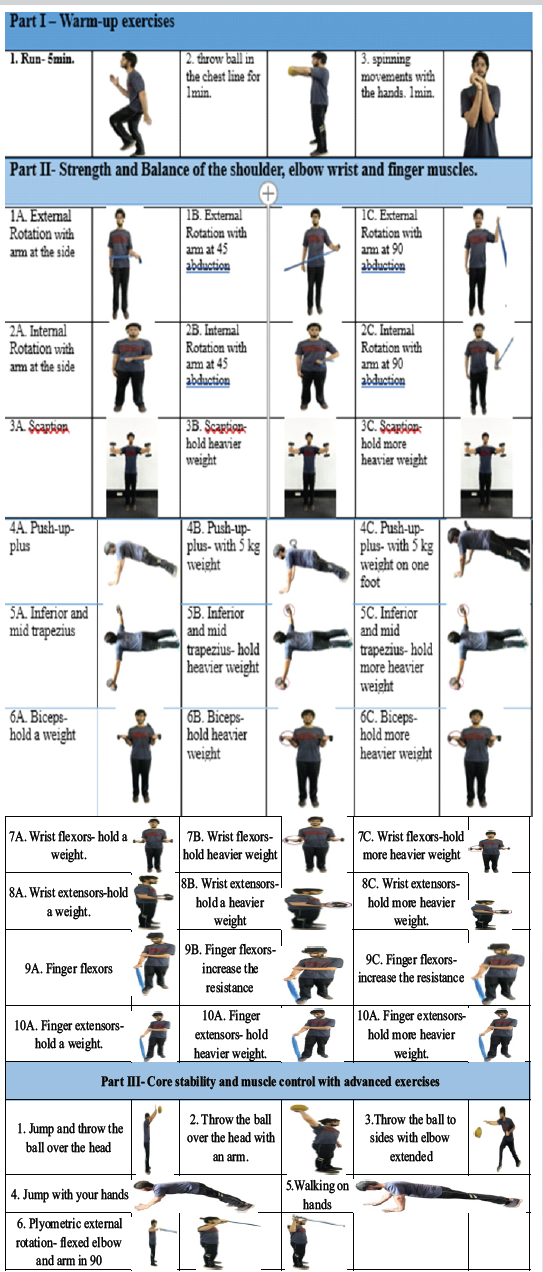
Figure 1: Federation of international football association 11+ shoulder
program.
Statistics
Data were entered in Microsoft Excel. After data cleaning data were imported to the Statistical Package for the Social Sciences version 25 and analysed using the same. Data were analysed for descriptive and inferential statistics. Data were assessed for normality using Shapiro Wilk test. Data were normally distributed. Therefore, a parametric test was used for analysis. Paired t-test was used for within-group analysis. P<0.05 was statistically significant.
Out of the 12 participants, 7 (58%) were males, and 5 (42%) were females. Regarding dominance, the majority of participants were right-hand dominant (92%), while only one participant (8%) was left-hand dominant. The mean BMI was 22.82 ± 3.6 kg/m², which falls within the normal range, suggesting that the participants had an overall healthy body composition (Table 1).
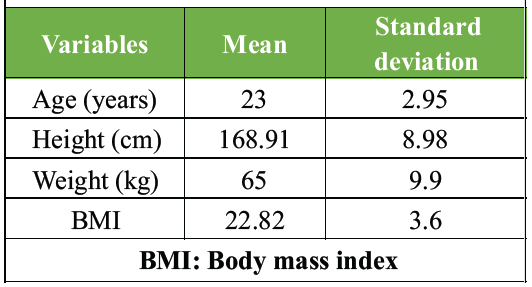
Table 1: Demographic details
Paired t-test analysis revealed statistically significant improvements in internal and external rotation strength on both the right and left sides following the intervention. Internal rotation strength increased significantly on the right side (t = −9.120, P < 0.001) and left side (t = −14.703, P < 0.001). Similarly, external rotation strength showed significant improvement on the right (t = −15.010, P < 0.001) and left sides (t = −9.469, P < 0.001). The seated medicine ball throw test showed a significant increase in pre- to post-intervention (t = −13.355, P < 0.001), indicating enhanced upper-limb power. The alternate hand wall toss test showed a significant increase in the number of catches (t = −14.165, P < 0.001), reflecting improved hand-eye coordination. In addition, the ruler drop test demonstrated a significant reduction in distance (t = 5.462, P = 0.001), indicating faster reaction time (Table 2).
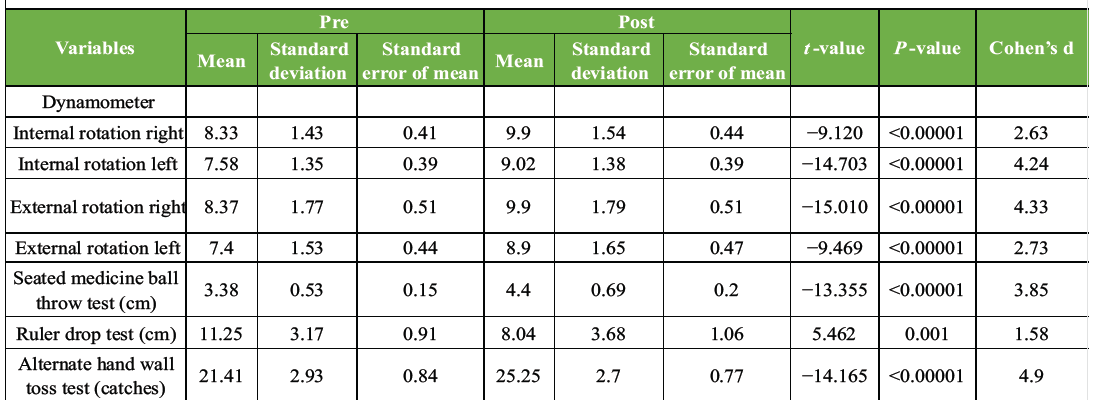
Table 2: Comparison of pre-test and post-test of upper limb strength, power coordination and reaction time
As shown in (Table 2), the effect size analysis using Cohen’s d revealed large to very large effects across all outcome measures. Internal and external rotator strength, seated medicine ball throw, and alternate hand wall toss tests demonstrated very large effect sizes (d > 2.5), indicating substantial practical and clinical significance. The ruler drop test showed a large effect size (d = 1.58), further supporting meaningful improvement. These findings confirm that the observed changes were not only statistically significant but also clinically relevant.
This pilot study suggests that the 8-week FIFA 11+S exercise injury prevention program can provide improvements in upper limb strength, power, coordination and reaction time for amateur badminton players․ This study shows statistically significant improvement between pre- and post-intervention assessments of all selected variables and effect sizes ranging from large to very large, indicating clinical relevance for these results․
Phomsoupha and Laffaye, 2015 stated that badminton is a high-speed racquet sport with powerful upper limb movements, badminton requires rapid muscular activation and coordination of the kinetic chain, which can impose excessive biomechanical stresses on the shoulder complex that have to cope with shuttlecock impact speeds up to 400 km/h․ Therefore, specific neuromuscular training programs for shoulder stabilization and motor control are vital to performance and injury prevention [3].
Pardiwala et al․, 2020 stated that in badminton, the shoulder experiences high rotational torque and eccentric load, which may explain the susceptibility of badminton players to shoulder impingement and tendinopathy․ Younas et al․, 2021 demonstrated the importance of an increase in internal and external rotator strength, which are both fundamental for glenohumeral joint stabilization during a repetitive overhead stroke [5]. Stausholm et al․, 2021 highlighted that balanced external rotator and internal rotator strength ratios are also important for overhead athletes [6]. In this study, increased strength may improve dynamic stability by reducing abnormal humeral head translation [1].
Research pertaining to soccer goalkeepers has also revealed similar findings․ Ejnisman et al․ (2016) suggest the FIFA 11+S warm-up program, incorporating shoulder strengthening and neuromuscular control exercises, may aid in reducing shoulder injury prevalence [9]. Al Attar et al․ (2021) showed that performing the FIFA 11+S program resulted in a reduction in upper extremity injuries by 68%․ Soccer goalkeepers do not perform racket strokes but throw and dive․ Goalkeepers are thus at risk for overhead injuries to the shoulder [8]. Eshghi et al․ (2020) reported isokinetic strength improvements among volleyball players following a prevention program, suggesting neuromuscular adaptations are transferable across sports [10].
Explosive upper limb power, as indicated by the seated medicine ball throw test, was also considerably improved, which is necessary to achieve high racquet head speed in a smash [11]. The results of the present study extend previous research on upper limb power, likely due to improvement in the stretch-shortening cycle efficiency and kinetic chain coordination [12]. In addition, Borms and Cools (2018) reported that shoulder strength correlates with shoulder function in overhead athletes [11]․
Phomsoupha and Laffaye, 2015 showed that the improvement in coordination has been noted when measured by the Alternate Hand Wall Toss Test, a measure of coordination required for the accurate shuttle placement in badminton [3,13]. Improved performance could be explained by sensorimotor integration and proprioceptive feedback as Zarei et al․ (2021) demonstrated in volleyball players [14].
The improvement in reaction time, measured as how far a ruler was dropped, was also important, as demonstrated by Ferreira et al․ (2024) [15]. Yüksel and Tunç, 2018 stated that due to the fast perceptual-motor demands present in badminton, this increase in performance may be due to increased neuromuscular responsiveness [16].
Ejnisman et al․, 2016 showed that a FIFA 11+S program containing strength, balance and plyometric training can produce meaningful neuromuscular adaptations in amateur badminton players․ Whilst previous data have demonstrated similar effects for soccer and volleyball, these current data also suggest that shoulder injury prevention programs designed for other overhead racket sports can be performance improving [9].
Limitations of the study
The sample size was small, only 12 participants were taken. There was no control group, so it was difficult to rule out the influence of regular practice. The study only involved the amateur college-level players, which limits its influence in elite and younger players.
This pilot study shows that the 8-weeks FIFA 11+ Shoulder program significantly improved the upper limb strength, power, coordination and reaction time. These findings indicate that the program can be implicate for amateur-level badminton players in their warm-up program, which will enhance their performance.
Structured neuromuscular warm-up programs like the FIFA 11+ Shoulder may be helpful for sports physiotherapists and rehabilitation clinicians working with overhead athletes‚ providing greater shoulder strength and coordination‚ power‚ and reaction time‚ with improvements in upper limb performance and risk reduction for injuries in amateur badminton players compared to standard warm-up programs․
References
- 1. Pardiwala DN, Subbiah K, Rao N, Modi R. Badminton injuries in elite athletes: A review of epidemiology and biomechanics. Indian J Orthop 2020;54:237-45. [Google Scholar] [PubMed]
- 2. About the Game. Badminton WA. Available from: https://www.badmintonwa.org.au/where-play/about-game [Last accessed on 2026 Jan 26]. [Google Scholar] [PubMed]
- 3. Phomsoupha M, Laffaye G. The science of badminton: Game characteristics, anthropometry, physiology, visual fitness and biomechanics. Sports Med 2015;45:473-95. [Google Scholar] [PubMed]
- 4. Marchena-Rodriguez A, Gijon-Nogueron G, Cabello-Manrique D, Ortega-Avila AB. Incidence of injuries among amateur badminton players: A cross-sectional study. Medicine 2020;99:e19785 [Google Scholar] [PubMed]
- 5. Younas AS, Afzal W, Mahmood T, Sharif F, Mubashir M. Quantitative measurement of upper extremity muscles strength among badminton players through dynamometer. Rawal Med J 2021;46:457-60. [Google Scholar] [PubMed]
- 6. Tooth C, Gofflot A, Schwartz C, Croisier JL, Beaudart C, Bruyère O, et al. Risk factors of overuse shoulder injuries in overhead athletes: A systematic review. Sports Health 2020;12:478-87. [Google Scholar] [PubMed]
- 7. Sadigursky D, Braid JA, De Lira DN, Machado BA, Carneiro RJ, Colavolpe PO. The FIFA 11+ injury prevention program for soccer players: A systematic review. BMC Sports Sci Med Rehabil 2017;9:18. [Google Scholar] [PubMed]
- 8. Al Attar WS, Faude O, Bizzini M, Alarifi S, Alzahrani H, Almalki RS, et al. The FIFA 11+ shoulder injury prevention program was effective in reducing upper extremity injuries among soccer goalkeepers: A randomized controlled trial. Am J Sports Med 2021;49:2293-300. [Google Scholar] [PubMed]
- 9. Ejnisman B, Barbosa G, Andreoli CV, De Castro Pochini A, Lobo T, Zogaib R, et al. Shoulder injuries in soccer goalkeepers: Review and development of a FIFA 11+ shoulder injury prevention program. Open Access J Sports Med 2016;7:75-80. [Google Scholar] [PubMed]
- 10. Eshghi S, Zarei M, Abbasi H, Alizadeh S. The effect of shoulder injury prevention program on shoulder isokinetic strength in young male volleyball players. Res Sports Med 2022;30:203-14. [Google Scholar] [PubMed]
- 11. Borms D, Cools A. Upper-extremity functional performance tests: Reference values for overhead athletes. Int J Sports Med 2018;39:433-41. [Google Scholar] [PubMed]
- 12. Chettri S, Sehdev A, Indora NK, Indora V, Anand P. Effect of FIFA 11+, dynamic and regular warm-up protocols on speed, agility, and lower limb explosive power in badminton players: A quasi-experimental study. J Clin Diagn Res 2022;16:YC13-7. [Google Scholar] [PubMed]
- 13. Cho EH, Yun HJ, So WY. The validity of alternative hand wall toss tests in korean children. J Mens Health 2020;16:10-8.s [Google Scholar] [PubMed]
- 14. Zarei M, Eshghi S, Hosseinzadeh M. The effect of a shoulder injury prevention programme on proprioception and dynamic stability of young volleyball players; a randomized controlled trial. BMC Sports Sci Med Rehabil 2021;13:71. [Google Scholar] [PubMed]
- 15. Ferreira S, Raimundo A, Del Pozo-Cruz J, Leite N, Pinto A, Marmeleira J. Validity and reliability of a ruler drop test to measure dual-task reaction time, choice reaction time and discrimination reaction time. Aging Clin Exp Res 2024;36:61. [Google Scholar] [PubMed]
- 16. Yüksel MF, Tunç GT. Examining the reaction times of international level badminton players under 15. Sports (Basel) 2018;6:20. [Google Scholar] [PubMed]




Related Articles in Journal of Orthopaedic Case Reports
 September 9, 2018 Hip Dysplasia in Mucopolysaccharidosis Type IVA (Morquio A Syndrome) Treated by Proximal Femoral Valgization Osteotomy: A Case Report
 October 10, 2023 Pediatric Forearm Impalement Injury: A Case Report with Review of Literature
 January 1, 2025 Open Ankle Injury without Associated Fracture or Dislocation Requiring Surgical Intervention: A Case Report
 April 7, 2014 Fracture of the Anterior Locking Flange of a Total Knee Arthroplasty Polyethylene Liner Presenting with Pain following Knee Replacement