

With the help of AI, orthobiologic therapy can move from product-centered injection treatment to phenotype, product, and outcome-driven precision therapy. Still, the evidence currently suggests caution with the integration of AI into research rather than clinical practice.
Dr. Madhan Jeyaraman, Department of Orthopaedics, ACS Medical College and Hospital, Dr. MGR Educational and Research Institute, Chennai, Tamil Nadu, India. E-mail: madhanjeyaraman@gmail.com
Abstract
Introduction: The use of orthobiologics such as autologous peripheral blood-derived orthobiologics, bone marrow-derived biologics, adipose tissue-derived biologics, mesenchymal stem cells, and extracellular vesicles is gaining traction in the field of orthobiology for the treatment of osteoarthritis (OA), tendinopathy, cartilage injuries, and delayed musculoskeletal healing. Clinical responses are inconsistent due to biological variation among patients, disease manifestations, product composition, delivery accuracy, and outcome definitions.
Materials and Methods: The literature was searched in PubMed, Embase, Cochrane Library, and Scopus databases from January 2019 to June 2026, and landmark and regulatory concepts were considered. The search terms were orthobiologics, platelet-rich plasma, mesenchymal stromal cells, OA, tendinopathy, artificial intelligence (AI), machine learning, imaging biomarkers, ultrasound guidance, responder prediction, potency assays, software as a medical device and regulation. The synthesis of evidence was done in a narrative fashion based on the Scale for the Assessment of Narrative Review articles principles.
Results: AI has the greatest clinical relevance as an enabler for precision orthobiologics. Supervised models can predict responder probability after platelet-rich plasma; unsupervised clustering can identify inflammatory, metabolic, structural, or pain-dominant phenotypes; deep learning can quantify imaging biomarkers; natural language processing can identify longitudinal outcomes; and privacy-preserving learning can facilitate multicenter validation. Product variability may be lessened through parallel advances in cytometry, secretome profiling, potency testing, and image-guided delivery. However, the evidence is still early, largely retrospective, and prone to bias, data drift, poor external validation, and unclear regulatory classification.
Conclusion: AI-assisted orthobiologics can be considered as a translational precision-medicine architecture, not a fully formed product. Standardized characterization of the biologic, a prospectively validated prediction model, easily understandable outputs, regulatory alignment, and ongoing monitoring of outcomes before routine clinical use are all necessary for safe implementation.
Keywords: Artificial intelligence, orthobiologics, precision medicine, machine learning.

As explained by the Scale for the Assessment of Narrative Review Articles (SANRA) [1], the following are most useful in narrative reviews: Defining a clinically important problem; describing the search strategy; appraising the quality of the evidence; and summarizing the uncertainty and providing practical guidance. Musculoskeletal disease is an ideal context in which to expose such a synthesis, as the number of people affected by osteoarthritis (OA) in 2020 was over 595 million worldwide, and is expected to rise significantly by 2050. Meanwhile, knee OA, tendinopathy, cartilage lesions, non-union, and soft tissue disease associated with sports activity are growing and are increasingly looking for orthobiologic treatments to repair tissues, treat pain, and prevent surgery [2].
The newest guidelines and consensus statements embody both hope and hesitation. The American Academy of Orthopaedic Surgeons guideline for non-arthroplasty knee OA labels platelet-rich plasma (PRP) as a potential treatment, but it is not yet entirely clear [3]. The process of consensus in Europe has sought to define indications for blood-derived injectables, and the orthobiologic guidelines have carried forward the emphasis on product reporting, indication selection and evidence quality [4,5,6]. This conservative approach is appropriate as preparations of autologous peripheral blood-derived orthobiologics, bone marrow-derived biologics, adipose tissue-derived biologics, mesenchymal stem cells (MSCs), and extracellular vesicles (EVs) all differ with regard to the donor, processing apparatus, leukocyte content, dosage of platelets, activation, cell viability, secretome, and criteria used to release them [7,8,9]. Two patients could thus be labeled the same and yet have different biologic interventions.
Biologic variability adds to regulatory complexity. In the U.S., 21 CFR 1271 and associated guidance differentiate minimally manipulated, homologous-use human cells, tissues, and cellular and tissue-based products from products that necessitate more formal biologic oversight, and many cellular products that are expanded or substantially manipulated enter the advanced-therapy medicinal-product framework in Europe. These rules impact upon manufacturing, claims and clinical availability but do not answer the bedside question as to which patient will respond. The tension that arises here is the common story in orthopedic clinics: Patients ask for regenerative care, doctors are given mixed signals about evidence, and health systems are tasked with discerning between responsible innovation and premature commercialization [10,11].
Artificial intelligence (AI) is suggested to be one of the possible bridges between empiric injection and precision orthobiologics [12]. A scoping review of the use of AI in regenerative orthopedics revealed the growing, but still nascent, literature and its use in patient stratification, product development, imaging, and follow-up. AI can combine symptoms, imaging, inflammatory markers, omics, gait, wearable data, and analytics of the biologic products to predict and optimize treatment response. The field of orthobiology has constraints on data availability, inconsistencies in endpoints, proprietary preparation systems, confounding by co-interventions, and ethical issues. In addition, it has a cultural hurdle in that the algorithmic output can be accurate even if the biologic preparation or clinical endpoint itself is less well standardized [13].
The question is not whether AI can classify data, but whether AI-driven workflows can deliver safer, more reproducible, and more clinically accountable orthobiologics than traditional selection. There needs to be a separation of evidence-supported selection, prospective research optimization, and direct-to-consumer marketing prior to algorithms impacting treatment. This narrative review aims to collect and consolidate the current evidence and offer a useful translation strategy for precision orthobiologics using AI in musculoskeletal disease.
English-language studies on AI-supported precision orthobiologics in musculoskeletal diseases were systematically searched. PubMed, Embase, Cochrane Library, and Scopus were searched from January 2019 to June 2026. Controlled vocabulary and free text were used for search strings: “orthobiologics,” “platelet-rich plasma,” “bone marrow aspirate concentrate,” “microfragmented adipose tissue,” “mesenchymal stromal cells,” “extracellular vesicles,” “osteoarthritis,” “tendinopathy,” “cartilage,” “artificial intelligence,” “machine learning,” “deep learning,” “natural language processing,” “federated learning,” “responder prediction,” “imaging biomarkers,” “ultrasound guidance,” “potency assay,” “secretome,” “software as a medical device,” and “regulation.” Eligible reviews and pivotal clinical studies were identified on reference lists.
The randomized controlled trials, systematic reviews, consensus statements, large cohorts, and biologic-characterization studies with interpretable performance metrics that are relevant to precision selection were emphasized, as well as AI model-development studies. Articles that were not peer-reviewed, not PubMed traceable, not relevant to musculoskeletal disease or orthobiologic intervention, speculative about nonclinical aspects, or did not contain any data that could be extracted regarding patient phenotype, product characterization, delivery, outcome prediction, ethics, or regulation were excluded. Evidence was synthesized in a narrative manner, not pooled, due to heterogeneity in interventions, preparation systems, model architecture, and endpoints. The review was oriented towards SANRA domains, defining the clinical importance, describing the search strategy, prioritizing the evidence quality, referencing substantive claims, and translating findings into a clinically usable roadmap [1].
Heterogeneity of preparations
There is a need for precision with orthobiologics as the therapeutic unit is not a fixed molecule. Leukocytes, red cells, nucleated cells, and secreted mediators vary in PRP by concentration and frequency, activation, culture conditions, and volume of injection, as well as by the number of injections in cellular products [7,8,9]. This variability results in a lack of precision in clinical labeling and makes it difficult to compare trials. Another layer: Regulatory frameworks treat minimally manipulated homologous-use products differently from expanded, enzymatically processed, or otherwise manipulated cellular therapies and can place MSC programs under the advanced-therapy medicinal-product regulation [10,11]. Three related classifications must be made to ensure precision: The patient, the biologic, and the regulatory pathway.
The responder/non-responder problem is also of fundamental importance. Current consensus guidelines for knee OA have shifted away from the idea that symptomatic knees are all alike to the importance of patient selection, disease stage, and reporting [4,5]. Prescribing guidance based on evidence in the field of orthobiologics also highlights that indications are still condition-specific and that biologic plausibility should not be used as a substitute for comparative outcomes [6]. However, a pain-dominant central sensitization patient with an inflammatory effusion, obesity, and advanced structural loss will respond somewhat differently to a mechanically overloaded, mildly degenerated joint. What makes AI desirable is that it can simulate such interactions, but precision starts with standardized phenotyping and standardized product reporting, long before an algorithm is trained. For knee OA, this will include the documentation of radiographic severity, effusion/synovitis, alignment, meniscal status, metabolic risk, pain phenotype, activity goals, previous injections, and planned rehabilitation. In tendon disease, it’s about distinguishing acute overload, chronic degenerative tendonopathy, partial tearing, enthesopathy, and post-surgical states. Without this clinical granularity, a model could learn the practice pattern of a clinic instead of the biology of treatment response [8,9,13,14,15].
Outline of AI techniques applicable to orthobiologics
A practical approach to orthobiologics using AI techniques is not magical. In supervised learning, the training outcomes are known (e.g., clinically important improvement following PRP) and used to predict future outcomes based on initial variables (e.g., baseline variables). An algorithmic approach is illustrated in Fig. 1 that details the learning and deployment loop of AI in ensuring consistent outcomes with orthobiologics in clinical usage.
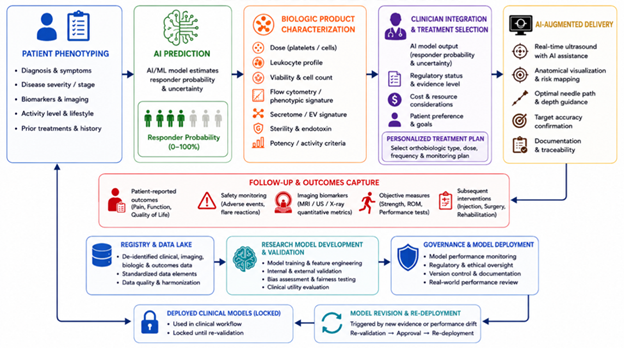
Figure 1: Artificial intelligence-guided orthobiologics precision loop
If no single label is accepted, then in a situation of unsupervised clustering, patients can be clustered into inflammatory, metabolic, structural, nociplastic, or activity profile. Images are relevant for deep learning because convolutional and transformer-based models can segment cartilage, quantify subregional morphology, and detect longitudinal change on magnetic resonance imaging (MRI) at a scale that manual measurement cannot [16]. When orthobiologic care is provided in clinics and registries, it is essential to obtain a list of symptoms, complications, and patient-reported outcomes (PROs) from electronic health records (EHRs) using natural language processing (NLP) [17].
Multimodal and continuous-learning systems integrate structured clinical data, imaging, laboratory values, wearables, operative variables, and post-operative results. When a single-centered orthobiologic model is insufficient due to limited data size, privacy-preserving methods such as swarm or federated learning allow multiple centers to share the training of models without needing to centralize sensitive data. The clinical promise is not simply a novel algorithm but the learning from a set of standardized, multi-center, longitudinal data, which remains under governance and audit. Model outputs should be summaries of probability (either with confidence or uncertainty intervals), not as binary commands. Important aspects to consider are cost, opportunity loss, and delayed definitive surgery, and calibration, decision-curve analysis, handling missing data, and subgroup performance are especially important [18,19].
AI for phenotyping patients and prediction of responders
The most advanced use case of AI in precision orthobiologics is patient phenotyping. However, given the importance of PRO measures in the study and their potential for forecasting the response to PRP injection, an explainable machine-learning study after PRP injection for knee OA found that the baseline PROs were among the useful predictors and that response could be estimated before injection [20]. A follow-up study on knee OA PRP found a gradient-boosting model with an area under the receiver operating characteristic curve of 0.862 and identified key biomarkers such as osmotic pressure, lipoprotein(a), and uric acid with Shapley Additive exPlanations (SHAP) [21]. While these models are not ready for independent model selection, they provide a glimpse of how AI and clinical scores can be integrated with metabolic markers to create a more interpretable treatment process. Their primary translation would be enrichment – patient selection for trials, identification of those who may not need injection, and identification of factors that can be changed and may improve response before injection.
Non-AI responder studies are used to establish candidate features. Retrospective cohorts have correlated PRP response with baseline pain, radiographic grade, age, body mass index, and symptom duration, and single-injection PRP studies have used clinical and structural variables to distinguish the responders from the impaired patients [22,23,24]. Biologic signals also can play a role: There was a relationship between the concentration of vascular endothelial growth factor and the efficacy of short-term PRP use in knee OA and between the multimodal immune profile of peripheral blood and response to autologous blood-derived orthobiologic treatment [25,26]. The implications of this research are that future AI models should not only use radiographs and questionnaires but also the inflammatory and metabolic context.
The concept of tendinopathy phenotyping is similar, but earlier. In a large prospective study of patellar tendinopathy, imaging texture (ultrashort echo time MRI) was found to predict clinical outcomes, demonstrating the ability of imaging to differentiate between tendon subtypes that may look similar on routine examination. If PRP or cell-based tendon trials, then AI-defined subtypes may distinguish between matrix-disorganization dominant disease and inflammatory, neovascular or load-management phenotypes [27].
Characterization of the biologics using AI
Characterization of the product delivered is also required for precision orthobiologics. Previous morphologic analysis has predicted immunomodulatory potency and growth rate without destructive testing, and machine-learning-aided single-cell image analysis has revealed quantifiable heterogeneity of MSC morphology [28,29]. These methods may be used in conjunction with flow cytometry to detect product states that are not captured by standard panels of markers. The secretome and extracellular-vesicle signature of bone marrow-derived MSCs depend on the type of expansion media, and microfragmented adipose tissue has a combination of tissue architecture, stromal cells, and paracrine mediators that do not lend themselves to a single cell count [30,31].
Criteria for release should thus be expanded to include sterility and viability. Isolation, expansion, characterization, testing of potency, and documentation of the batch are the main focus of good manufacturing practice for MSC therapy [32]. The MISEV2023 guidelines apply to EVs, reaffirming the minimum information requirements for EVs: Source, separation, characterization, and functional reporting [33]. AI can help in this process by identifying lot-to-lot drift, grouping secretome signatures, identifying preparations that are outliers, and associating release attributes with patient outcomes. These systems, however, should be transparent enough to enable understanding of the basis for the acceptance, rejection, or matching to a phenotype by clinicians and regulators. Acceptable ranges for a practical release dashboard could include platelet dose, leukocyte profile, cell viability, sterility, endotoxin, identity markers, secretome clusters, and potency surrogates. Negative trials would also be more meaningful to interpret with such dashboards, as they would be able to distinguish an ineffective indication from an underdosed or inconsistent biologic product.
Closed-loop dosing and image-guided delivery
Closed-loop orthobiologic care connects baseline phenotype, product characterization, delivery accuracy, and outcome monitoring. However, the intra-articular PRP formulation was not superior to placebo in reducing knee pain and medial tibial cartilage volume at 12 months in the RESTORE randomized trial, which is another reason for the need for careful endpoints for biologic enthusiasm [34]. However, higher-level clinical trials of cellular products are now possible, such as a phase III trial evaluating adipose-derived MSCs in knee OA and a randomized phase 3 trial of cell-based therapy compared with corticosteroid injection [35,36]. A prospective randomized trial also showed bone marrow aspirate concentrate (BMAC) is as effective as PRP for knee OA at 2 years, emphasizing the need to select products based on evidence, not brand [37].
AI-assisted ultrasound could enhance delivery through automatic recognition of the anatomic structure, needle-path planning, and quality assurance of the joint, bursal, peritendinous, and enthesis injection [38]. The MRI biomarkers can then quantify cartilage morphology, bone marrow lesions, synovitis, and radiomic progression, and neural-network models with longitudinal MRI radiomics and biochemical biomarkers have predicted knee OA progression [39]. A closed loop would only consider retreatment, rehabilitation, or escalation based on an objective measure of response and not after a predetermined injection schedule. Closed-loop dosing should be protocolized in trials; otherwise, there is the potential of bias if therapy is stepped up in early responders or therapy is discontinued in patients who would have benefited later.
Predictive models of outcomes, digital twins for joint-specific simulation, and continuous-learning systems
Outcome prediction models should be developed from a one-time calculator to become a learning system that is specific to the joint. The digital-twin concept for knee OA would involve alignment, cartilage thickness, meniscus status, synovitis, inflammatory markers, gait load, body mass, activity, pain phenotype, biologic attributes, and prior response. To incorporate tendon structure, load exposure, metabolic risk, training history, and properties of the injectate would be integrated into a twin for tendinopathy. These models are still visionary, but the components are already available in MRI segmentation, EHR NLP, multimodal modeling, and privacy-preserving collaboration [16,17,18,19,39].
Continuous learning is crucial because the performance of orthobiologics can “drift” when there are changes in the preparation device, anticoagulants, activation protocols, rehabilitation programs, or patient population. Registries should document baseline phenotype, lot-level product information, image guidance confirmation, adverse events, PROs, structural imaging, and subsequent surgeries. Only lock clinical models, have them monitored for calibration drift, and update them through auditable governance. The same registry can enable digital-twin research, but exploratory simulations need to be well differentiated from clinical decision support until evidence of impact is demonstrated. This separation guards patients from being handled based on appealing, yet unreproducible computational hypotheses [14,18].
Ethical, regulatory, data-governance and explainability issues
AI-guided orthobiologics present two regulatory conundrums: First, the biologic should be legal and suitably classified, and second, the algorithm could be considered as software as a medical device if it influences the diagnosis or choice of treatment [40]. The European Union AI Act further strengthens the risk-based approach to healthcare AI regulation, emphasizing transparency, data quality, human oversight, and post-market monitoring of this technology [41]. They are specifically relevant when a model advises a costly biologic injection, denies access to treatment, or modifies dosage.
Ethical risks are algorithmic bias, socioeconomic inequity, proprietary product analytics, weak consent for secondary data use, and overconfident marketing. Explainability is clinically required as an orthopedic surgeon has to explain to a patient that the recommendation is based on the stage of the disease, inflammatory phenotype, potency of the product, comorbidities, or lack of evidence. A black-box recommendation is particularly an issue in situations where patients pay out of pocket for treatments that may or may not be of benefit [40,41].
Translational roadmap and the current clinical-trial landscape
Translation should be done in a step-by-step manner. First, harmonized reporting of PRP, cells, and EVs in clinical studies is required, including reporting on the type of device, dose, number of leukocytes present, number of platelets, number of cells, viability, release criteria, and storage conditions of the EVs, including reporting of the number of cells per EV. Second, prospective registries should standardize the variables on patients, imaging, product, delivery, and outcomes across institutions. Third, prediction models need to be trained on one dataset and then tested externally on another, before being used to guide treatment in a silent mode. Fourth, randomized trials are needed to compare AI-assisted selection with standard guideline-based selection based on patient-important endpoints, structural outcomes, cost, and adverse events [4,5,6,7,8,32,33].
The clinical trial environment is promising but incomplete. Recent high-quality PRP trials, MSC trials, cell-based comparative trials, and BMAC-versus-PRP trials demonstrate that careful studies of orthobiologics are feasible. The missing element is a trial in which AI is used to make future product selections, match products, make shipping decisions, or monitor products. Unfortunately, there are no such trials at this time, and AI should be used to generate hypotheses, to enrich study populations, to standardize measurements, and to support shared decision-making, but not to replace clinician judgment [34,35,36,37]. The summary of AI-guided precision orthobiologics is depicted in Fig. 1.
From a cautious interpretation point of view, this review can be considered as an architecture for the translation of precision orthobiologics into a clinical product. The best near-term use in this regard is not autonomous injection selection but disciplined use of patient phenotyping, product analytics, image-guided delivery, and longitudinal outcomes data. This is particularly relevant since deciding on orthobiologics is often a complex system that can be reduced to a product name. If those are standardized and representative, AI can reveal hidden structure in that system. Future trials are, therefore, not between AI and no AI, but between AI-assisted standardized care and non-standardized care as illustrated in Tables 1 and 2. With neither product reporting nor objective outcome surveillance, the trial will fail to reveal whether failure is due to the algorithm, the biologic, or the study design.
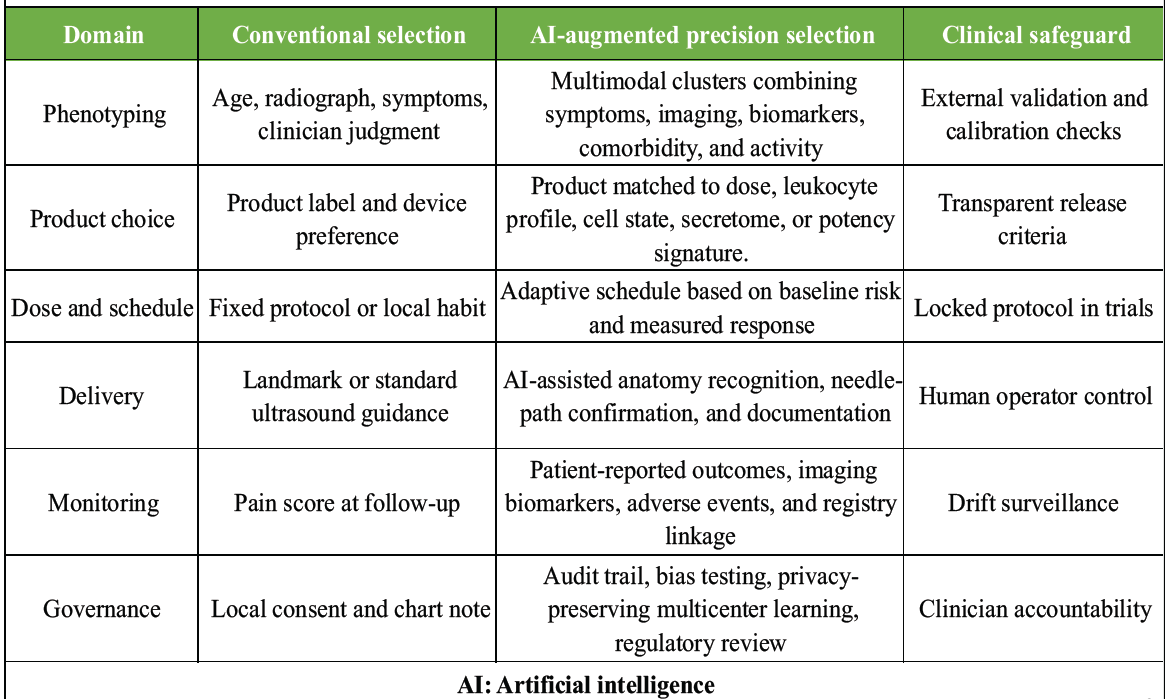
Table 1: AI-augmented versus conventional orthobiologic selection
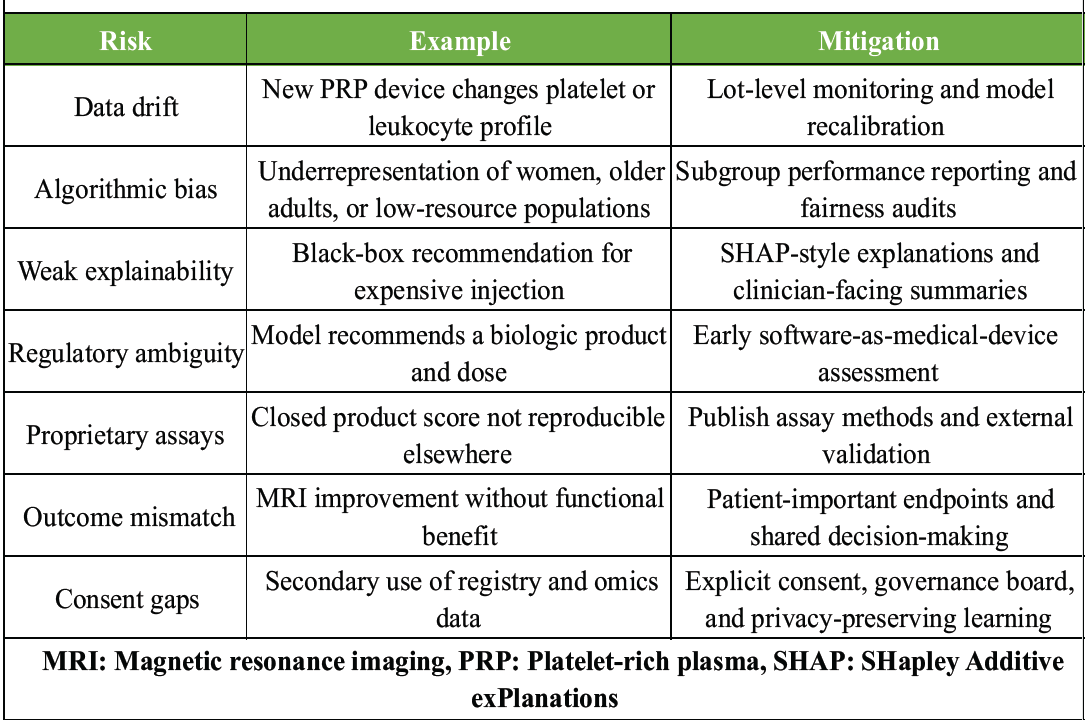
Table 2: Translational risk controls
Recent precision-oriented work has moved focus from treating with PRP or cell products to matching and measurement [8,9] compared to earlier reviews on orthobiologics, which were primarily focused on treating with either PRP or cell products. This represents a change in guidance and consensus that focuses on preparation, reporting, disease stage, and clinical indication [3,4,5,6]. It also provides an understanding of why conflicting clinical evidence should not be taken by itself as evidence of failure or success of a product class. While the RESTORE trial questions the widespread claims of PRP, other trials with cells and other comparisons demonstrate that well-designed orthobiologic trials can be performed. The right answer is not to loosen the standards but to improve the stratification of the field. The negative trial in unselected moderate-to-severe OA should not rule out the use of PRP for an inflammatory phenotype in younger patients, and a positive cell-therapy cohort should not be used to justify widespread adoption without manufacturing transparency, sham controls, and long-term follow-up [34,35,36,37].
There are still some issues that are not settled. First, there is not yet a consistent data collection of PRP types and release criteria of the cellular products in routine practice, which restricts the portability of the models. Second, existing responder models are prospective but largely retrospective in nature, single disease in scope, and susceptible to confounding from rehabilitation, co-intervention, regression to the mean, and payer selection. Third, product-characterization tools could become proprietary, risking that the algorithms would be optimized for a company-specific assay and not a biologically generalizable construct. Fourth, imaging biomarkers can quantify both structure and pain relief, and function may not be related to cartilage thickness or tendon texture. Finally, when an algorithm is transitioned from documentation to treatment recommendation, regulatory classification can shift [40,41], as shown in Table 2.
The scope of this review is limited to that of the literature. It is not pooled since the AI models, orthobiologic products, indications, and endpoints are heterogeneous. Some papers in the included AI are not orthobiologic studies but methodologic or translational papers. Very few studies evaluate external validation, calibration, decision curve utility, or prospective clinical impact. The short publication time also means that there is a risk that the current models are outdated due to changes in preparation systems, imaging pipelines, and regulatory requirements [20,41].
Clinical translation should be conservative, therefore. Doctors and surgeons should not tell patients that AI can find a certain “biologic responder.” Standardized phenotyping, reporting of the biologic product in detail, accurate delivery, tracking of patient-reported and structural outcomes, and involvement in registries are examples of a defensible near-term workflow. AI can help with probability assessment, highlighting uncertainty, and facilitating collaborative decision-making; the clinician will need to communicate other options, cost, evidence quality, and the potential of no injection. However, AI-assisted selection can only be assessed as effective at enhancing the quality of care, avoiding unnecessary interventions, or making care more safe than traditional evidence-based selection, and only then will the field develop. For now, the most ethical applications of AI are as a tool to measure, enlarge the trial, detect adverse events, and communicate uncertainty [6,41].
Precision orthobiologics represents a forward‑looking paradigm in musculoskeletal care, but its success depends on disciplined integration rather than isolated advances. AI offers the potential to unify diverse elements – patient phenotyping, biologic characterization, image‑guided delivery, rehabilitation, and longitudinal monitoring – into a coherent learning system. Yet translation into practice requires more than feasibility; it demands rigorous data capture, transparent reporting, external validation, and regulatory clarity. Progress in computational performance without biologic plausibility, or innovation in analytics without clinical accountability, will not achieve meaningful impact. At this stage, AI should serve as a catalyst for better questions, sharper study design, and avoidance of poorly matched interventions, rather than as a marketing label for unproven therapies. The path forward lies in balanced advancement across science, technology, regulation, and ethics, ensuring that precision orthobiologics evolves into a trustworthy, patient‑centered discipline with durable clinical relevance.
1. By integrating patient phenotyping, biologic characterization, imaging biomarkers, and longitudinal outcomes, AI can move orthobiologic therapy from generic product-centered injections to individualized, outcome-driven precision care.
2. Current AI applications in orthobiologics are largely retrospective, prone to bias, and lack external validation. Therefore, AI should be cautiously integrated into research workflows and registries rather than routine clinical practice.
3. Transparency in product reporting, explainable AI outputs, and alignment with regulatory frameworks are critical to ensure safe, equitable, and accountable adoption of AI-assisted orthobiologics.
References
- 1. Baethge C, Goldbeck-Wood S, Mertens S. SANRA-a scale for the quality assessment of narrative review articles. Res Integr Peer Rev 2019;4:5. [Google Scholar] [PubMed]
- 2. GBD 2021 Osteoarthritis Collaborators. Global, regional, and national burden of osteoarthritis, 1990-2020 and projections to 2050: A systematic analysis for the global burden of disease study 2021. Lancet Rheumatol 2023;5:e508-22. [Google Scholar] [PubMed]
- 3. Brophy RH, Fillingham YA. AAOS clinical practice guideline summary: Management of osteoarthritis of the knee (nonarthroplasty), third edition. J Am Acad Orthop Surg 2022;30:e721-9. [Google Scholar] [PubMed]
- 4. Laver L, Filardo G, Sanchez M, Magalon J, Tischer T, Abat F, et al. The use of injectable orthobiologics for knee osteoarthritis: A European ESSKA-ORBIT consensus. Part 1-Blood-derived products (platelet-rich plasma). Knee Surg Sports Traumatol Arthrosc 2024;32:783-97. [Google Scholar] [PubMed]
- 5. Kon E, De Girolamo L, Laver L, Andriolo L, Andia I, Bastos R, et al. Platelet-rich plasma injections for the management of knee osteoarthritis: The ESSKA-ICRS consensus. Recommendations using the RAND/UCLA appropriateness method for different clinical scenarios. Knee Surg Sports Traumatol Arthrosc 2024;32:2938-49. [Google Scholar] [PubMed]
- 6. Winkler T, Oehme S, Hildebrandt A, Paolucci A, Pichler L. Evidence-based guidelines on orthobiologics. EFORT Open Rev 2025;10:345-51. [Google Scholar] [PubMed]
- 7. Collins T, Alexander D, Barkatali B. Platelet-rich plasma: A narrative review. EFORT Open Rev 2021;6:225-35. [Google Scholar] [PubMed]
- 8. Andia I, Silvestre A, Del Amo C, Eymard F, Bard H. The platelet-rich plasma research ecosystem: From mechanistic insights to precision treatment in knee osteoarthritis. Regen Ther 2025;30:1036-45. [Google Scholar] [PubMed]
- 9. Navani A, Jeyaraman M, Jeyaraman N, Ramasubramanian S, Nallakumarasamy A, Azzini G, et al. Precision medicine in orthobiologics: A paradigm shift in regenerative therapies. Bioengineering 2025;12:908. [Google Scholar] [PubMed]
- 10. Manchikanti L, Centeno CJ, Atluri S, Albers SL, Shapiro S, Malanga GA, et al. Bone marrow concentrate (BMC) therapy in musculoskeletal disorders: Evidence-based policy position statement of American society of interventional pain physicians (ASIPP). Pain Physician 2020;23:E85-131. [Google Scholar] [PubMed]
- 11. Muthu S, Jeyaraman M, Kotner MB, Jeyaraman N, Rajendran RL, Sharma S, et al. Evolution of mesenchymal stem cell therapy as an advanced therapeutic medicinal product (ATMP)-an Indian perspective. Bioengineering (Basel) 2022;9:111. [Google Scholar] [PubMed]
- 12. Jeyaraman M, Ratna HV, Jeyaraman N, Venkatesan A, Ramasubramanian S, Yadav S. Leveraging artificial intelligence and machine learning in regenerative orthopedics: A paradigm shift in patient care. Cureus 2023;15:e49756. [Google Scholar] [PubMed]
- 13. Vaishya R, Dhall S, Vaish A. Artificial intelligence (AI): A potential game changer in regenerative orthopaedics-a scoping review. Indian J Orthop 2024;58:1362-74. [Google Scholar] [PubMed]
- 14. Rosen J, Russell J, Kartik P, Vella-Baldacchino M. Artificial intelligence algorithms in orthopaedics: A narrative review of methods and clinical applications. J Exp Orthop 2025;12:e70549. [Google Scholar] [PubMed]
- 15. Misir A, Yuce A. AI in orthopedic research: A comprehensive review. J Orthop Res 2025;43:1508-27. [Google Scholar] [PubMed]
- 16. Panfilov E, Tiulpin A, Nieminen MT, Saarakkala S, Casula V. Deep learning-based segmentation of knee MRI for fully automatic subregional morphological assessment of cartilage tissues: Data from the osteoarthritis initiative. J Orthop Res 2022;40:1113-24. [Google Scholar] [PubMed]
- 17. Nugen F, Vera Garcia DV, Sohn S, Mickley JP, Wyles CC, Erickson BJ, et al. Application of natural language processing in total joint arthroplasty: Opportunities and challenges. J Arthroplasty 2023;38:1948-53. [Google Scholar] [PubMed]
- 18. Oettl FC, Zsidai B, Oeding JF, Hirschmann MT, Feldt R, Tischer T, et al. Beyond traditional orthopaedic data analysis: AI, multimodal models and continuous monitoring. Knee Surg Sports Traumatol Arthrosc 2025;33:2269-75. [Google Scholar] [PubMed]
- 19. Xie Y, Wang X, Yang H, Zhang J, Wang H, Yan Z, et al. Swarm learning network for privacy-preserving and collaborative deep learning assisted diagnosis of fracture: A multi-center diagnostic study. Front Med (Lausanne) 2025;12:1534117. [Google Scholar] [PubMed]
- 20. Oettl FC, Madrazo Ibarra A, Fontana MA, Loblack O, Dagli MM, Otero M, et al. Development of explainable machine learning models to predict outcomes after platelet-rich plasma injections for knee osteoarthritis. Orthop J Sports Med 2025;13:23259671251349743. [Google Scholar] [PubMed]
- 21. Zhang H, Yang X, Geng T, Wang R, Li G. Machine learning predicts clinical response to platelet-rich plasma therapy in knee osteoarthritis. Front Med (Lausanne) 2026;13:1787872. [Google Scholar] [PubMed]
- 22. Saita Y, Kobayashi Y, Nishio H, Wakayama T, Fukusato S, Uchino S, et al. Predictors of effectiveness of platelet-rich plasma therapy for knee osteoarthritis: A retrospective cohort study. J Clin Med 2021;10:4514. [Google Scholar] [PubMed]
- 23. Kikuchi N, Yoshioka T, Arai N, Sugaya H, Hyodo K, Taniguchi Y, et al. A retrospective analysis of clinical outcome and predictive factors for responders with knee osteoarthritis to a single injection of leukocyte-poor platelet-rich plasma. J Clin Med 2021;10:5121. [Google Scholar] [PubMed]
- 24. Bec C, Rousset A, Brandin T, François P, Rabarimeriarijaona S, Dumoulin C, et al. A retrospective analysis of characteristic features of responders and impaired patients to a single injection of pure platelet-rich plasma in knee osteoarthritis. J Clin Med 2021;10:1748. [Google Scholar] [PubMed]
- 25. Yamamoto N, Saita Y, Kobayashi Y, Wakayama T, Uchino S, Momoi Y, et al. Impact of vascular endothelial growth factor concentration on the short-term efficacy of platelet-rich plasma (PRP) therapy for knee osteoarthritis. Cartilage 2025;???:19476035251352178. [Google Scholar] [PubMed]
- 26. Tonutti A, Granata V, Marrella V, Camisaschi C, Puccio S, Morenghi E, et al. Multimodal immune profiling of peripheral blood to predict the response to intra-articular autologous blood-derived orthobiologic treatment in patients with knee osteoarthritis. Biomed Pharmacother 2025;192:118674. [Google Scholar] [PubMed]
- 27. Fang Y, Deng J, Breda SJ, De Vos RJ, Oei EH, Hirvasniemi J. Ultrashort echo time MRI radiomics as a predictor of clinical outcomes in patellar tendinopathy: Insights from a large prospective clinical trial. Eur J Radiol 2026;196:112675. [Google Scholar] [PubMed]
- 28. Imai Y, Kanie K, Kato R. Morphological heterogeneity description enabled early and parallel non-invasive prediction of T-cell proliferation inhibitory potency and growth rate for facilitating donor selection of human mesenchymal stem cells. Inflamm Regen 2022;42:8. [Google Scholar] [PubMed]
- 29. Mukhopadhyay R, Chandel P, Prasad K, Chakraborty U. Machine learning aided single cell image analysis improves understanding of morphometric heterogeneity of human mesenchymal stem cells. Methods 2024;225:62-73. [Google Scholar] [PubMed]
- 30. Grieco G, Piccolo S, Ragni E, De Girolamo L. Secretome and extracellular vesicle signatures in bone marrow-derived mesenchymal stromal cells after expansion in standard and next-generation media. Extracell Vesicles Circ Nucl Acids 2025;6:195-215. [Google Scholar] [PubMed]
- 31. Ragni E, Viganò M, Torretta E, Perucca Orfei C, Colombini A, Tremolada C, et al. Characterization of microfragmented adipose tissue architecture, mesenchymal stromal cell content and release of paracrine mediators. J Clin Med 2022;11:2231. [Google Scholar] [PubMed]
- 32. Williams ME, Banche Niclot F, Rota S, Lim J, Machado J, De Azevedo R, et al. Optimizing mesenchymal stem cell therapy: From isolation to GMP-compliant expansion for clinical application. BMC Mol Cell Biol 2025;26:15. [Google Scholar] [PubMed]
- 33. Welsh JA, Goberdhan DC, O’Driscoll L, Buzas EI, Blenkiron C, Bussolati B, et al. Minimal information for studies of extracellular vesicles (MISEV2023): From basic to advanced approaches. J Extracell Vesicles 2024;13:e12404. [Google Scholar] [PubMed]
- 34. Bennell KL, Paterson KL, Metcalf BR, Duong V, Eyles J, Kasza J, et al. Effect of intra-articular platelet-rich plasma vs placebo injection on pain and medial tibial cartilage volume in patients with knee osteoarthritis: The RESTORE randomized clinical trial. JAMA 2021;326:2021-30. [Google Scholar] [PubMed]
- 35. Kim KI, Lee MC, Lee JH, Moon YW, Lee WS, Lee HJ, et al. Clinical efficacy and safety of the intra-articular injection of autologous adipose-derived mesenchymal stem cells for knee osteoarthritis: A phase III, randomized, double-blind, placebo-controlled trial. Am J Sports Med 2023;51:2243-53. [Google Scholar] [PubMed]
- 36. Mautner K, Gottschalk M, Boden SD, Akard A, Bae WC, Black L, et al. Cell-based versus corticosteroid injections for knee pain in osteoarthritis: A randomized phase 3 trial. Nat Med 2023;29:3120-6. [Google Scholar] [PubMed]
- 37. Anz AW, Plummer HA, Cohen A, Everts PA, Andrews JR, Hackel JG. Bone marrow aspirate concentrate is equivalent to platelet-rich plasma for the treatment of knee osteoarthritis at 2 years: A prospective randomized trial. Am J Sports Med 2022;50:618-29. [Google Scholar] [PubMed]
- 38. Hattori S, Saggar R, Heidinger E, Qi A, Mullen J, Fee B, et al. Advances in ultrasound-guided surgery and artificial intelligence applications in musculoskeletal diseases. Diagnostics (Basel) 2024;14:2008. [Google Scholar] [PubMed]
- 39. Wang T, Liu H, Zhao W, Cao P, Li J, Chen T, et al. Predicting knee osteoarthritis progression using neural network with longitudinal MRI radiomics, and biochemical biomarkers: A modeling study. PLoS Med 2025;22:e1004665. [Google Scholar] [PubMed]
- 40. Shah S, Thakor P, Shah A, Singh OV. Software as medical devices: Requirements and regulatory landscape in the United States. Expert Rev Med Devices 2025;22:1201-14. [Google Scholar] [PubMed]
- 41. Busch F, Kather JN, Johner C, Moser M, Truhn D, Adams LC, et al. Navigating the European union artificial intelligence act for healthcare. NPJ Digit Med 2024;7:210. [Google Scholar] [PubMed]






Related Articles in Journal of Orthopaedic Case Reports
 December 1, 2025 Machine Learning Assisted Pre-operative planning for Total Hip Arthroplasty: Accuracy Validation and Post Operative Critical Analysis- A Retrospective Study
 October 1, 2026 Digital Transformation in Orthopedics: Can India Leapfrog with Artificial Intelligence, Augmented Reality, and Robotics?
 October 1, 2026 Efficacy of Intra-Articular Injection of Platelet-Rich Plasma and Growth Factor Concentrate in Degenerative Meniscal Lesions
 October 1, 2026 Comparative Efficacy of Leukocyte-Poor Platelet-Rich Plasma, Leukocyte-Rich Platelet-Rich Plasma, Injectable Platelet-Rich Fibrin, and Corticosteroid Injections in Kellgren–Lawrence Grade 2–3 Knee Osteoarthritis: A Prospective Comparative Study