

Vitamin D deficiency is highly prevalent among health care workers, highlighting the need for greater awareness, targeted screening, and preventive measures in high-risk individuals.
Dr. Akshay Kumar Shah, Department of Orthopaedics, Gandhi Medical College, Bhopal, Madhya Pradesh, India. E-mail: akshayshah511@gmail.com
Abstract
Introdution: Vitamin D deficiency is increasingly recognized as a significant public health problem, even in sun-rich countries such as India. Health care workers (HCWs) are particularly vulnerable due to prolonged indoor duty hours, limited sunlight exposure, and irregular lifestyle patterns, which may adversely affect their health and work performance.
Aim and Objective: The aim of the study was to determine the prevalence of Vitamin D deficiency among HCWs in a tertiary care center and to describe its distribution in relation to demographic, occupational, lifestyle, dietary, supplementation, and clinical characteristics.
Materials and Methods: We conducted this cross-sectional study among HCWs aged >18 years at a tertiary care center after Ethical Committee approval. Data regarding demographic profile, occupational characteristics, sunlight exposure, physical activity, dietary habits, and Vitamin D supplementation were collected using a structured questionnaire. Serum 25-hydroxyvitamin D levels were measured using a chemiluminescence assay. Vitamin D status was categorized as deficiency (<20 ng/mL), insufficiency (20–30 ng/mL), and sufficiency (>30 ng/mL). Statistical analysis was performed using Statistical Package for the Social Sciences version 26.0.
Results: A total of 317 participants were analyzed. Vitamin D deficiency was observed in 71.9% of participants, insufficiency in 22.1%, and sufficient levels in 6.0%. The majority reported limited sunlight exposure (<1 h/day; 75.4%) and low physical activity (<30 min/day; 75.7%). Most participants followed a vegetarian diet (71.3%), and only 15.5% reported recent Vitamin D supplementation. Common clinical manifestations included fatigue (34.4%), hair fall (21.5%), and muscle weakness (19.9%).
Conclusion: Vitamin D deficiency was highly prevalent among HCWs in this tertiary care setting. The findings were observed in the context of limited sunlight exposure, low physical activity, predominantly vegetarian dietary patterns, and infrequent supplementation. However, because of the cross-sectional, single-center design and reliance on self-reported exposure data, causal or independent associations cannot be established. Routine awareness, screening of high-risk individuals, and preventive strategies may be beneficial.
Keywords: Vitamin D deficiency, health care workers, sunlight exposure, tertiary care hospital, 25-hydroxyvitamin D.

Vitamin D is a fat-soluble secosteroid hormone essential for calcium–phosphate homeostasis, skeletal mineralization, and musculoskeletal integrity, with Vitamin D receptors widely distributed across tissues, indicating additional roles in immune modulation, muscle function, and cellular proliferation [1]. Deficiency is linked not only to osteomalacia and osteoporosis but also to non-specific symptoms, including fatigue, myalgia, and reduced functional capacity, thereby impairing quality of life and productivity [2]. Despite abundant sunlight, Vitamin D deficiency is highly prevalent in India due to factors such as darker skin pigmentation, cultural clothing practices, limited outdoor activity, air pollution, and inadequate intake of Vitamin D–rich or fortified foods, all of which reduce cutaneous synthesis and bioavailability [3].
Health care workers (HCWs) are particularly vulnerable due to predominantly indoor work environments, prolonged duty hours, shift schedules, minimal ultraviolet B (UVB) exposure, irregular diet, and poor adherence to supplementation [4]. Indian studies have demonstrated a high prevalence of deficiency among HCWs, including reduced bone mineral density in resident doctors and widespread deficiency across multiple healthcare cadres [5,6]. Similar trends in medical students and international data from high-sunlight regions further emphasize that occupational and lifestyle factors outweigh environmental availability of sunlight [7,8,9]. Given its impact on musculoskeletal health, fatigue, and work efficiency, Vitamin D deficiency among HCWs is a significant occupational and public health concern; however, comprehensive data integrating demographic, occupational, lifestyle, and dietary determinants remain limited, warranting the present study to assess prevalence, risk factors, and clinical manifestations.
Study design and setting
We planned a cross-sectional study in the Department of Orthopedics at Gandhi Medical College over a period of 22 months. The Institutional Ethics Committee approved the study protocol (42/IEC/2024), and written informed consent was obtained from all participants before enrolment. Confidentiality of participant data was strictly maintained.
Study population
HCWs aged 18 years or older who were willing to participate were included in the study. Participants were excluded if they were receiving medications known to interfere with vitamin D metabolism (such as anticonvulsants, glucocorticoids, or rifampicin) or had underlying conditions affecting Vitamin D status, including endocrine disorders, chronic hepatic or renal disease, malabsorption syndromes, malignancy, or prior major gastrointestinal surgery. A total of 330 participants were initially recruited using simple random sampling, and 317 participants were included in the final analysis after applying eligibility criteria.
Data collection
Data were collected using a structured, pre-validated questionnaire administered via a digital platform. Information on demographic variables, occupational profile, daily working hours, sunlight exposure, physical activity, dietary habits, and recent Vitamin D supplementation was recorded. Participants were also evaluated for self-reported clinical symptoms associated with Vitamin D deficiency, including fatigue, musculoskeletal pain, muscle weakness, hair fall, and mood-related disturbances.
Laboratory assessment
A single venous blood sample was obtained from each participant under aseptic conditions. Serum 25-hydroxyvitamin D [25(OH)D] levels were measured using a standardized chemiluminescence assay in a single laboratory to ensure consistency. Vitamin D status was categorized as deficiency (<20 ng/mL), insufficiency (20–30 ng/mL), and sufficiency (>30 ng/mL) in accordance with established clinical guidelines.
Statistical analysis
Data were entered and analyzed using the Statistical Package for the Social Sciences software version 26.0. Continuous variables were summarized as mean ± standard deviation or median (interquartile range), as appropriate, and categorical variables were presented as frequencies and percentages. The present analysis was primarily descriptive. No multivariate regression analysis was performed; therefore, independent predictors of Vitamin D deficiency could not be identified.
A total of 317 HCWs were included in the final analysis. The overall cohort was predominantly young to middle-aged, with a slight male preponderance. Occupationally, participants were distributed evenly among doctors, nursing staff, and Class IV workers, with the majority reporting 6–10 h of daily work. Lifestyle assessment revealed limited sunlight exposure and low physical activity in a substantial proportion of participants. Dietary patterns were predominantly vegetarian, and Vitamin D supplementation practices were infrequent (Table 1).
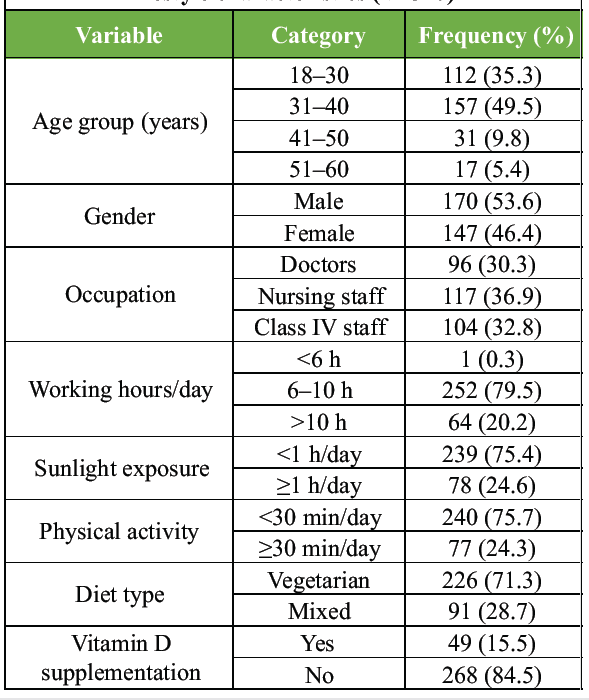
Table 1: Baseline demographic, occupational, and lifestyle characteristics (n=317)
The prevalence of Vitamin D deficiency was markedly high in the study population, with most participants exhibiting suboptimal serum Vitamin D levels. Clinical symptoms commonly associated with hypovitaminosis D were also frequently reported (Table 2).
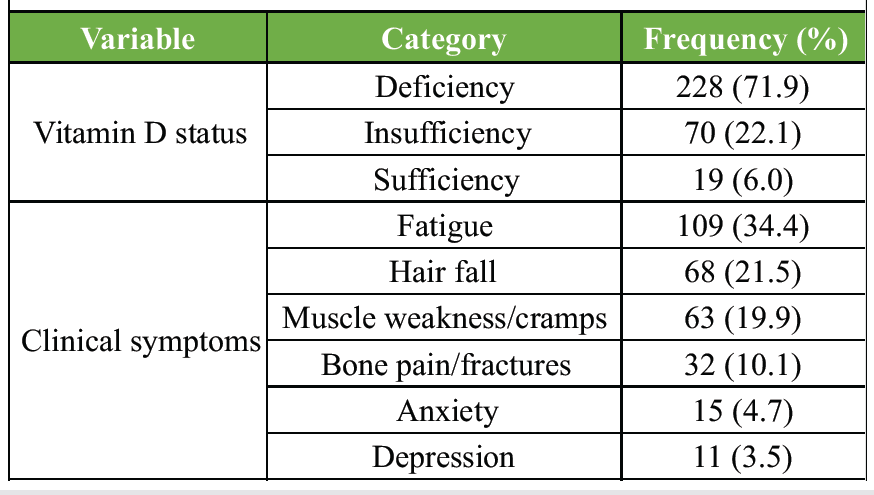
Table 2: Vitamin D status and clinical manifestations (n=317)
Fig. 1 distribution of Vitamin D Status among Participants. Bar diagram illustrating the distribution of Vitamin D status among study participants, showing a high prevalence of deficiency (71.9%), followed by insufficiency (22.1%) and a small proportion with sufficient levels (6.0%).
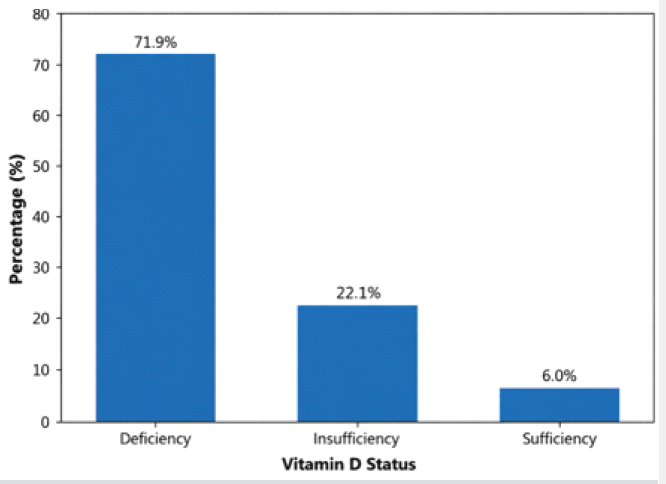
Figure 1: Distribution of Vitamin D status among participants. Bar diagram illustrating the distribution of Vitamin D status among study participants, showing a high prevalence of deficiency (71.9%), followed by insufficiency (22.1%) and a small proportion with sufficient levels (6.0%).
The present study demonstrated a high prevalence of Vitamin D deficiency (71.9%) among HCWs, with only a small proportion (6.0%) exhibiting sufficient levels. These findings are consistent with existing Indian data highlighting widespread hypovitaminosis D among HCWs despite adequate awareness and access to healthcare facilities. Beloyartseva et al. reported Vitamin D deficiency in 79% of healthcare professionals across India, emphasizing that this population remains at significant risk due to occupational and lifestyle factors [10].
The occupational environment of HCWs plays a crucial role in determining Vitamin D status. In the present study, the majority of participants reported working prolonged indoor hours, with nearly 80% working 6–10 h/day. Similar observations have been reported by Sowah et al., who identified healthcare professionals and indoor workers as high-risk groups for Vitamin D deficiency due to reduced exposure to UVB [4]. Supporting this, Ashraf Ganie et al. demonstrated that individuals with minimal occupational sunlight exposure had significantly higher rates of Vitamin D deficiency than those with outdoor exposure, reinforcing the workplace environment as a key determinant [11].
Sunlight exposure patterns observed in this study further substantiate this association, with 75.4% of participants reporting <1 h of daily sunlight exposure. This is clinically relevant, as Patwardhan et al. showed that more than 1 h of daily sunlight exposure is often required to maintain adequate serum Vitamin D levels in Indian populations, with even longer exposure needed for optimal sufficiency [12]. Therefore, the majority of participants in the present study likely remained below the threshold required for adequate endogenous Vitamin D synthesis.
Dietary habits also contribute to Vitamin D status, particularly in populations with limited sun exposure. In the present study, 71.3% of participants followed a vegetarian diet, which may further predispose them to Vitamin D deficiency due to limited natural dietary sources of Vitamin D. Baig et al. similarly reported that hypovitaminosis D is common in both vegetarian and non-vegetarian populations. However, dietary intake alone is often insufficient to compensate for reduced sunlight exposure [13]. In addition, only 15.5% of participants reported recent Vitamin D supplementation, indicating poor adoption of preventive strategies even among medically aware individuals.
The findings of this study are further supported by evidence from medical trainee populations. Studies among medical students have consistently reported a high prevalence of Vitamin D deficiency, suggesting that risk factors such as indoor lifestyle, academic workload, and reduced outdoor activity begin early and persist into professional life [7,8]. International data also corroborate these findings; Al-Elq reported Vitamin D deficiency in over 90% of medical students in Saudi Arabia, despite abundant sunlight, highlighting that behavioral and environmental factors significantly influence Vitamin D status [9].
Clinically, the present study identified fatigue, hair fall, and muscle weakness as the most common symptoms among participants. These findings are consistent with previous literature linking Vitamin D deficiency to non-specific musculoskeletal symptoms. Plotnikoff and Quigley reported a high prevalence of Vitamin D deficiency among patients presenting with chronic, non-specific musculoskeletal pain, supporting the association between hypovitaminosis D and functional symptoms [2]. Such manifestations, although often overlooked, may contribute to reduced work efficiency and quality of life among HCWs.
Limitations
The present study has certain limitations. First, this was a single-center, hospital-based study conducted in a tertiary care institution; therefore, the findings may not be generalizable to HCWs from other institutions, peripheral health facilities, private centers, or community-based settings. Second, the cross-sectional design prevents assessment of temporal or causal relationships between Vitamin D deficiency and associated demographic, occupational, lifestyle, or clinical characteristics. Third, the relatively modest sample size may have limited the statistical power to detect differences in smaller subgroups, particularly across occupational categories, specialties, and shift patterns. Fourth, sunlight exposure, physical activity, dietary habits, and clinical symptoms were self-reported and were therefore subject to recall and reporting bias. The duration and intensity of sunlight exposure were not objectively measured, and actual UVB exposure could not be quantified. In addition, important determinants of cutaneous Vitamin D synthesis, including sunscreen use, protective clothing, extent of body surface exposure, skin pigmentation, and air pollution exposure, were not evaluated. Fifth, dietary assessment was limited to broad dietary categories and was not performed using a validated food-frequency questionnaire or quantitative nutritional assessment tool; therefore, precise Vitamin D intake could not be estimated. Sixth, although Vitamin D supplementation history was recorded, details regarding dose, formulation, duration, frequency, and compliance were not assessed. Seventh, seasonal variation in serum 25(OH)D levels was not analyzed, despite its known influence on Vitamin D status. Eighth, biochemical evaluation was limited to serum 25(OH)D levels, and related parameters such as parathyroid hormone, serum calcium, phosphate, and alkaline phosphatase were not measured. Ninth, potential confounders such as body mass index/obesity, sleep patterns, stress levels, comorbidities, and medication history were not comprehensively analyzed. Tenth, symptoms such as fatigue, muscle weakness, musculoskeletal pain, hair fall, anxiety, and depression are non-specific and may be influenced by causes other than Vitamin D deficiency. Finally, the study did not include a general-population control group, bone mineral density assessment, longitudinal follow-up, or evaluation of interventions such as supplementation, lifestyle modification, or structured sunlight exposure; therefore, comparison with non-HCWs, skeletal impact, temporal changes, and intervention effectiveness could not be assessed.
The present study demonstrated a high prevalence of Vitamin D deficiency among HCWs, in a tertiary care setting, with nearly three-fourths of participants exhibiting deficient levels. Limited sunlight exposure, a sedentary lifestyle, predominantly vegetarian dietary patterns, and low uptake of Vitamin D supplementation emerged as key contributing factors. The findings highlight the need for increased awareness, routine screening of at-risk individuals, and implementation of preventive strategies such as lifestyle modification and appropriate supplementation. Addressing Vitamin D deficiency among healthcare workers is essential not only for improving individual health and well-being but also for maintaining optimal work performance and healthcare delivery.
Healthcare workers are at significant risk of vitamin D deficiency due to inadequate sunlight exposure and lifestyle-related factors. Early screening and preventive measures, including lifestyle modification, improved dietary practices, and appropriate Vitamin D supplementation, may help reduce the health impact of Vitamin D deficiency.
References
- 1. Holick MF. Vitamin D deficiency. N Engl J Med 2007;357:266-81. [Google Scholar] [PubMed]
- 2. Plotnikoff GA, Quigley JM. Prevalence of severe hypovitaminosis D in patients with persistent, nonspecific musculoskeletal pain. Mayo Clin Proc 2003;78:1463-70. [Google Scholar] [PubMed]
- 3. Mithal A, Wahl DA, Bonjour JP, Burckhardt P, Dawson-Hughes B, Eisman JA, et al. Global vitamin D status and determinants of hypovitaminosis D. Osteoporos Int 2009;20:1807-20. [Google Scholar] [PubMed]
- 4. Sowah D, Fan X, Dennett L, Hagtvedt R, Straube S. Vitamin D levels and deficiency with different occupations: A systematic review. BMC Public Health 2017;17:519. [Google Scholar] [PubMed]
- 5. Multani SK, Sarathi V, Shivane V, Bandgar TR, Menon PS, Shah NS. Study of bone mineral density in resident doctors working at a teaching hospital. J Postgrad Med 2010;56:65-70. [Google Scholar] [PubMed]
- 6. Nandyala S, Mohamed A, Bhargava A, Chaurasia S, Senthil S, Vaddavalli PK. Vitamin D deficiency in healthcare professionals across the network of an eye care organization in India. Indian J Ophthalmol 2021;69:455-6. [Google Scholar] [PubMed]
- 7. Walia HK, Singh A, Kaur K, Sharma V, Bhartiya JP, Sah NK, et al. Vitamin D status in apparently healthy students of Maharishi Markandeshwar Medical College & Hospital, Kumarhatti, Solan. Sch J App Med Sci 2017;5:949-54. [Google Scholar] [PubMed]
- 8. Khushdil A, Ullah S, Ali S, Khan I, Awan T. Hypovitaminosis D in healthy students of a medical college. Khyber Med Univ J 2015;7:162-4. [Google Scholar] [PubMed]
- 9. Al-Elq AH. The status of Vitamin D in medical students in the preclerkship years of a Saudi medical school. J Family Community Med 2012;19:100-4. [Google Scholar] [PubMed]
- 10. Beloyartseva M, Mithal A, Kaur P, Kalra S, Baruah MP, Mukhopadhyay S, et al. Widespread vitamin D deficiency among Indian health care professionals. Arch Osteoporos 2012;7:187-92. [Google Scholar] [PubMed]
- 11. Ganie MA, Sidana S, Misgar RA, Sehar T, Sharma T. Prevalence and predictors of vitamin D deficiency among hospital staff in tertiary care center: A cross sectional study. Int J Community Med Public Health 2023;10:4234-41. [Google Scholar] [PubMed]
- 12. Patwardhan VG, Mughal ZM, Chiplonkar SA, Webb AR, Kift R, Khadilkar VV, et al. Duration of casual sunlight exposure necessary for adequate vitamin D status in Indian Men. Indian J Endocrinol Metab 2018;22:249-55. [Google Scholar] [PubMed]
- 13. Baig JA, Sheikh SA, Islam I, Kumar M. Vitamin D status among vegetarians and non-vegetarians. J Ayub Med Coll Abbottabad 2013;25:152-5. [Google Scholar] [PubMed]





Related Articles in Journal of Orthopaedic Case Reports
 July 1, 2026 Association of Different Levels of Vitamin D Deficiency and Hip Fracture in Indian Population: A Cross-sectional Study
 September 29, 2019 Synovial Chondromatosis in the First Metatarsophalangeal Joint: A Case Report of this Uncommon Condition and Review of Current Literature
 November 1, 2025 Definitive Management of Open Clavicle Fracture with Locking Compression Plate as External Fixator
 August 6, 2024 Hemodynamic Effects of Bone Cement Implantation in Hip Arthroplasty: Insights from a Prospective Study in Eastern India