


Introduction
The knee is the largest and one of the most intricate synovial joints in the human body, functioning primarily as a hinge joint while permitting a degree of rotation. Its stability depends on a combination of bony anatomy, intra-articular structures, and a complex network of static and dynamic stabilizers [1].
The primary stabilizing ligaments include the anterior cruciate ligament (ACL), posterior cruciate ligament (PCL), and the medial collateral ligament (MCL) and lateral collateral ligament (LCL). These structures are vital for maintaining anteroposterior and coronal plane stability, as well as controlling rotational forces. Among them, the ACL is especially critical – it prevents anterior translation of the tibia and provides essential control during pivoting movements [2].
Dynamic support is further provided by the surrounding musculature, including the quadriceps and hamstrings, though their stabilizing capacity is secondary and less effective in the absence of intact ligamentous structures.
ACL injuries are some of the most common ligamentous injuries encountered in orthopedic practice, particularly among athletes involved in high-demand pivoting and cutting sports. Most often, these injuries occur through non-contact mechanisms, such as sudden deceleration, hyperextension, or directional changes, though contact-related trauma can also be involved. Patients typically present with a sudden “pop,” joint effusion, and instability [3].
If left untreated, ACL tears can result in chronic knee instability, recurrent giving way, and increased risk of secondary damage, such as meniscal tears and articular cartilage degeneration, ultimately contributing to early-onset osteoarthritis. As a result, accurate diagnosis, thorough evaluation of associated injuries, and timely intervention are essential.
Surgical reconstruction remains the standard of care for symptomatic individuals, particularly those with high functional demands. Advancements in graft selection, surgical techniques, and rehabilitation protocols continue to evolve, intending to restore native knee kinematics and optimize long-term outcomes [4].
Materials and Methods
Study setting and period
The study was conducted at the Department of Orthopaedics, Maharishi Markandeshwar Institute of Medical Sciences and Research, Mullana, over a period of 24 months to evaluate the functional outcomes of arthroscopic ACL reconstruction using autografts from the hamstring and peroneus longus tendons (PLTs) after taking clearance from the institute’’ ethics committee IEC NO.-2760 on date December 13, 2023.
Sample size and sampling technique
A total of 30 patients, aged 18–45 years, who underwent ACL reconstruction with either hamstring or PLT autografts, were included. Participants were selected using randomized sampling.
Inclusion and exclusion criteria
Inclusion criteria
Symptomatic ACL insufficiency confirmed clinically or through magnetic resonance imaging, age 18–45 years, and no history of prior knee surgery.
Exclusion criteria
Asymptomatic individuals, patients below 18 or above 45 years, systemic conditions affecting pre-anesthetic fitness, presence of PCL, MCL, or LCL injuries, osteoarthritis or tibial plateau fractures, active skin infections, or axial malalignment, such as varus deformity.
Clinical confirmation of ACL tear
Diagnosis of ACL tears was confirmed through a combination of detailed patient history, physical examination, and imaging studies to ensure accurate selection of suitable candidates for the study.
Preoperative workup
Patients admitted with confirmed ACL tears underwent routine laboratory and imaging investigations, along with an anesthetic assessment to determine suitability for regional or general anesthesia.
Preoperative rehabilitation
Knee joint strength and range of motion (ROM) were assessed and recorded before surgery. Patients were instructed in static and dynamic quadriceps exercises to maintain muscle conditioning, and all participants received detailed education regarding the post-operative rehabilitation protocol to optimize recovery.
Surgical technique and ACL reconstruction
Preparation and anesthesia
All procedures were performed in a sterile orthopedic operating theatre with prophylactic antibiotics. Spinal or epidural anesthesia was administered to all patients.
Positioning and limb preparation
The operative leg was secured with a leg holder and lateral support post, and a tourniquet was applied. The limb was thoroughly cleaned using aseptic techniques, draped, and positioned supine with the knee flexed at 90°. Sterile gowns were worn by the surgical team to maintain a clean environment.
Arthroscopic portal creation and diagnostic arthroscopy
Standard anterolateral and anteromedial arthroscopic portals were established. The anterolateral portal was used for visualization with a 4 mm, 30° arthroscope, while the anteromedial portal served as the primary working portal. Diagnostic arthroscopy assessed menisci, cruciate ligaments, cartilage, and other intra-articular structures, with joint distension maintained using normal saline.
Graft harvesting and preparation
Hamstring graft
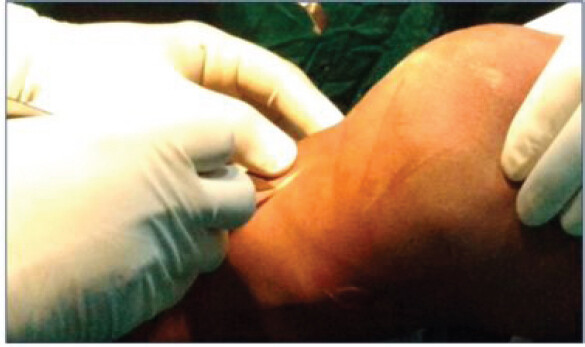
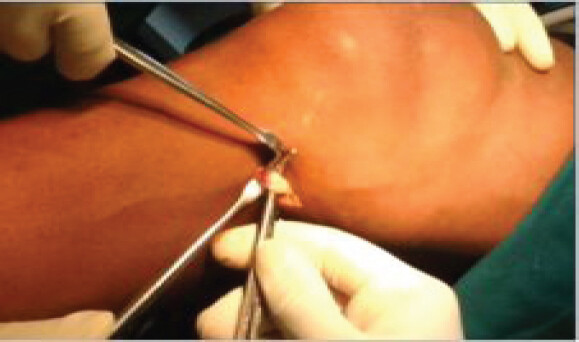
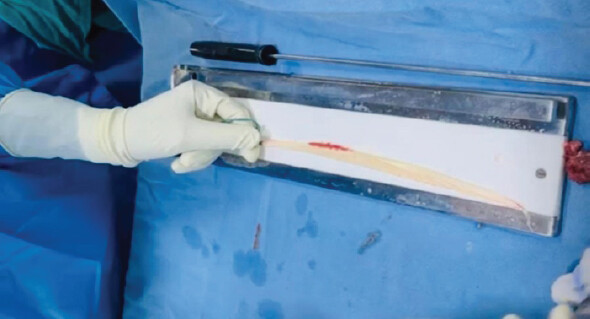
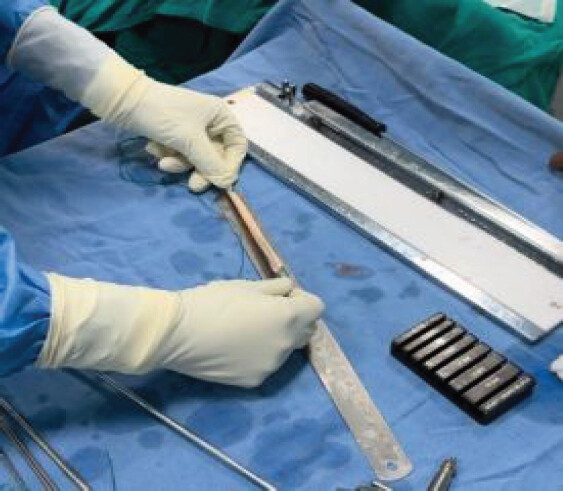
A 4 cm anteromedial tibial incision exposed the gracilis and semitendinosus tendons, which were dissected, released, measured, and folded into a quadrupled graft using Krackow sutures (Figs. 1 and 2).
Peroneus longus graft
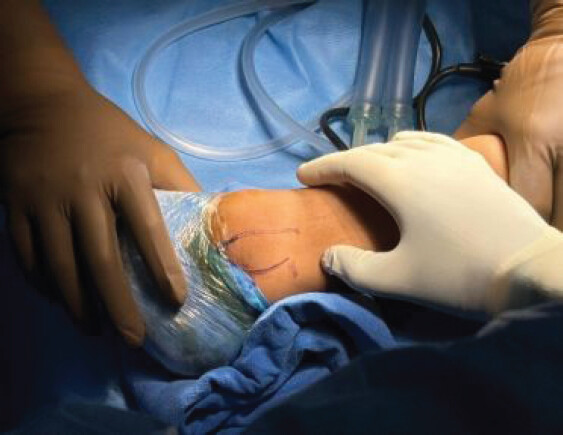
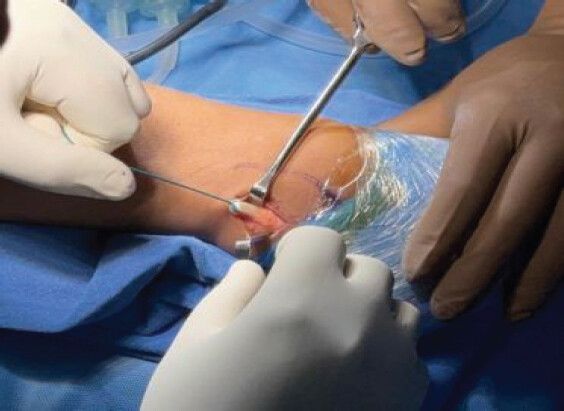
A 2–3 cm lateral distal leg incision exposed the PLT, which was harvested, cleaned, measured, and folded into a double-loop graft suitable for ACL reconstruction (Figs. 3 and 4). Figs. 5 and 6 show graft size measurement and preparation.
ACL reconstruction and tunnel creation
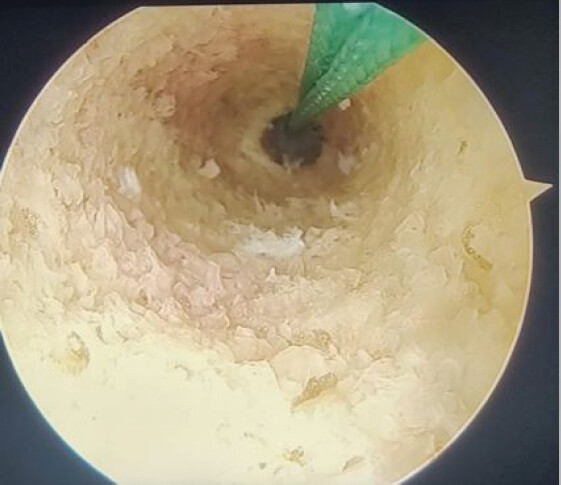
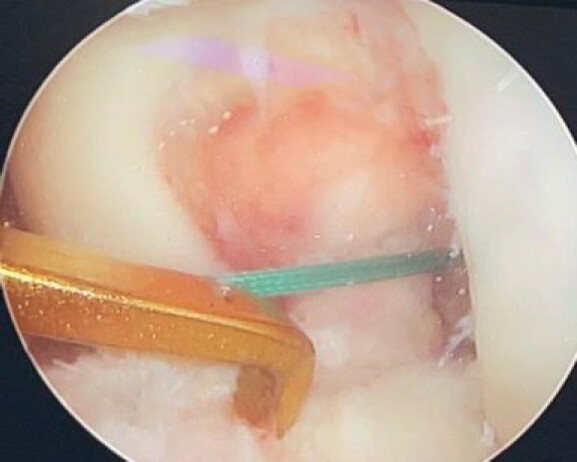
The femoral footprint was identified arthroscopically, and a femoral tunnel was drilled using a guidewire and cannulated reamer to match the graft diameter (Fig. 7). The tibial tunnel was created using a tibial guide and reamer aligned with the anatomical footprint (Fig. 8).
Graft fixation
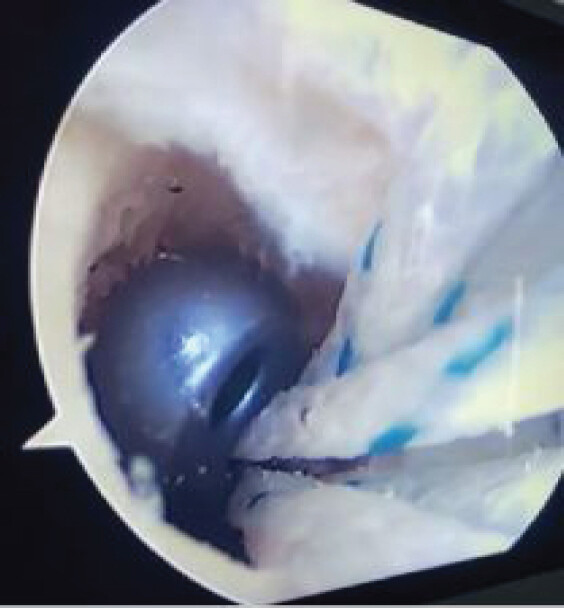
The graft was passed through the tibial and femoral tunnels and secured proximally with a suspensory fixation device (EndoButton) and distally with a bioabsorbable or titanium interference screw. Graft cycling was performed to distribute tension and prevent slack, and final arthroscopic inspection ensured proper orientation and impingement-free motion (Fig. 9).
Post-fixation and wound management
Post-operative imaging confirmed tunnel and fixation placement. Wounds were closed with subcutaneous and skin sutures, a sterile dressing applied, and a knee brace fitted.
Post-operative protocol and evaluation
The limb was immobilized, elevated, and IV antibiotics were administered for 5 days. Wounds were inspected on post-operative days 2 and 7, and sutures removed on day 14. Early rehabilitation commenced under physiotherapist supervision. Follow-up evaluations occurred at 2, 6, 12, and 24 weeks, with radiographs assessing tunnel and fixation positions and functional outcomes measured using standardized scoring systems for knee stability, ROM, and patient-reported outcomes.
Scoring and statistical analysis
Functional outcomes were evaluated using the International Knee Documentation Committee (IKDC) Subjective Knee Evaluation Form, an ordinal scoring system where higher scores indicate better knee function and fewer symptoms. Activities were graded from 0 (unable to perform due to knee pain) to 4 (very strenuous activities, such as jumping or pivoting), and pain frequency was scored from 0 (constant) to 10 (never). The total score from individual items was transformed to a scale of 0–100, with 100 indicating full knee function without restrictions. A valid IKDC score required responses to at least 90% of items. Donor site morbidity was assessed pre- and post-operatively using the American Orthopaedic Foot and Ankle Society (AOFAS) score to evaluate ankle function after grafts harvesting.
For statistical analysis, data were recorded in a pre-designed case record form and entered into Microsoft Excel, then analyzed using the Statistical Package for the Social Sciences version 26. Continuous variables, such as age or graft measurements, were expressed as mean ± standard deviation, while categorical variables, such as gender or type of graft, were presented as counts and percentages. Differences between the hamstring and peroneus longus graft groups were analyzed using the Chi-square test for categorical data and the Student’s t-test for continuous data. Repeated measures Analysis of Variance was employed to assess within-group changes over multiple follow-up time points. A P < 0.05 was considered statistically significant.
Results
Demographic characteristics
The study included 30 patients with complete ACL tears, equally divided into Group A (Hamstring Tendon [HT] Graft) and Group B (PLT Graft). Both groups had similar demographics, with 60% males and 40% females. The majority of patients were aged 31–40 years (66.7% in Group A, 73.3% in Group B), with mean ages of 32.17 ± 4.71 years and 32.83 ± 4.42 years, respectively. The distribution of affected knees was nearly equal, with left and right knees involved in roughly half of the patients in each group.
Mode and timing of injury
Sports injuries were the predominant cause of ACL tears (66.7% in Group A, 60% in Group B), followed by road traffic accidents and trauma. Most patients underwent ACL reconstruction within 1 month of injury (46.7% in both groups), while a smaller proportion had surgery between 1 and 2 months, 2 and 3 months, or after 3 months.
Graft characteristics
The Peroneus Longus graft (Group B) had a significantly larger mean diameter (8.70 ± 0.25 mm) and length (270 ± 7.19 mm) compared to the Hamstring graft (Group A: 8.27 ± 0.32 mm, 255 ± 12.02 mm; P < 0.01) (Table 7).
Pre-operative functional assessment of patients in Group A, that is, hamstring tendon graft, and Group B (peroneus longus tendon graft)
| Parameter | Group A | Group B | P-value |
|---|---|---|---|
| Graft (n=15) (%) | (n=15) (%) | ||
| Anterior drawer test (Grade) | 0.28a | ||
| Grade 2 | 5 (33.3) | 4 (26.7) | |
| Grade 3 | 10 (66.7) | 11 (73.3) | |
| Lachman test (Grade) | 0.28 a | ||
| Grade 2 | 5 (33.3) | 4 (26.7) | |
| Grade 3 | 10 (66.7) | 11 (73.3) | |
| IKDC score (Mean±SD) | 46.1±2.9 | 47.6±3.47 | 0.21b |
| Range of motion (°) | 99.3±9.6 | 101±9.15 | 0.16b |
IKDC: International Knee Documentation Committee, SD: Standard deviationa = chi square test, b = student t – test
Post-operative functional assessment of patients in Group A, that is, hamstring tendon graft, and Group B (Peroneus longus tendon graft) at 12 weeks
| Parameter | Group A hamstring tendon graft | Group B Peroneus longus tendon graft | P-value |
|---|---|---|---|
| (n=15) (%) | (n=15) (%) | ||
| Anterior drawer test (Grade) | 0.66a | ||
| Grade 0 | 11 (73.3) | 12 (80) | |
| Grade 1 | 4 (26.7) | 3 (20) | |
| Lachman test (Grade) | 0.65a | ||
| Grade 0 | 11 (73.3) | 12 (80) | |
| Grade 1 | 4 (26.7) | 3 (20) | |
| IKDC score (Mean±SD) | 82±1.05 | 82.2±1.23 | 0.66b |
| Range of motion (°) | 113.7±4.8 | 116.3±3.99 | 0.11b |
IKDC: International Knee Documentation Committee, SD: Standard deviation, a = chi square test, b = student t – test
Post-operative functional assessment of patients in Group A, that is, hamstring tendon graft, and Group B (peroneus longus tendon graft) at 24 weeks
| Parameter | Group A | Group B | P-value |
|---|---|---|---|
| Hamstring Tendon graft (n=15) (%) | Peroneus longus tendon graft (n=15) (%) | ||
| Anterior drawer test (Grade) | 0.62a | ||
| Grade 0 | 12 (80) | 13 (86.7) | |
| Grade 1 | 3 (20) | 2 (13.3) | |
| Lachman test (Grade) | 0.62a | ||
| Grade 0 | 12 (80) | 13 (86.7) | |
| Grade 1 | 3 (20) | 2 (13.3) | |
| IKDC score (Mean±SD) | 90.7±1.75 | 90.8±2.19 | 0.94b |
| Range of motion (°) | 122.1±4.1 | 124±2.91 | 0.103b |
IKDC: International Knee Documentation Committee, SD: Standard deviationa = chi square test, b = student t – test
Pre- and post-operative functional scoring of patients in Group A (Hamstring Tendon Graft). (n=15)
| Test | Preoperative | Post-operative | Post-operative | P-value* |
|---|---|---|---|---|
| (3 months) | (6 months) | |||
| IKDC score (Mean±SD) | 46.1±2.9 | 82±1.05 | 90.7±1.75 | <0.01 |
| Range of motion (°) | 99.3±9.6 | 113.7±4.8 | 122.1±4.1 | <0.01 |
IKDC: International Knee Documentation Committee, SD: Standard deviation
*
repeated measures ANOVA
Pre- and post-operative functional scoring of patients in Group B (peroneus longus tendon graft). (n=15)
| Test | Preoperative | Post-operative | Post-operative | P-value* |
|---|---|---|---|---|
| (3 months) | (6 months) | |||
| IKDC score (Mean±SD) | 47.6±3.47 | 82.2±1.23 | 91.7±1.56 | <0.01 |
| Range of motion (°) | 101±9.15 | 116±4.81 | 124±2.91 | <0.01 |
IKDC: International Knee Documentation Committee, SD: Standard deviation,
*
repeated measures ANOVA
Assessment of eversion and plantar flexion muscle strength of donor ankle by MRC scale in group B
| Ankle function | Pre-operative (%) | Post-operative | Post-operative |
|---|---|---|---|
| (12 weeks) (%) | (24 weeks) (%) | ||
| Eversion power | |||
| Grade 4 | 0 | 1 (6.7) | 0 |
| Grade 5 | 15 (100) | 14 (93.3) | 15 (100) |
| Plantar flexion | |||
| Grade 5 | 15 (100) | 15 (100) | 15 (100) |
MRC: Medical Research Council
Graft characteristics
| Parameter | Group A | Group B | P-value* |
|---|---|---|---|
| Hamstring tendon graft (n =15) | Peroneus longus tendon graft (n =15) | ||
| (Mean±SD) | (Mean±SD) | ||
| Graft diameter (mm) | 8.27±0.32 | 8.70±0.25 | <0.01 |
| Graft length (mm) | 255±12.02 | 270±7.19 | <0.01 |
SD: Standard deviation,
*
– repeated measures ANOVA
Post-operative complications
No surgical site infections were reported in either group at 12 or 24 weeks. Graft-site paresthesia was initially higher in Group A (20% at 12 weeks) but resolved by 24 weeks; only 1 patient in Group B had transient paresthesia at 12 weeks. Donor-site ankle morbidity in Group B showed a temporary reduction in AOFAS scores at 12 weeks (94.13), which improved by 24 weeks (98.4, P < 0.01). Eversion strength showed a slight decrease at 12 weeks in 1 patient but fully recovered by 24 weeks, while plantar flexion remained intact throughout.
Functional outcomes
Preoperatively, both groups had comparable IKDC scores (Group A: 46.1 ± 2.9; Group B: 47.6 ± 3.47) and ROM (99.3° vs. 101°) (Table 1). Post-operative assessments at 12 and 24 weeks showed significant improvement in both groups, with no statistically significant differences between them (Table 2). At 24 weeks, IKDC scores reached 90.7 ± 1.75 in Group A and 91.7 ± 1.56 in Group B, and mean ROM increased to 122.1° and 124°, respectively (P > 0.05) (Table 3).
Summary
Both grafts provided excellent functional recovery, with significant improvements in IKDC scores and knee ROM over 6 months. While the Peroneus Longus graft had larger dimensions, it caused only a temporary reduction in ankle eversion strength, which fully recovered by 24 weeks, indicating it as a viable alternative to the HT graft for ACL reconstruction.
Discussion
Overview of ACL injuries and graft options
ACL injuries are among the most common sports-related and trauma-associated knee injuries, especially in active and physically demanding populations [5]. Arthroscopic ACL reconstruction is well established as the gold-standard treatment to restore knee stability and function. While the HT autograft has traditionally been favored due to its favorable strength, consistent graft size, and relatively low donor site morbidity, alternative grafts, such as bone-patellar tendon-bone, quadriceps tendon grafts, allografts, and synthetics (e.g., ligament augmentation and reconstruction system) have also been explored. Recently, the PLT has gained interest as a viable alternative, with several studies suggesting comparable functional outcomes, larger graft dimensions, and limited knee donor site morbidity [6].
Participant characteristics
Sex distribution
In this study, both graft groups had an equal sex distribution (60% male and 40% female), consistent with published cohorts reporting male predominance in ACL injuries due to higher participation of males in high-impact sports. Nazem et al. also noted a male majority in their cohort of 375 ACL reconstructions, aligning with findings from Reddy et al. where males predominated in a 50-patient ACLR series with road traffic injuries. However, studies by Agarwal et al. and Asif et al. reported more balanced sex ratios, possibly reflecting increased female engagement in competitive sports [7].
Age distribution
The majority of participants in both groups were aged 31–40 years, with mean ages of approximately 32 years, aligning with other studies that suggest ACL tears are most prevalent in the third and fourth decades due to higher physical activity and occupational strain. Younger patients (21–30 years) constituted a smaller proportion in this study, comparable to Agarwal et al.’s findings of fewer injuries in younger cohorts [8].
Side distribution
This study showed near-equal left and right knee involvement in both groups, consistent with previous literature suggesting no strong side predilection in ACL injuries. Limb dominance, external forces, and biomechanical factors likely contribute to the multifactorial nature of injury laterality, as discussed by Vijay et al. [9].
Mode of injury
Sports related activities were the predominant cause of ACL injuries in both groups, accounting for 66.7% and 60% in the HT and PLT groups, respectively, supported by similar findings in studies involving younger, active populations. Mechanical forces during pivoting or jumping significantly increase ACL load. Road traffic accidents and direct trauma accounted for the remainder, similar to patterns described by Keyhani et al. [10].
Surgical parameters and graft characteristics
PLT grafts in this study had significantly larger diameters (mean 8.70 mm) and lengths (mean 270 mm) compared with HT grafts (mean diameter 8.27 mm, length 255 mm; P < 0.01). These findings are consistent with prior evidence indicating that PLT grafts generally provide larger cross-sectional area and length, which may confer biomechanical advantages and potential reductions in graft failure risk. Larger grafts also necessitated slightly wider tibial screw diameters in the PLT group, as reported in Keyhani et al. and Asif et al. [10, 11].
Post-operative complications
Surgical site infections
No surgical site infections were observed in either group at 12 and 24 weeks, echoing the low infection rates documented in ACL reconstruction cohorts when aseptic technique and prophylactic antibiotic protocols are followed.
Paresthesia
Graft-site paresthesia was more frequent in the HT group at 12 weeks (20%) compared with the PLT group (6.7%), but declined by 24 weeks. This trend aligns with studies linking nerve irritation at hamstring harvest sites with early sensory disturbances. Lower donor site paresthesia in the PLT group may result from its harvest location outside the knee joint capsule [12].
Donor site morbidity (PLT group)
PLT donor site assessment showed a temporary decline in AOFAS scores at 12 weeks with significant recovery by 24 weeks, demonstrating minimal long-term functional impairment. Similarly, transient reduction in ankle eversion strength was noted at 12 weeks but fully resolved by 24 weeks, and plantar flexion remained unaffected throughout. These outcomes align with reports of minimal donor site morbidity and recovery of ankle strength following PLT harvest, reinforcing the PLT graft’s safety in preserving ankle function (Table 6) [13].
Functional outcomes
Pre- and post-operative knee function
Preoperative functional assessments indicated similar baseline knee stability and IKDC scores between groups, consistent with prior comparisons of ACL graft cohorts. Both groups showed significant improvements at 12 and 24 weeks in Anterior Drawer and Lachman tests, IKDC scores, and ROM, with no statistically significant differences between graft types at any post-operative time point. These findings corroborate a growing body of evidence demonstrating comparable functional recovery between HT and PLT grafts [14, 15].
Studies by He et al. and Keyhani et al. reported analogous functional outcomes and graft survivorship between PLT and HT, including slightly better subjective scores in PLT groups [16]. Reddy et al. found similar knee stability outcomes with both grafts at mid-term follow-up [7]. Agarwal et al. reported equivalent IKDC and Lysholm scores at 6–12 months, further supporting the equivalence of these grafts. Vijay et al. and Asif et al. also highlighted early return to activity and larger graft dimensions with PLT without increased morbidity [9].
Conclusion
This study demonstrates that both HT and PLT grafts provide effective, comparable functional and clinical outcomes following arthroscopic ACL reconstruction. The PLT graft offers larger graft size and minimal donor site morbidity with transient, non-impactful ankle strength changes and no compromise in long-term ankle or knee function. These findings support the PLT graft as a reliable alternative to the conventional HT graft, particularly in cases where preserving hamstring integrity or attaining a larger graft diameter is clinically desirable.
Clinical Message
Peroneus longus tendon is a viable autologous graft option for arthroscopic ACL reconstruction, providing larger graft dimensions and comparable 6-month functional outcomes to quadrupled HT grafts. Although temporary reduction in ankle eversion strength may occur following peroneus longus tendon harvest, it appears to resolve during rehabilitation. Thus, the peroneus longus tendon can be considered an alternative graft, particularly when a larger graft diameter is required.
Conflict of Interest:
Nil
Source of Support:
Nil
Consent
The authors confirm that informed consent was obtained from the patient for publication of this article
How to Cite this Article
Singh A, Gupta G, Das S, Saini A, Singh A, Relwani N. Functional Outcome in Arthroscopic Anterior Cruciate Ligament Reconstruction Using an Autologous Quadrupled Hamstring Tendon Versus Peroneus Longus Tendon Graft: A Comparative Study. J Orthop Case Rep. 2026 November;16(11):553-561. doi: 10.13107/jocr.2026.v16.i11.8550.
References
- Jenkins DB. Hollinshead's Functional Anatomy of the Limbs and Back. Philadelphia, PA. Harcourt Brace and Company 1991:233-9. [Google Scholar] | [PubMed]
- Kiapour AM, Murray MM. Basic science of anterior cruciate ligament injury and repair. Bone Joint Res 2014;3:20-31. [Google Scholar] | [PubMed]
- Butler DL, Noyes FR, Grood ES. Ligamentous restraints to anterior-posterior drawer in the human knee. A biomechanical study. J Bone Joint Surg Am 1980;62:259-70. [Google Scholar] | [PubMed]
- Kiapour AM, Wordeman SC, Paterno MV, Quatman CE, Levine JW, Goel VK. Diagnostic value of knee arthrometry in the prediction of anterior cruciate ligament strain during landing. Am J Sports Med 2014;42:312-9. [Google Scholar] | [PubMed]
- Ellison AE, Berg EE. Embryology, anatomy, and function of the anterior cruciate ligament. Orthop Clin NA 1985;16:3-14. [Google Scholar] | [PubMed]
- Girgis FG, Marshall JL, Monajem AR. The cruciate ligaments of the knee joint. Anatomical, functional and experimental analysis. Clin Orthp Relat Res 1975;106:210-31. [Google Scholar] | [PubMed]
- Reddy KS, Keerthi N, Sarvani KK. Functional outcome between peroneus longus vs hamstring graft in an ACL reconstruction. Eur J Cardiovasc Med 2023;13:2346-51. [Google Scholar] | [PubMed]
- Agarwal A, Singh S, Singh A, Tewari P. Comparison of functional outcomes of an anterior cruciate ligament (ACL) reconstruction using a peroneus longus graft as an alternative to the hamstring tendon graft. Cureus 2023;15:e37273. [Google Scholar] | [PubMed]
- Vijay VK, Deepak DK, Pande H, Thakur S, Anand R. Functional outcome of hamstring versus peroneus longus tendon graft in arthroscopic anterior cruciate ligament reconstruction -a prospective comparative study. J Arthrosc Surg Sports Med 2024;5:32-7. [Google Scholar] | [PubMed]
- Keyhani S, Qoreishi M, Mousavi M, Ronaghi H, Soleymanha M. Peroneus longus tendon autograft versus hamstring tendon autograft in anterior cruciate ligament reconstruction: A comparative study with a mean follow-up of two years. Arch Bone Jt Surg 2022;10:695-701. [Google Scholar] | [PubMed]
- Asif N, Khan MJ, Singhal U, Anwer A, Firoz MA, Rashid M. Randomized controlled study comparing hamstring graft and peroneus longus tendon graft in arthroscopic ACL reconstruction. J Orthop Case Rep 2024;14:240-5. [Google Scholar] | [PubMed]
- Park CH, Lee WC. Donor site morbidity after lateral ankle ligament reconstruction using the anterior half of the peroneus longus tendon autograft. Am J Sports Med 2017;45:922-8. [Google Scholar] | [PubMed]
- Shao X, Shi LL, Bluman EM, Wang S, Xu X, Chen X. Satisfactory functional and MRI outcomes at the foot and ankle following harvesting of full thickness peroneus longus tendon graft. Bone Joint J 2020;102:205-11. [Google Scholar] | [PubMed]
- Makhmalbaf H, Moradi A, Ganji S, Omidi-Kashani F. Accuracy of lachman and anterior drawer tests for anterior cruciate ligament injuries. Arch Bone Jt Surg 2013;1:94-7. [Google Scholar] | [PubMed]
- Slocum DB, James SL, Larson RL, Singer KM. Clinical test for anterolateral rotary instability of the knee. Clin Orthop Relat Res 1976;118:63-9. [Google Scholar] | [PubMed]
- He J, Tang Q, Ernst S, Linde MA, Smolinski P, Wu S. Peroneus longus tendon autograft has functional outcomes comparable to hamstring tendon autograft for anterior cruciate ligament reconstruction: A systematic review and meta-analysis. Knee Surg Sports Traumatol Arthrosc 2021;29:2869-79. [Google Scholar] | [PubMed]
© 2026 Journal of Orthopaedic Case Reports - Published by Indian Orthopaedic Research Group
About the Authors
-

Abhishek Singh
-

Gagandeep Gupta
-

Samay Das
-

Akhilesh Saini
-

Ayush Singh
-

Nikhil Relwani
Related Articles in Journal of Orthopaedic Case Reports
 September 1, 2026 From Ankle to Knee: Donor-Site Morbidity after Peroneus Longus Tendon Graft for ACL Reconstruction Assessed by the Kitaoka Ankle-Hindfoot Score – A Prospective Cohort Study
 September 1, 2026 Serial Magnetic Resonance Imaging Graft Signal Intensity and its Correlation with Functional Recovery Following Primary Anterior Cruciate Ligament Reconstruction
 September 1, 2026 Comparing Bridge-Enhanced Anterior Cruciate Ligament Repair to Standard Autograft for Anterior Cruciate Ligament Reconstruction: Biomechanical and Clinical Outcomes
 September 1, 2026 Comparative Analysis of Functional Outcomes of Accelerated versus Conventional Rehabilitation after Anterior Cruciate Ligament Reconstruction Surgery