


Introduction
Near-total traumatic amputations of the upper limb represent severe high-energy injuries associated with extensive soft-tissue damage, contamination, vascular injury, and bone loss. Determining whether to attempt limb salvage or perform primary amputation remains a major challenge.
Scoring systems, such as the Mangled Extremity Severity Score (MESS) have been proposed to guide decision-making; however, their reliability in upper limb injuries is limited [1,2]. Upper limb salvage is frequently attempted because even partial function provides significant functional and psychological benefits compared to amputation [2].
Initial stabilization with external fixation is commonly used as part of damage-control orthopedics, allowing wound care and staged reconstruction [3,4].
The titanium elastic nailing system (TENS), widely used in pediatric fractures, has limited documentation in adult trauma as a spanning construct. We present a case of near-total elbow amputation managed with staged fixation using spanning TENS nails, resulting in successful limb salvage.
Case Report
A 54-year-old female presented to the emergency department approximately 5 hours after a road traffic accident involving a side-swipe injury to the dominant right upper limb.
On arrival, the patient was conscious, oriented, and hemodynamically stable, with no evidence of head injury, chest injury, abdominal injury, or associated fractures involving other extremities.
Primary trauma survey was performed according to Advanced Trauma Life Support protocol, following which detailed examination of the right upper limb was carried out.
Clinical examination revealed approximately 75% soft-tissue and skin loss involving the distal arm and proximal forearm measuring approximately 30 × 10 cm, predominantly over the posterior and lateral aspects, with gross contamination, exposed bone fragments, and muscle tissue (Fig. 1). There was evidence of near-total amputation at the level of the elbow joint, with fractures involving the proximal humerus, distal bone loss, and proximal bone loss involving the radius and ulna, associated with significant muscle loss (Fig. 2).
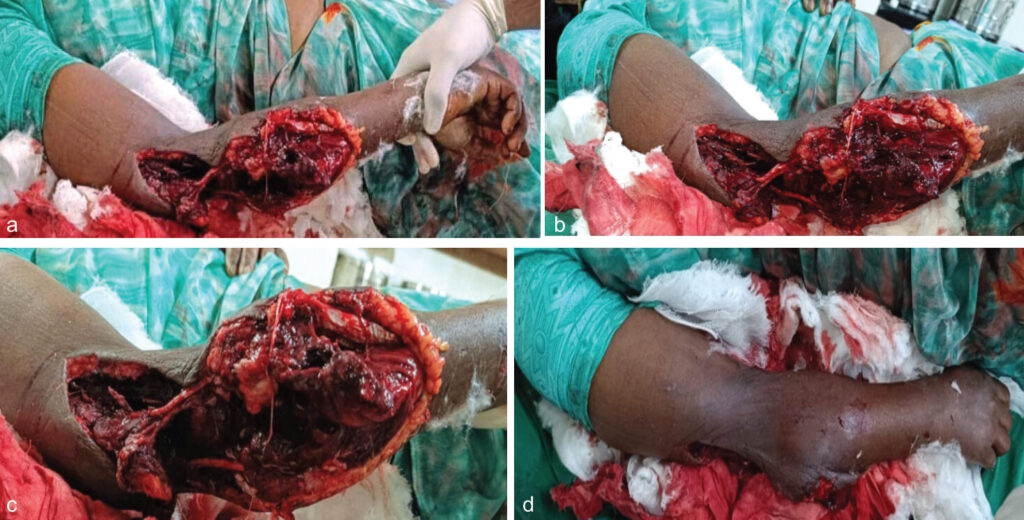
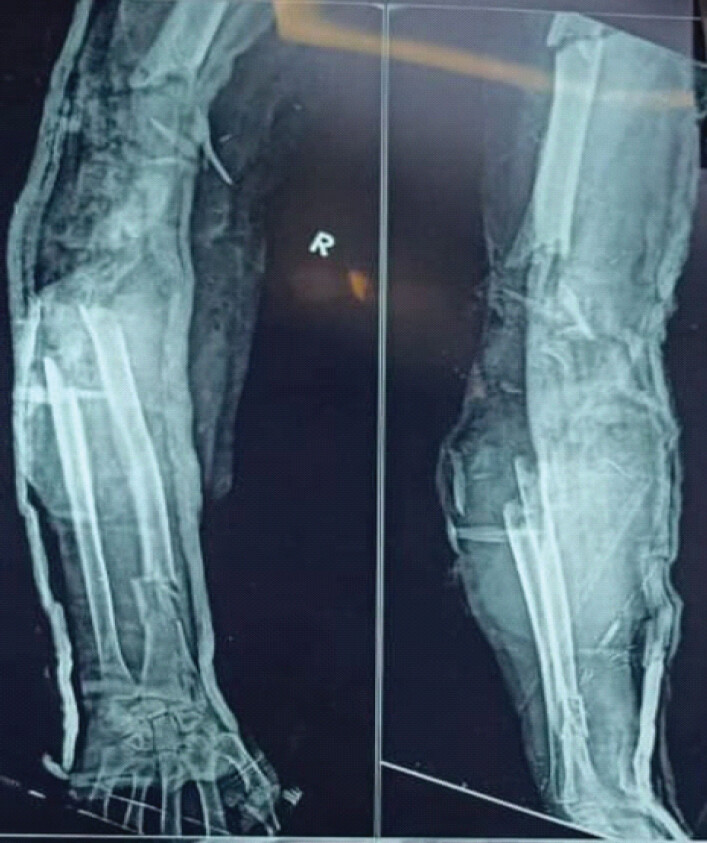
The injury was classified as a Gustilo-Anderson Type IIIB open fracture. Intraoperatively, extensive soft-tissue devitalization and non-viable muscle were identified and thoroughly debrided. There was loss of the olecranon fragment with associated disruption and laceration of the triceps insertion mechanism.
The MESS was >7, indicating a severe limb injury.
Initial surgical management
Emergency surgical management included extensive wound debridement, removal of devitalized tissue, and temporary stabilization using an external fixator spanning the elbow joint (Fig. 3).
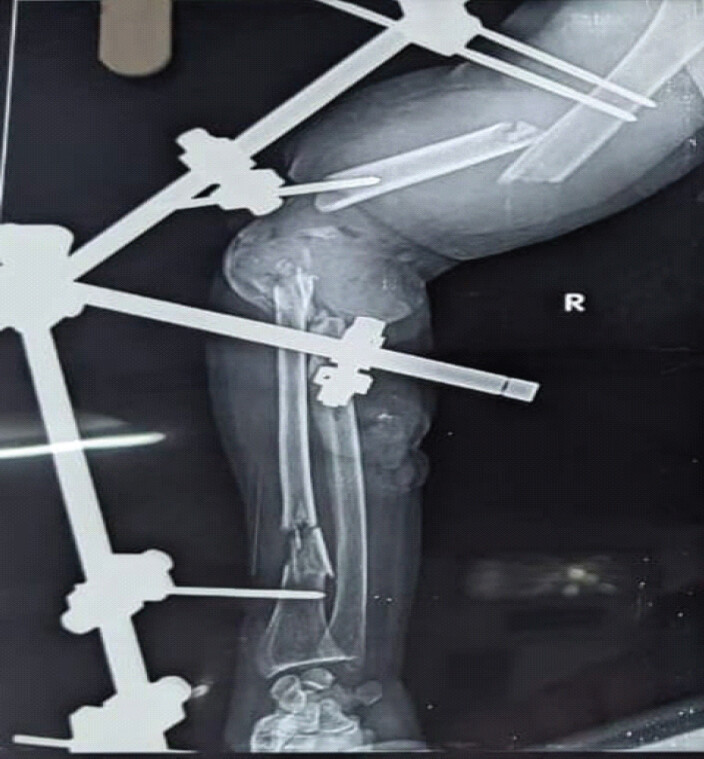
All major neurovascular structures, including the brachial artery, median nerve, musculocutaneous nerve, radial nerve, and ulnar nerve, were explored and found to be contused but intact.
Further fixation
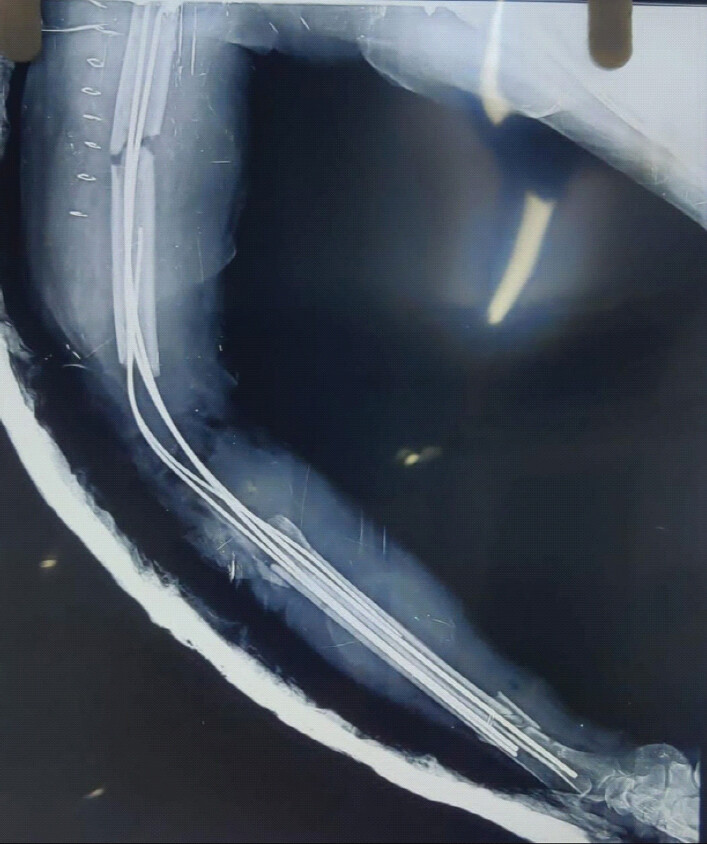
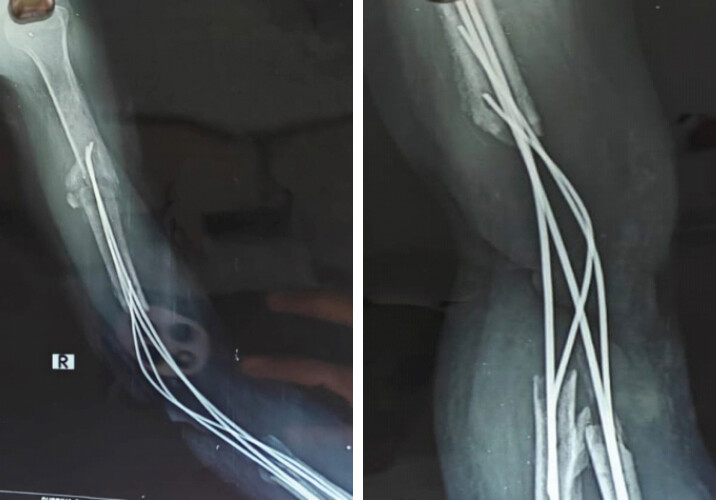
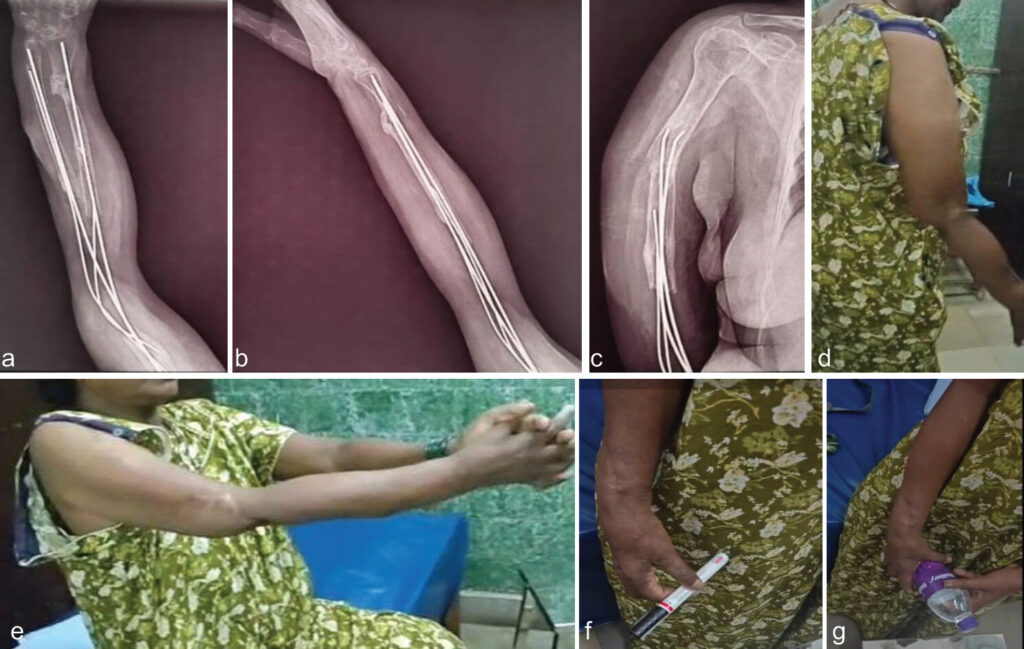
Definitive stabilization was achieved using four titanium elastic nails inserted in a spanning configuration across the elbow joint, connecting the fractured humerus with the fractured radius and ulna (Fig. 4). Two 1.5 mm titanium elastic nails and two 2.5 mm titanium elastic nails were used. Nail diameter was selected according to the available medullary canal diameter to achieve adequate elastic stability while minimizing additional soft-tissue trauma and preserving fracture biology. This construct maintained limb alignment and stability in the presence of bone loss (Fig. 5).
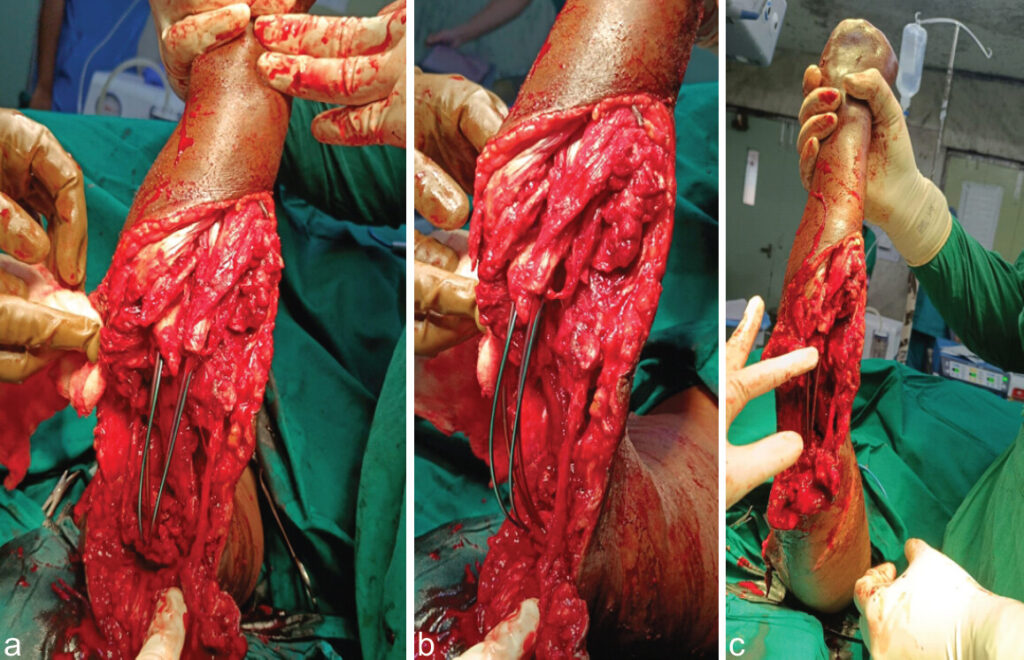
Soft tissue reconstruction
Following skeletal stabilization, loose skin closure was initially obtained because of associated muscle loss and soft-tissue deficiency. Subsequently, areas of skin necrosis developed and were managed with serial debridement and regular wound dressings until satisfactory wound healing was achieved. Plastic surgery intervention was not required in the present case. Definitive soft-tissue coverage was subsequently achieved using split-thickness skin grafting without the need for flap reconstruction.
Outcome
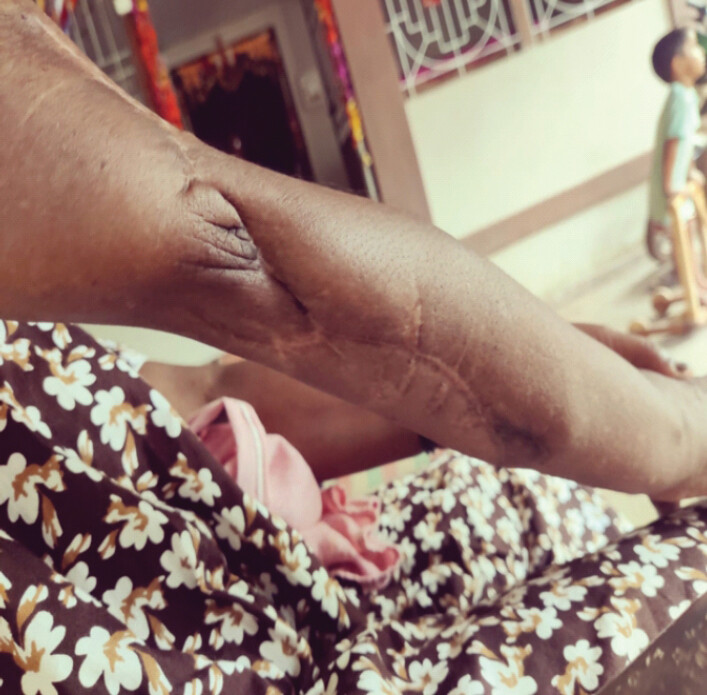
Post-operatively, the limb was immobilized in an above-elbow plaster of Paris slab. Broad-spectrum intravenous antibiotics were administered, and serial wound inspections were performed. After 3 weeks, the plaster slab was discontinued, and arm pouch support was continued. Gradual physiotherapy and rehabilitation were initiated following satisfactory soft-tissue healing (Fig. 6).
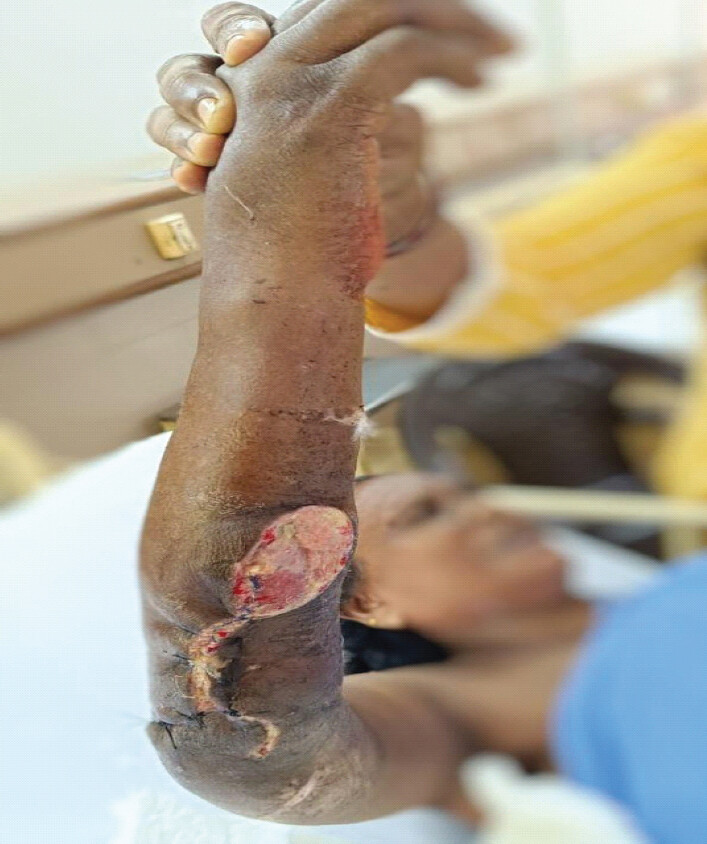
At 8-month follow-up, the patient demonstrated satisfactory limb salvage with complete resolution of pain and no evidence of deep infection or implant-related complications. Distal vascularity was maintained with a palpable ulnar artery pulse.
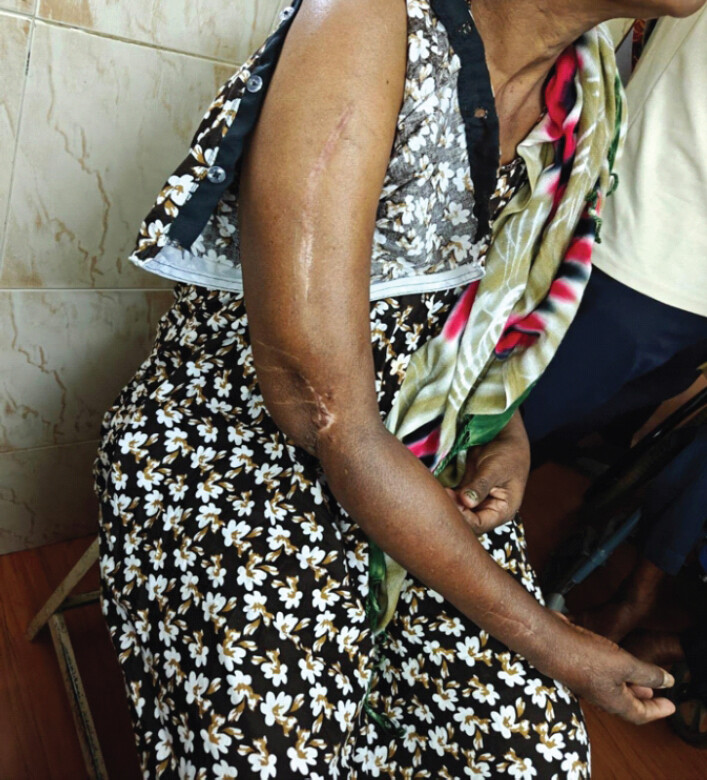
Neurologically, wrist movements that were absent immediately after injury showed partial recovery, with approximately 20° of wrist flexion achieved at final follow-up. Finger movements were present with partial return of hand function; however, grip strength remained inadequate. Wrist extension remained absent.
The elbow was fixed in approximately 10° of flexion with no significant elbow range of motion (Figs. 7–10). Despite residual functional limitations, the salvaged limb retained partial distal hand function with acceptable soft-tissue healing. The patient was able to hold a bottle with assistance from the contralateral limb and could hold a pen, although writing was not possible. The patient reported satisfaction with limb preservation and preferred the salvaged limb over amputation.
Discussion
Near-total traumatic amputations around the elbow are devastating injuries associated with extensive soft-tissue loss, contamination, neurovascular compromise, and bone loss [5,6]. The decision between limb salvage and primary amputation remains controversial. The MESS, first described by Johansen et al., assists in predicting the likelihood of limb salvage; however, its reliability in upper limb injuries remains limited [1,2].
Early management of severe open fractures includes prompt debridement, antibiotic therapy, and skeletal stabilization to reduce infection risk and improve outcomes [7]. Damage-control orthopedics recommends temporary stabilization using external fixation, particularly in contaminated and high-energy injuries [3,4].
Complex elbow injuries are particularly difficult to manage because of limited soft-tissue coverage and intricate anatomy [8,9]. The associated loss of the olecranon fragment and disruption of the triceps insertion further complicated reconstruction and limited conventional fixation options.
The TENS, although primarily used in pediatric fractures, offers advantages, such as minimal soft-tissue disruption, preservation of fracture biology, and ease of insertion [10,11]. In the present case, four titanium elastic nails were used in a spanning configuration across the elbow joint, providing stabilization while facilitating wound care and staged soft-tissue reconstruction in the presence of bone loss.
Various fixation methods have been described in the management of complex elbow trauma and near-amputation injuries, including plate osteosynthesis, external fixation, intramedullary interlocking nails, elbow arthrodesis, and total elbow arthroplasty. However, these techniques may be limited in the presence of severe contamination, extensive soft-tissue injury, and bone loss [4,8].
Although TENS fixation is primarily used in pediatric fractures, several studies have demonstrated its usefulness in selected adult humeral and forearm fractures because of its minimally invasive nature and preservation of fracture biology [10,11,12]. Biomechanical studies have shown that flexible intramedullary nails function as internal splints, providing relative stability through elastic three-point fixation principles [13].
Alternative fixation strategies, including plate osteosynthesis, prolonged external fixation, elbow arthrodesis, and total elbow arthroplasty were considered. However, severe contamination, extensive soft-tissue compromise, disruption of the extensor mechanism, and bone loss limited the feasibility of these options. Spanning TENS fixation provided a minimally invasive alternative that maintained alignment while facilitating wound management and staged reconstruction.
Although functional recovery remained limited because of the severity of neurovascular and soft-tissue injury, limb salvage resulted in preservation of a pain-free limb with partial hand function and satisfactory cosmetic outcome.
However, literature describing the use of multiple spanning titanium elastic nails across the elbow joint in adult near-amputation injuries remains extremely limited. To the best of our knowledge, reports describing the use of multiple spanning titanium elastic nails across the elbow joint in adult near-amputation injuries are scarce in the available literature.
Conclusion
Near-total traumatic elbow amputation is a severe limb-threatening injury requiring staged surgical management.
External fixation followed by spanning titanium elastic nails may provide an effective salvage strategy in complex elbow trauma with bone loss when conventional fixation techniques are not feasible.
Even in cases with severe soft-tissue loss and extensor mechanism disruption, staged limb salvage using unconventional fixation methods may provide meaningful functional preservation.
Clinical Message
In severe elbow trauma with bone loss and extensive soft-tissue injury, spanning titanium elastic nails may provide a minimally invasive stabilization method that facilitates limb salvage and staged reconstruction.
Conflict of Interest:
Nil
Source of Support:
Nil
Consent
The authors confirm that informed consent was obtained from the patient for publication of this article
How to Cite this Article
Abdulla A, Deshpande M, Patil DU, Mamgain P, Lawande NN, Kenkre AD. Limb Salvage in Near-Total Traumatic Elbow Amputation with Bone Loss Using Spanning Titanium Elastic Nails: A Case Report. J Orthop Case Rep. 2026 November;16(11): 67-73. doi: 10.13107/jocr.2026.v16.i11.8390.
References
- Johansen K, Daines M, Howey T, Helfet D, Hansen STJr. Objective criteria accurately predict amputation following lower extremity trauma. J Trauma 1990;30:568-72. discussion 572-3. [Google Scholar] | [PubMed]
- Bosse MJ, MacKenzie EJ, Kellam JF, Burgess AR, Webb LX, Swiontkowski MF. An analysis of outcomes of reconstruction or amputation after leg-threatening injuries. N Engl J Med 2002;347:1924-31. [Google Scholar] | [PubMed]
- Giannoudis PV, Pape HC, Cohen AP, Krettek C, Smith RM. Damage control orthopaedics in unstable pelvic ring injuries. Injury 2005;36:671-7. [Google Scholar] | [PubMed]
- Pape HC, Giannoudis PV, Krettek C, Trentz O. Timing of fixation of major fractures in blunt polytrauma: Role of conventional indicators in clinical decision making. J Orthop Trauma 2005;19:551-62. [Google Scholar] | [PubMed]
- Court-Brown CM, Bugler KE, Clement ND, Duckworth AD, McQueen MM. The epidemiology of open fractures in adults. A 15-year review. Injury 2012;43:891-7. [Google Scholar] | [PubMed]
- Court-Brown CM, Heckman JD, McQueen MM, Ricci WM, Tornetta P 3rd, McKee MD. Rockwood and Green's Fractures in Adults. 8th ed Philadelphia, PA:Wolters Kluwer Health 2015. [Google Scholar] | [PubMed]
- Gustilo RB, Anderson JT. Prevention of infection in the treatment of one thousand and twenty-five open fractures of long bones: Retrospective and prospective analyses. J Bone Joint Surg Am 1976;58:453-8. [Google Scholar] | [PubMed]
- Ring D, Jupiter JB. Complex fractures of the elbow and their complications. Orthop Clin North Am 1999;30:103-13. [Google Scholar] | [PubMed]
- Jupiter JB, Morrey BF. Fractures of the distal humerus in adults Morrey BF, Sanchez-Sotelo J. The Elbow and Its Disorders. 4th ed. Philadelphia, PA:Saunders Elsevier;2009 333-66. [Google Scholar] | [PubMed]
- Lascombes P, Haumont T, Journeau P. Use and abuse of flexible intramedullary nailing in children and adolescents. J Pediatr Orthop 2006;26:827-34. [Google Scholar] | [PubMed]
- Flynn JM, Skaggs DL. Titanium elastic nailing of pediatric fractures Beaty JH, Kasser JR. Rockwood and Wilkins' Fractures in Children. Philadelphia, PA:Lippincott Williams and Wilkins;2010. [Google Scholar] | [PubMed]
- Ligier JN, Metaizeau JP, Prevot J, Lascombes P. Elastic stable intramedullary nailing of femoral shaft fractures in children. J Bone Joint Surg Br 1988;70:74-7. [Google Scholar] | [PubMed]
- Furlan D, Pogorelić Z, Biocić M, Jurić I, Budimir D, Todorić J. Elastic stable intramedullary nailing for pediatric long bone fractures: Biomechanical principles and clinical application. Acta Clin Croat 2011;50:519-31. [Google Scholar] | [PubMed]
© 2026 Journal of Orthopaedic Case Reports - Published by Indian Orthopaedic Research Group
About the Authors
-

Ajmal Abdulla
-

Milind Deshpande
-

Dhairyasheel Udaysinh Patil
-

Praful Mamgain
-

Neel Nilesh Lawande
-

Aadishree Devendra Kenkre
Related Articles in Journal of Orthopaedic Case Reports
 November 1, 2026 Limb Salvage of a Flail Neuropathic Ankle in Congenital Insensitivity to Pain with Anhidrosis Using a Hindfoot Superconstruct
 November 1, 2026 Immediate Limb Lengthening Following Vascular Repair of Iatrogenic Arterial Lesions – A Report of Two Cases
 November 1, 2026 Compression of the Diseased Segment and Regeneration through Healthy Bone for Salvage of Infected Recurrent Congenital Pseudarthrosis of the Tibia in an Adult: A Case Report
 October 1, 2026 Development of a Non-ossifying Fibroma in the Same Femur 6 Years after Limb-Salvage Surgery for Osteosarcoma: A Case Report