

The Vancomycin Povidone-Iodine Protocol shows promising efficacy in the reduction of infection rates in arthroplasty.
Dr. Arjun Ganesh, Department of Orthopaedic Surgery, Sri Ramachandra Institute of Higher Education and Research, Chennai, Tamil Nadu, India. E-mail: drarjunganeshjournal@gmail.com
Abstract
Introduction: Patients of all age groups undergoing arthroplasty surgeries can develop surgical site infection after operation, which represents a major source of patient harm. Intrawound vancomycin and irrigation with dilute povidone-iodine is a potential prophylactic measure to prevent infection; thus, this prospective clinical observational study was done to evaluate its efficacy. .
Materials and Methods: Patients who underwent arthroplasty surgeries (total knee arthroplasty, total hip arthroplasty, hip bipolar hemiarthroplasty) at one specialist tertiary care center, from October 2020 to October 2022, were included in our study. Patients <18 years of age and known cases of vancomycin allergy were excluded from the study. These were the inclusion and exclusion criteria in our study. Participants were split into two groups: Group 1, vancomycin povidone-iodine protocol (VPIP) not initiated, and Group 2, VPIP initiated. The period of follow-up was 6 weeks, and the primary outcome under consideration was wound healing. After 6 weeks, patients in both groups were assessed using the ASEPSIS wound score, assigned to a category of infection, and the results compared between the groups.
Results: Mean ASEPSIS scores in Groups 1 and 2 were 4.46 (±7.6) and 1.17 (±3.7), respectively, while overall infection rates were 5.8% and 0.8%. The chance of developing infection was 11-fold higher in Group 1 patients than those in Group 2, which was a highly significant difference (adjusted odds ratio = 11.651; 95% confidence interval, 1.27–106.76; P < 0.05). The likelihood of developing an infection was significantly higher among individuals with diabetes mellitus (P < 0.05).
Conclusion: Use of the VPIP in patients undergoing arthroplasty generated good results, indicating that it is a good infection prevention measure. Additional randomized controlled trials are needed to assess the effectiveness of this method and ascertain whether its extensive utilization is justified.
Keywords: Vancomycin, arthroplasty, total knee arthroplasty, povidone-iodine, infection control, total hip arthroplasty

In the interval between incision and closure, surgical site infection (SSI) can arise due to surgical site contamination. SSIs, as defined by the Centers for Disease Control and Prevention (CDC) in the United States, are infections that happen in the area where a surgical procedure was performed within 30 days after the surgery or within 1 year if an implant is inserted and the infection is considered to be linked with the surgery [1]. Patients of all age groups undergoing arthroplasty surgeries can develop SSI after the operation, representing a major source of patient harm. SSI following arthroplasty surgery is a serious complication, resulting in poor outcomes, including prolonged hospitalization, readmission, and re-operation [2].
Although numerous preventative measures are in place, the incidence of infection during total hip arthroplasty (THA) remains around 1–2%. The augmented risks of both SSI and periprosthetic joint infection (PJI) are associated with multiple factors related to the wound and the host, which has led to the exploration of alternative preventive approaches, such as the formulation of diverse antibiotic and wound irrigation regimens. To lower the frequency of PJI and SSI, it has been suggested that novel prophylaxis measures be methodically assessed [3].
The use of diluted povidone-iodine lavage has been shown to be a safe and effective method for reducing the incidence of acute PJI after total joint arthroplasty (TJA). Brown et al. demonstrated the clinical efficacy of this approach in decreasing the infection occurrence in patients undergoing TJA. Moreover, the utilization of diluted povidone-iodine lavage has several advantages, such as low cost, broad-spectrum bactericidal properties, and efficacy against aggressive microorganisms such as methicillin-resistant Staphylococcus aureus, Pseudomonas aeruginosa, and fungi. This technique is also user-friendly and widely accessible in most operating rooms [4].
In addition to other preventative measures, the application of vancomycin powder in the surgical site has been found to be a useful method for preventing infection. Otte et al., established the effectiveness of this technique in patients who underwent revision total knee arthroplasty (TKA) and revision THA, by significantly reducing the incidence of infections compared to patients in the control group who were not administered intrawound vancomycin powder [5].
The role of intrawound vancomycin powder and irrigation with dilute povidone-iodine lavage in reducing SSIs when each is used independently in patients undergoing arthroplasty surgeries has been explored to some extent in the orthopedic literature [6,7]. In addition, the impact of the combined use of vancomycin powder and diluted povidone-iodine lavage was examined in a study involving high-risk arthroplasty patients, and it showed a decrease in PJI incidence and an increase in the success rate of irrigation, debridement, and liner exchange as a treatment for early PJI [2]. A recent study conducted in 2021 extended the use of the vancomycin povidone-iodine protocol (VPIP), a combination of intrawound vancomycin powder and dilute povidone-iodine, to all patients undergoing surgery, regardless of pre-operative risk factors. The results of the study indicated that VPIP significantly decreased the risk of PJI in all groups of patients [4].
The ASEPSIS score has proven to be a dependable, comparable, and consistent technique for evaluating post-operative infections, unlike other scales that have not demonstrated similar outcomes. In a research that aimed to compare infection rates in surgical wounds amongst orthopedic patients using either the ASEPSIS scoring method or adhering to the protocols proposed by the US CDC and UK SSI surveillance service (SSISS), the overall incidence of infection was 8% based on the CDC guidelines, 4% according to SSISS guidelines, and 3% using the ASEPSIS approach. Moreover, the CDC and SSISS definitions were found to be subjective and subject to surgeon interpretation, while ASEPSIS was regarded as an objective and replicable method. Thus, the ASEPSIS score represents a simple and appropriate tool for evaluating surgical wound infections and was adopted in our study [8].
Due to the limited number of prospective research studies in orthopedic literature that have examined the potential benefits of administering the VPIP to all patients, regardless of their pre-operative risk, the objective of this prospective clinical observational study was to assess the impact of intrawound treatment using the VPIP as a prophylactic measure for infection in patients undergoing arthroplasty. This prospective clinical observational study evaluated the incidence of infection in arthroplasty using the ASEPSIS score system, and thus determining the efficacy of the Vancomycin-Iodine Protocol as a prophylactic measure in arthroplasty surgeries.
All patients who underwent primary arthroplasty surgeries (TKA, total hip replacement, hip bipolar hemiarthroplasty) at a single specialist tertiary care center (Sri Ramachandra Institute of Higher education and Research, Chennai, India), performed by four equally experienced fellowship-trained arthroplasty surgeons, from October 2020 to October 2022, were included in the study. Patients <18 years of age and those with a known drug allergy to vancomycin were excluded from the study. These were the inclusion and exclusion criteria. As part of the pre-operative workup, patient details, including age, sex, and associated comorbidities, were documented, and pre-operative radiographs of the involved joints were taken. The study participants were segregated into two groups: Group 1 consisted of individuals who did not receive the VPIP, while Group 2 comprised those who were administered the VPIP and monitored. The grouping procedure was not randomized or matched. The decision whether or not to use VPIP was based on the preference of the surgeon – Surgeons who opted to use VPIP had used it for all of their cases without any selection bias.
In Group 1, after the prosthesis was inserted in situ, a normal saline wash was conducted, the underlying fascia closed in standard fashion, and the subcutaneous tissues and skin closed in layers. In Group 2, after the prosthesis was inserted in situ, VPIP was initiated, followed by wound closure.
VPIP
The VPIP is an intraoperative surgical protocol. Following the insertion of the prosthesis, a diluted lavage was performed using 0.35% povidone-iodine solution. The solution was created by diluting 17.5 mL of povidone-iodine with 500 mL of normal saline, which was then left in place for 3 min. After 3 min, the povidone-iodine lavage was irrigated using a pulsed lavage of 1 L normal saline. Following the last irrigation during the surgical procedure, 1 g of vancomycin powder (equivalent to 2 vials) was administered topically by being carefully inserted into the fascia before it was sutured conventionally. An additional 1 g of vancomycin powder (also equivalent to 2 vials) was applied superficially on top of the underlying sutured fascia. The subcutaneous tissues and skin were then closed in layers. So, four vials (equivalent to 2 g) were employed for each patient [2].
ASEPSIS wound score
The ASEPSIS wound score is a clinical observational scoring system that provides an objective measure of surgical wound status. It is calculated by conducting a comprehensive clinical examination of the surgical site. To evaluate the occurrence of acute post-operative surgical site wound complications, the ASEPSIS wound score was determined at the conclusion of the 6 weeks. Four basic parameters were assessed: the presence of serous exudates, erythema, purulent exudates, and separation of deep tissues; individual points were given depending on the proportion of the wound affected by each of these parameters, and the respective points allocated for each parameter summed to calculate an ASEPSIS wound score for each patient. Minimum and maximum ASEPSIS wound scores were 0 and 80, respectively. ASEPSIS wound score was used to sub-categorize patients into five categories of infection: Satisfactory healing, disturbance of healing, minor wound infection, moderate wound infection, and severe wound infection for patients with scores in the ranges 0–10, 11–20, 21–30, 31–40, and >40, respectively. The two groups were observed and analyzed based on six weeks post-operative ASEPSIS wound score and infection category.
Statistical analysis
The collected data was analyzed using IBM Corp’s Statistical Package for the Social Sciences software (v29, IBM Corp, USA). The “category of infection” outcome variable was converted into a binary variable of “Non-infected” (ASEPSIS score between 0 and 20) and “Infected” (ASEPSIS score between 21 and 100), and a binomial logistic regression model was used to calculate the adjusted (odds ratio [OR] with 95% confidence interval [CI]) of developing infection. A significance level of P < 0.05 was considered significant statistically. The preferred model was the binomial logistic regression model. This was due to the small sample size, which helped avoid skewed data and false positive infection rates. The independent variables considered in the model were Group 1, age, diabetes, hypertension, and coronary artery disease, with age being a continuous variable. For categorical variables such as diabetes, hypertension, and coronary artery disease, Group 1 was used as a reference category for absence, while Group 2 was used as a reference category for presence.
Two groups (n = 120 per group, calculated sample size of 240) were formed with patients; the VPIP was not applied to patients in Group 1, while those in Group 2 underwent the VPIP. The demography of patients in each group is summarized in Table 1.
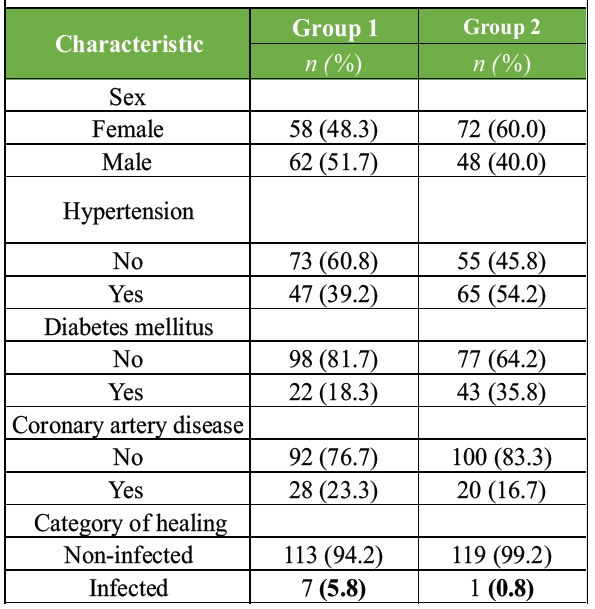
Table 1: Characteristics of patients in Groups 1 and 2
Mean ± standard deviation (SD) (range) ASEPSIS scores in Groups 1 and 2 were 4.46 ± 7.69 (0–35) and 1.17 ± 3.77 (0–25), respectively. With respect to the category of infection, overall rates of infection were 5.8% and 0.8% in Groups 1 and 2, respectively.
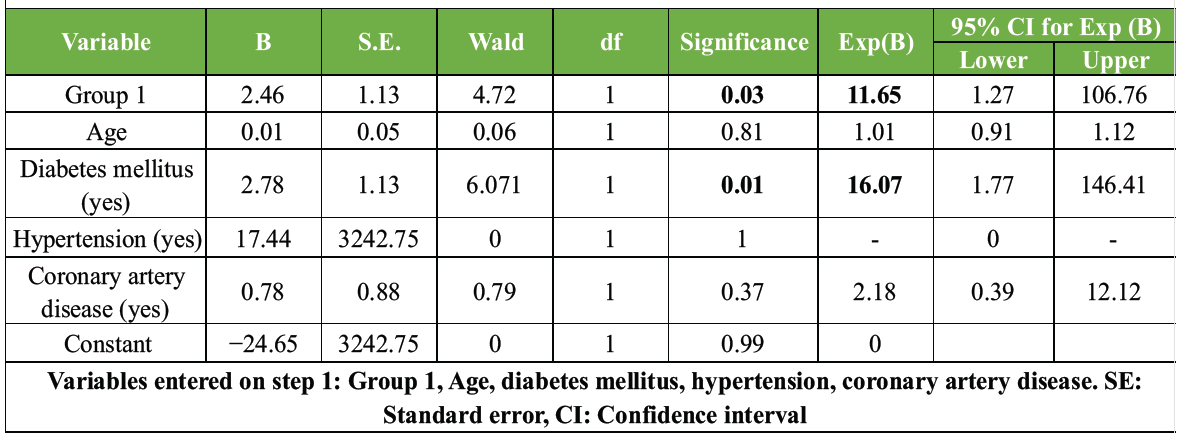
Table 2: Statistical analysis (logistic regression model) and comparison of variables between Groups 1 and 2
Table 2 displays the logistic regression analysis results, which indicated that out of the five variables considered in the model, two were found to have a significant association with the occurrence of infection, with a P < 0.05. The likelihood of developing infection was 11-fold higher in Group 1 than in Group 2, and the difference was significant (adjusted OR = 11.651; 95% CI, 1.27–106.76; P < 0.05 P = 0.03). Patients with diabetes mellitus were also significantly more likely to develop infection (P < 0.05), while hypertension and coronary artery disease were not significantly associated with healing outcomes (P > 0.05).
Several well-established strategies for reducing infection rates include aseptic technique, skin preparation, pulse lavage, antibiotic prophylaxis, and decreasing surgical duration. The role of intrawound vancomycin powder and irrigation with dilute povidone-iodine lavage in reducing SSI when each is used independently in arthroplasty surgeries has been explored to some extent in the orthopedic literature [9]. Therefore, as we did in our study, it is important to consider the individual and combined effects of intrawound vancomycin powder and dilute povidone-iodine lavage. While numerous studies in orthopedic literature demonstrate the effectiveness of each treatment separately in reducing SSIs in arthroplasty patients, limited studies have investigated their combined efficacy, specifically in patients undergoing TJA procedures. Here, we used the VPIP and our results, showing a clear reduction in the infection rate in patients administered VPIP, which are consistent with those of other studies that used the VPIP [4,5,10], which also showed reduced infections as a result of VPIP application (Table 3).
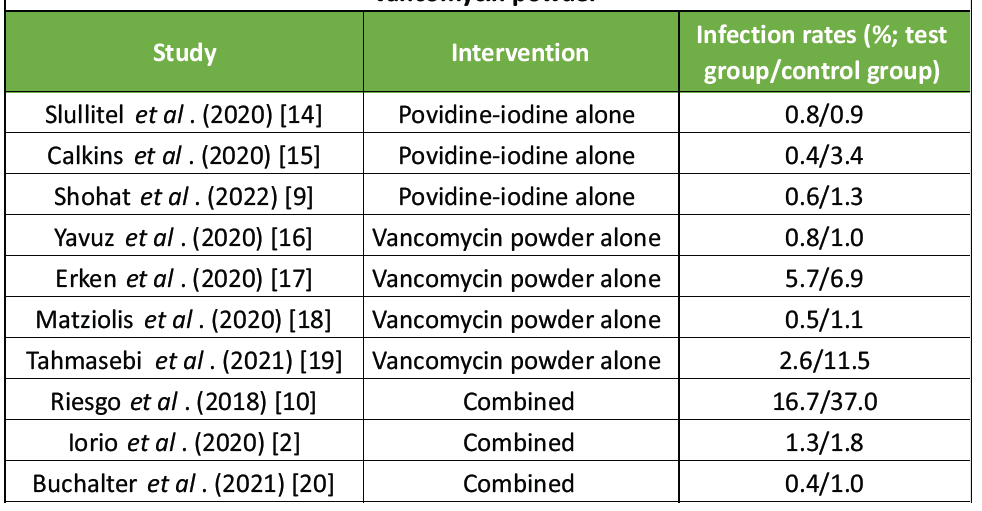
Table 3: Comparison of infection rates in studies which used only povidone-iodine, only vancomycin powder, or a combination of both only
Our study also focused on the importance of thoroughly applying vancomycin powder and diluted povidone-iodine lavage in areas with more soft tissue, such as the hip. This approach was taken to utilize the efficacy of the combined treatment fully. Previous reports had also emphasized the importance of spreading vancomycin powder on all soft tissue within the surgical site and have reported significant reductions in SSI incidence when vancomycin was used in combination with diluted povidone-iodine, which is consistent with our findings [10,11,12].
The detailed descriptive statistics generated in our study are provided in Tables 1 and 2 and indicate an infection rate of 5.8% (apparent increased percentage owing to the smaller sample size) which were both superficial and deep following TKA and THA, with a mean (SD) ASEPSIS score of 4.46 (±7.69) in Group 1(VPIP not used) while in Group 2 (VPIP used), the infection rate was only 0.8%, with a mean (SD) ASEPSIS score of 1.17 (±3.76).
According to the results of the logistic regression model, patients in Group 1 were 11 times more susceptible to developing an infection compared to those in Group 2, and this difference was found to be statistically significant (adjusted OR = 11.65; 95% CI, 1.272–106.283; P < 0.03). Moreover, the presence of diabetes was found to be significantly associated with the development of infection (adjusted odds ratio = 16.07; 95% CI, 1.765–146.40; P = 0.014). The potential reasons for the difference in infection rate between the groups observed in our study are discussed below.
Numerous studies and systematic reviews in the orthopedic literature related to both spine and arthroplasty surgeries have reported significantly reduced rates of SSI when intrawound local vancomycin alone was applied (Table 3). Local application of powdered antibiotics has the advantage of a rapid onset of activity at the surgical site. It can achieve high local concentrations, which may contribute to reducing the incidence of SSIs. The lower ASEPSIS scores and reduced likelihood of developing infection observed in Group 2 may be attributed to the benefits of receiving vancomycin powder treatment, which was not used in Group 1. Intrawound vancomycin powder provides sub-therapeutic and often undetectable systemic vancomycin concentrations while yielding highly therapeutic levels within the joint. Due to these pharmacokinetic properties, vancomycin powder serves as a safe and effective means of reducing PJI.
In addition, delivering the antibiotic locally can achieve high concentrations within the wound that would otherwise cause systemic toxicity if delivered intravenously. Further, vancomycin-resistant bacterial strains are more likely to develop following prolonged administration of sub-therapeutic levels rather than the brief supra-therapeutic levels used in the intrawound application of vancomycin for TJA. These represent added advantages of local intrawound vancomycin powder that likely contributed to the superior outcomes observed in Group 2 patients who underwent VPIP [7]. Retrospective studies have also demonstrated that the risk of nephrotoxicity is reduced when vancomycin powder is administered locally [5].
One crucial discovery made in our study was that patients diagnosed with diabetes were at a considerably higher risk with respect to developing infections (adjusted OR = 16.07; 95% CI, 1.765–146.40; P = 0.014). This increased susceptibility to infections can be attributed to microangiopathic changes that are characteristic of diabetes mellitus. These changes can cause lower levels of antibiotics in the tissue, leading to localized tissue ischemia and hindering the wound healing [13].
SSI is a significant challenge for the healthcare system and patients undergoing TJA, incurring substantial financial and emotional burdens. With the continuous rise in the number of TJA procedures, there is an urgent need to develop more effective preventive measures to minimize the associated costs. With global infection rates in patients undergoing TJA ranging from 1% to 2%, the results of our prospective clinical observational study demonstrate the high clinical significance and indicate a definitive role for the use of VPIP for reducing SSI in all cases of TJA, regardless of pre-operative risk.
This study’s limitations include a small sample size and the possible presence of confounding factors with respect to the comorbidities, highlighting the need for further investigation in this field, particularly large-scale, multi-center, prospective randomized controlled trials.
Within the limitations of the study, we conclude that, with respect to the category of infection, overall rates of infection were 5.8% and 0.8% in Groups 1 and 2, respectively; and the chance of developing infection was 11-fold higher for patients in Group 1 than those in Group 2 and was significantly different (adjusted OR = 11.651; 95% CI, 1.27–106.76; P < 0.05) (Table 4).
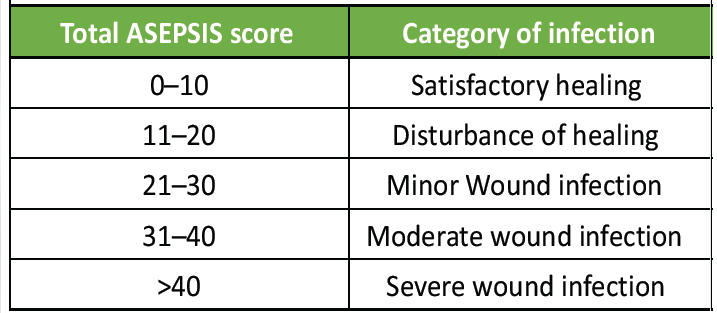
Table 4: Category of infection (Copanitsanou et al.) [8]
The use of the VPIP in patients undergoing arthroplasty generated promising results, indicating that it is a good infection prevention measure. Further prospective randomized controlled trials are required to evaluate the efficacy of this approach and determine whether its widespread use is warranted.
The Vancomycin Povidone-Iodine Protocol (VPIP) proves highly effective in preventing infections during arthroplasty, yielding promising outcomes that support its role as a valuable prophylactic strategy.
References
- 1. Papadakis M. Wound irrigation for preventing surgical site infections. World J Methodol 2021;11:222. [Google Scholar] [PubMed]
- 2. Iorio R, Yu S, Anoushiravani AA, Riesgo AM, Park B, Vigdorchik J, et al. Vancomycin powder and dilute povidone-iodine lavage for infection prophylaxis in high-risk total joint arthroplasty. J Arthroplasty 2020;35:1933-6. [Google Scholar] [PubMed]
- 3. Dial BL, Lampley AJ, Green CL, Hallows R. Intrawound vancomycin powder in primary total hip arthroplasty increases rate of sterile wound complications. Hip Pelvis 2018;30:37. [Google Scholar] [PubMed]
- 4. Buchalter DB, Teo GM, Kirby DJ, Schwarzkopf R, Aggarwal VK, Long WJ. Does the organism profile of periprosthetic joint infections change with a topical vancomycin powder and dilute povidone-iodine lavage protocol? J Arthroplasty 2021;36:S314-9. [Google Scholar] [PubMed]
- 5. Otte JE, Politi JR, Chambers B, Smith CA. Intrawound vancomycin powder reduces early prosthetic joint infections in revision hip and knee arthroplasty. Surg Technol Int 2017;30:284-9. [Google Scholar] [PubMed]
- 6. Johnson JD, Nessler JM, Horazdovsky RD, Vang S, Thomas AJ, Marston SB. Serum and wound vancomycin levels after intrawound administration in primary total joint arthroplasty. J Arthroplasty 2017;32:924-8. [Google Scholar] [PubMed]
- 7. Brown NM, Cipriano CA, Moric M, Sporer SM, Della Valle CJ. Dilute betadine lavage before closure for the prevention of acute postoperative deep periprosthetic joint infection. J Arthroplasty 2012;27:27-30. [Google Scholar] [PubMed]
- 8. Wilson AP, Treasure T, Sturridge MF, Grüneberg RN. A scoring method (ASEPSIS) for postoperative wound infections for use in clinical trials of antibiotic prophylaxis. Lancet 1986;1:311-3. [Google Scholar] [PubMed]
- 9. Shohat N, Goh GS, Harrer SL, Brown S. Dilute povidone-iodine irrigation reduces the rate of periprosthetic joint infection following hip and knee arthroplasty: An analysis of 31,331 cases. J Arthroplasty 2022;37:226-31.e1. [Google Scholar] [PubMed]
- 10. Riesgo AM, Park BK, Herrero CP, Yu S, Schwarzkopf R, Iorio R. Vancomycin povidone-iodine protocol improves survivorship of periprosthetic joint infection treated with irrigation and debridement. J Arthroplasty 2018;33:847-50. [Google Scholar] [PubMed]
- 11. Winkler C, Dennison J, Wooldridge A, Larumbe E, Caroom C, Jenkins M, et al. Do local antibiotics reduce periprosthetic joint infections? A retrospective review of 744 cases. J Clin Orthop Trauma 2018;9 Suppl 1:S34-9. [Google Scholar] [PubMed]
- 12. Patel NN, Guild GN, Kumar AR. Intrawound vancomycin in primary hip and knee arthroplasty: A safe and cost-effective means to decrease early periprosthetic joint infection. Arthroplast Today 2018;4:479-83. [Google Scholar] [PubMed]
- 13. Ahmad MA, Rahman SA, Islam MA. Prevalence and risk of infection in patients with diabetes following primary total knee arthroplasty: A global systematic review and meta-analysis of 120,754 knees. J Clin Med 2022;11:3752. [Google Scholar] [PubMed]
- 14. Slullitel PA, Dobransky JS, Bali K, Poitras S, Bhullar RS, Gofton WT, et al. Is There a Role for preclosure dilute betadine irrigation in the prevention of postoperative infection following total joint arthroplasty? J Arthroplasty 2020;35:1374-8. [Google Scholar] [PubMed]
- 15. Calkins TE, Culvern C, Nam D, Gerlinger TL, Levine BR, Sporer SM, et al. Dilute betadine lavage reduces the risk of acute postoperative periprosthetic joint infection in aseptic revision total knee and hip arthroplasty: A randomized controlled trial. J Arthroplasty 2020;35:538-43.e1. [Google Scholar] [PubMed]
- 16. Yavuz IA, Oken OF, Yildirim AO, Inci F, Ceyhan E, Gurhan U. No effect of vancomycin powder to prevent infection in primary total knee arthroplasty: A retrospective review of 976 cases. Knee Surg Sports Traumatol Arthrosc 2020;28:3055-60. [Google Scholar] [PubMed]
- 17. Erken HY, Nusran G, Karagüven D, Yilmaz O, Kuru T. No decrease in infection rate with the use of local vancomycin powder after partial hip replacement in elderly patients with comorbidities. Cureus 2020;12:e10296. [Google Scholar] [PubMed]
- 18. Matziolis G, Brodt S, Böhle S, Kirschberg J, Jacob B, Röhner E. Intraarticular vancomycin powder is effective in preventing infections following total hip and knee arthroplasty. Sci Rep 2020;10:13053. [Google Scholar] [PubMed]
- 19. Tahmasebi MN, Vaziri AS, Vosoughi F, Tahami M, Khalilizad M, Rabie H. Low post-arthroplasty infection rate is possible in developing countries: Long-term experience of local vancomycin use in Iran. J Orthop Surg Res 2021;16:1-7. [Google Scholar] [PubMed]
- 20. Buchalter DB, Kirby DJ, Teo GM, Iorio R, Aggarwal VK, Long WJ. Topical vancomycin powder and dilute povidone-iodine lavage reduce the rate of early periprosthetic joint infection after primary total knee arthroplasty. J Arthroplasty 2021;36:286-90.e1. [Google Scholar] [PubMed]





Related Articles in Journal of Orthopaedic Case Reports
 September 1, 2024 Case Reports: Periprosthetic Joint Infection after Total Joint Arthroplasty Following Swimming Activity
 October 1, 2026 Intrapelvic Neck Screw Migration after Trochanteric Fixation Nail Advanced Fixation of a Trochanteric Femoral Fracture: A Case Report and Proposed Treatment Algorithm
 October 1, 2026 Primary Total Hip Arthroplasty for a Displaced Femoral Neck Fracture in an Above-the-Knee Amputee: A Case Report
 October 1, 2026 Superficial Femoral Artery Pseudoaneurysm after Total Knee Arthroplasty: An Uncommon Vascular Complication