

Injectable platelet-rich fibrin and leukocyte-poor platelet-rich plasma provide superior and sustained pain relief and functional improvement compared to corticosteroid injections in periarthritis of the shoulder, making them safe and durable regenerative alternatives for long-term management.
Dr. Madhan Jeyaraman, Department of Orthopaedics, ACS Medical College and Hospital, Dr. MGR Educational and Research Institute, Chennai, Tamil Nadu, India. E-mail: madhanjeyaraman@gmail.com
Abstract
Introduction: Periarthritis of the shoulder (adhesive capsulitis) is a common, disabling condition. Autologous platelet concentrates have emerged as regenerative alternatives to corticosteroids. Still, the comparative efficacy of leukocyte-rich platelet-rich plasma (LR-PRP), leukocyte-poor platelet-rich plasma (LP-PRP), injectable platelet-rich fibrin (iPRF), and triamcinolone remains undefined.
Objective: This study aimed to compare the efficacy, safety, and functional outcome of intra-articular LR-PRP, LP-PRP, iPRF, and triamcinolone in patients with periarthritis of the shoulder over 12 months.
Materials and Methods: In this single-center, double-blinded, four-arm randomized controlled trial, 64 patients were allocated 1:1:1:1 (n = 16 per arm) to receive a single intra-articular injection of 5–6 mL LR-PRP, 5–6 mL LP-PRP, 5–6 mL iPRF, or 1 mL (40 mg) triamcinolone. The primary outcomes were the Visual Analog Scale (VAS) for pain and the disabilities of the Arm, Shoulder and Hand (DASH) score, assessed at baseline and at 1, 3, 6, and 12 months. Data were analyzed using repeated-measures analysis of variance in Statistical Package for the Social Sciences v26.0, with P < 0.05 considered significant.
Results: All groups improved significantly from baseline (P < 0.001). At 1 month, the triamcinolone group showed the greatest improvement (VAS 3.1; DASH 30.2). From 6 months onward, the platelet-concentrate arms were superior; at 12 months, iPRF achieved the best outcomes (VAS 1.6 ± 0.6; DASH 15.0 ± 4.6), followed by LP-PRP (VAS 1.8; DASH 16.8) and LR-PRP (VAS 2.1; DASH 19.2), whereas the triamcinolone group regressed (VAS 4.2; DASH 37.4) (between-group P < 0.001 at 12 months). Adverse events were transient; post-injection swelling and pain were more frequent with LR-PRP.
Conclusion: Corticosteroids offered the fastest early relief, but their effect was not durable. Platelet concentrates, particularly iPRF and LP-PRP, produced superior and sustained pain and functional benefit at 12 months with an excellent safety profile, supporting their use as durable regenerative options for periarthritis of the shoulder.
Keywords: Periarthritis shoulder, adhesive capsulitis, platelet-rich plasma, injectable platelet-rich fibrin, corticosteroids.

Adhesive capsulitis or “frozen shoulder” is an inflammatory and fibrotic disease of the glenohumeral joint capsule, which presents with progressive pain, stiffness, and limitation of both active and passive range of motion, especially in external rotation [1]. It is thought to impact 2–5% of the general population and is one of the most common causes of shoulder pain and reduced mobility in clinical practice. The condition is being recognized more and more as a weak nosological diagnosis, and several authors have advocated for the need for more descriptive criteria [2]. It is more common among people aged 40–60 years and is also associated with diabetes mellitus, with people who have diabetes having a much greater risk of developing the disease. Periarthritis is a significant and ever-increasing clinical burden in India and the world at large, where type 2 diabetes is a major burden [3].
Conventional management involves the use of analgesia, physiotherapy, intra-articular corticosteroid injection, hydrodilatation, manipulation under anesthetic and arthroscopic capsular release [4]. The most frequently used intra-articular injection is corticosteroid (usually triamcinolone), which provides rapid pain relief reliably, and good quality trials and reviews have established that it has meaningful short-term benefit, including in patients with diabetes; in diabetic patients, there is also good evidence that it has long-term benefits [5]. Other surgical procedures investigated include hydrodilatation, suprascapular nerve block, bursal injection and optimized steroid doses [6]. However, the advantages of corticosteroids are often temporary, and repeated use is known to have associated risks of cartilage damage, tendon weakening, transient hyperglycemia and hypothalamic–pituitary–adrenal suppression [7].
Autologous platelet concentrates (APCs) – leukocyte-rich platelet-rich plasma (LR-PRP), leukocyte-poor platelet-rich plasma (LP-PRP) and injectable platelet-rich fibrin (iPRF) – have emerged as biologic, steroid-sparing alternatives that deliver the patient’s own growth factors to modulate inflammation and promote tissue repair. While there is some existing evidence base with positive results, it is dispersed. In shoulder disorders, randomized trials and meta-analyses have consistently demonstrated both superior and more durable results in pain and function when compared to corticosteroids. Systematic reviews of adhesive capsulitis have demonstrated that platelet-rich plasma (PRP) is as effective as, or superior to, corticosteroid and saline at the longest follow-up with a favorable safety profile [8]. This has been replicated by individual randomized controlled trials (RCTs) in frozen shoulder and periarthritis, and PRP has demonstrated benefits for related shoulder conditions such as rotator cuff tendinopathy. The use of allogeneic PRP as an off-the-shelf option has also been investigated [9]. However, the vast majority of these studies use only one PRP formulation when compared to steroid or hydrodissection, and no study has directly compared leukocyte-rich PRP, leukocyte-poor PRP, and a platelet-rich fibrin (PRF) concentrate in the same blinded PRP protocol [10]. The relative advantage of leukocyte enrichment versus leukocyte depletion and the sustained-release fibrin matrix is therefore unclear, and the clinician is left without evidence to assist in deciding between the biologic options. The present trial was conceived to fill this void specifically [11]. The clinical study compared the efficacy, safety, and functional outcome of intra-articular LR-PRP, LP-PRP, iPRF, and triamcinolone, using VAS and disabilities of the arm, shoulder and hand (DASH) scores as primary endpoints.
Study design and setting
A single-center, prospective, double-blinded, 4-arm parallel-group RCT was conducted in the Department of Orthopaedics in the Sri Lalithambigai Medical College and Hospital, Chennai, India. The protocol was approved by the Institutional Ethics Committee (Faculty of Medicine – Sri Lalithambigai Medical College and Hospital, Dr. MGR-ERI/SLMCH/2025/001, dated March 05, 2025) and conducted in accordance with the Declaration of Helsinki and the CONSORT 2010 statement for parallel-group randomized trials. All participants gave informed consent.
Participants
The clinical diagnosis of periarthritis of the shoulder was made, and all consecutive patients who visited the orthopedics outpatient department were screened. Diagnosis should be based on progressive pain, stiffness, and restricted active and passive range of motion (especially external rotation) for at least 4 weeks, without a clear structural shoulder lesion (as determined by radiography and magnetic resonance imaging, when indicated).
Individuals with a shoulder that is stiff and painful and has not improved despite conservative treatment for at least 1 month, with a confirmed diagnosis of adhesive capsulitis, were included in the study. They must be able to provide informed consent, adhere to the study protocol, and attend regular outpatient follow-up visits as required. Patients with hemoglobin levels below 10 g/dL or platelet counts < 1.0 × 10⁵/µL, those who have received an injection at the treatment site within the past 30 days, or individuals with local infection at the point of injection, systemic infections such as septicemia, or viral conditions including human immunodeficiency virus, hepatitis B, or hepatitis C were excluded from the study. In addition, patients who refuse to comply with the study treatment protocol will be excluded.
Sample size
The sample size was determined based on the clinically important difference in the mean outcome score of 1.02 with a 95% power (80%), with a standard deviation of 1.28 and a two-sided alpha of 0.05 (Z = 1.96). Approximately 16 participants per arm (including dropouts) are required, for a total of 64 participants across 4 arms, using n = [(Zα/2 + Zβ) × σ/Δ]2. This calculation was carried out based on the principles of sample size estimation and power analysis of clinical research.
Randomization and blinding
Participants were randomly assigned (1:1:1:1) to any of four treatment groups with a random sequence generated on a computer and the order written in sequentially numbered, opaque, sealed envelopes opened only at the time of the injection by a preparing clinician who was not involved in outcome assessment. The participant and the assessor of the outcome were masked (double-blinded). The injectate was made away from the patient and administered in the same syringes to ensure blinding.
Preparation of platelet concentrates
In PRP, the whole venous blood was collected and then processed using differential centrifugation. LR-PRP and LP-PRP were prepared with a double spin protocol: first spin at 2400 rpm for 10 min; second spin at 3600 rpm for 10 min, and the buffy coat was retained for LR-PRP and discarded for LP-PRP to obtain a leukocyte-poor product. Automated platelet counting confirmed platelet yield, and preparations were characterized according to standard platelet-concentrate classification systems. iPRF was prepared by low-speed centrifugation (700 rpm for 3 min) using tubes without any anticoagulants, to yield a liquid fibrin concentrate containing a high concentration of platelets and leukocytes, as well as growth factors released slowly during the preparation process according to the described procedures.
Intervention
On day 0, all participants were injected intra-articularly in their assigned arm, according to Table 1, under strict aseptic conditions. Pre-procedurally, patients were counseled and instructed in active mobilization exercises. Post-procedurally, all arms received the same standardized protocol of rest, ice, compression and elevation (RICE), restriction of movement, progressive exercise program and review.
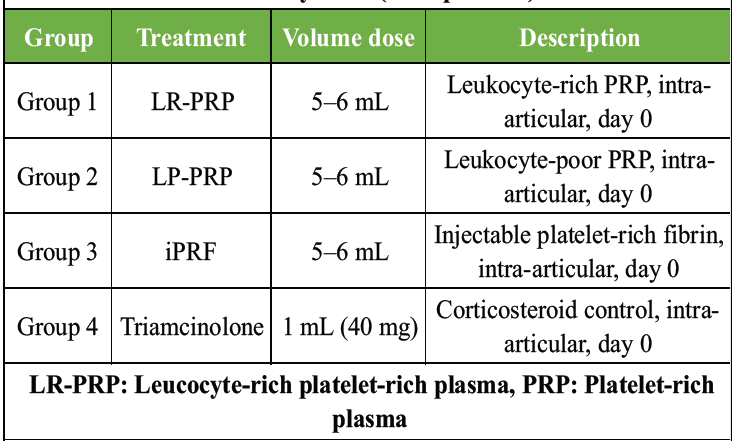
Table 1: Treatment allocation and intervention protocol across the four study arms (n=16 per arm)
All arms followed an identical, structured post-injection rehabilitation protocol to avoid co-intervention bias. Phase 1 (day 0–2): relative rest with the RICE regimen, avoidance of strenuous or overhead activity, and paracetamol for analgesia (non-steroidal anti-inflammatory drugs were withheld for the first 48 h to avoid blunting the biologic response). Phase 2 (day 3 to week 2): Gentle pendular (Codman) exercises and pain-limited active-assisted range-of-motion in forward flexion, abduction and rotation, performed 4–6 times daily. Phase 3 (weeks 2–6): Progressive active and passive range-of-motion with pulley, wall-climbing and capsular stretching. Phase 4 (weeks 6–12): Isometric followed by resisted (elastic-band) strengthening of the rotator cuff and periscapular muscles with scapular stabilization drills, progressing to unrestricted functional activity thereafter. Participants attended supervised physiotherapy and were given a mirrored home-exercise program, with adherence checked at each follow-up visit.
Outcome measures
There were two coprimary outcomes: the Visual Analog Scale (VAS) for pain (0–10), and the DASH score (0–100, higher scores representing greater disability), which are both validated for shoulder disorders. Baseline and 1, 3, 6, and 12-month outcomes were measured. Secondary outcomes included the percentage who met the minimal clinically important difference (MCID) using published distribution-based thresholds for shoulder outcome measures and the rate of adverse events.
Statistical analysis
The data were analyzed using the Statistical Package for the Social Sciences v26.0 (IBM Corp., Chicago, IL, USA). Means ± standard deviations are used for continuous variables. Repeated measures analysis of variance (ANOVA) was used to determine within-group change over time, and one-way ANOVA with Bonferroni post hoc to determine between-group differences at each of the time points. Chi-square or Fisher’s exact test was used to compare categorical variables. Statistically significant results were obtained for P < 0.05 (analysis intention to treat). Pre-specified exploratory subgroup analyses were performed for age (<50 vs. ≥50 years), sex, affected side, and hand dominance by adding a treatment-by-subgroup interaction term to the repeated-measures model.
Baseline characteristics
A total of 64 patients were enrolled, and all reached the 12-month follow-up. The four arms were similar at baseline in terms of age, gender, affected side, duration of symptoms, diabetic status, and baseline VAS score and DASH score (Table 2; all P > 0.05), which indicates successful randomization.
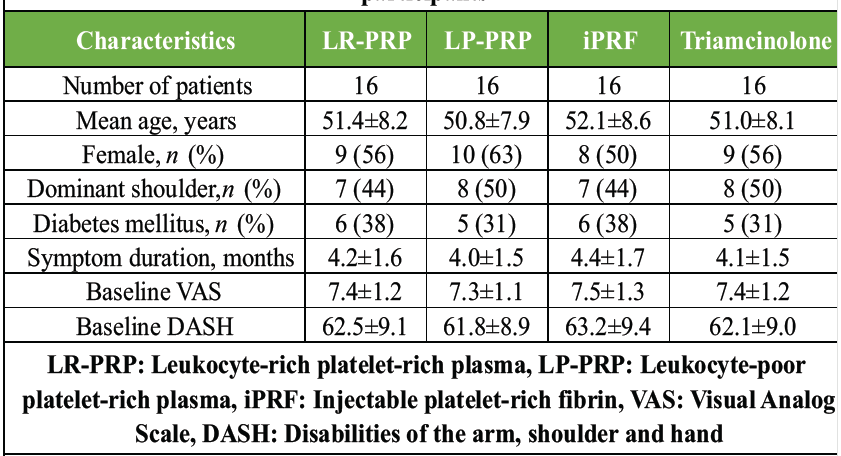
Table 2: Baseline demographic and clinical characteristics of the study participants
Pain outcomes (VAS)
There were highly significant decreases from baseline in VAS in all groups (P < 0.001, repeated-measure ANOVA). The triamcinolone arm had the greatest early fall (3.1 ± 0.8) and was better than all platelet groups (P < 0.05) at 1 month. The groups merged in 3 months (VAS 2.8–3.2). Shortly after 6 months, there was a clear separation: the platelet concentrate effect kept getting better, whereas the corticosteroid effect was fading. The mean VAS for iPRF was lowest (1.6 ± 0.6), followed by LP-PRP (1.8 ± 0.6) and LR-PRP (2.1 ± 0.7), and highest for triamcinolone (4.2 ± 1.1); iPRF was significantly different from the other groups (P < 0.001) (Fig. 1) (Table 3).
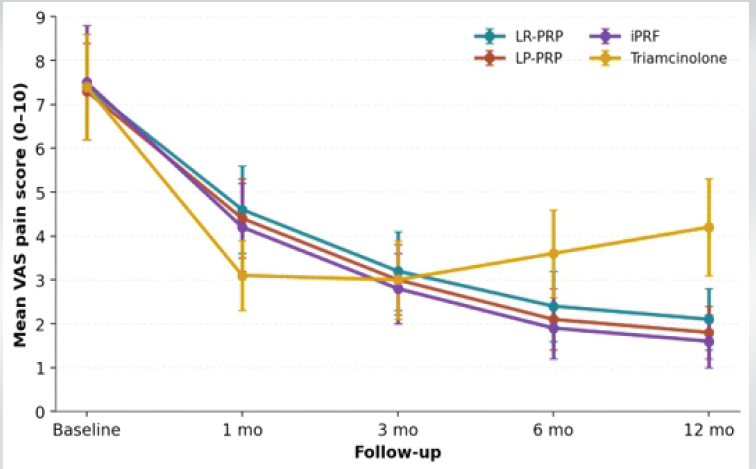
Figure 1: Mean Visual Analog Scale pain scores across follow-up by treatment group.
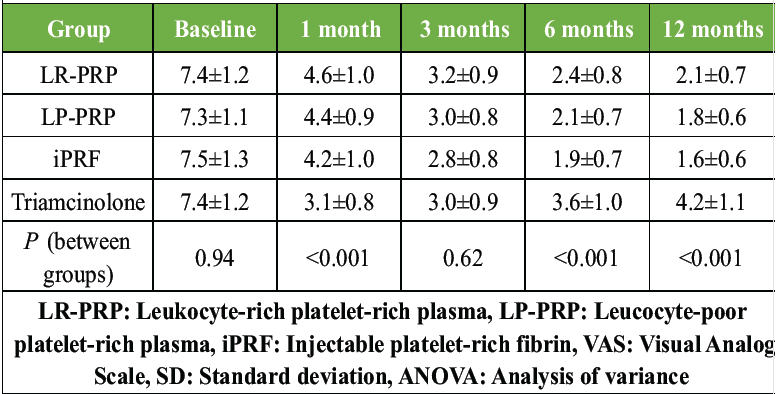
Table 3: Mean VAS pain scores (mean±SD) by group across follow-up, with between-group P-values (one-way ANOVA)
Functional outcomes (DASH)
The platelet arms showed progressive improvement, whereas triamcinolone showed the highest 1-month functional gain (30.2 ± 6.5), which decreased later on. At 12 months, iPRF achieved the lowest (best) DASH score (15.0 ± 4.6), followed by LP-PRP (16.8 ± 4.9) and LR-PRP (19.2 ± 5.4), all significantly better than triamcinolone (37.4 ± 8.1; P < 0.001). The level of improvement in the biologic arms was above the MCID for measures of shoulder disability. Functional trajectories are displayed in Fig. 2. Upon subgroup analysis, the treatment response was consistent across patient characteristics, with no statistically significant interaction between treatment arm and age (<50 vs. ≥50 years), sex, affected side, or hand dominance (dominant vs. non-dominant limb) for either VAS or DASH at 12 months (all interaction P > 0.05).
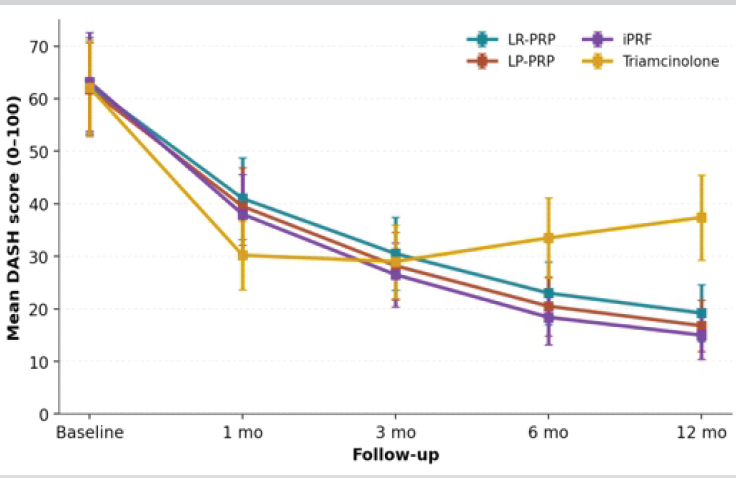
Figure 2: Mean disabilities of the arm, shoulder and hand disability scores (0–100) across follow-up by treatment group. Lower scores indicate better function.
Growth factor profile
The concentrations prepared showed distinct growth factor signatures as analyzed (Fig. 3). The early release of platelet-derived growth factor (PDGF) and transforming growth factor-beta 1 (TGF-β1) was greatest for LR-PRP, which has a pro-inflammatory leucocyte content, whereas the long-term release of insulin-like growth factor 1 (IGF-1) and epidermal growth factor (EGF) was greatest for iPRF, due to its slow-release fibrin matrix. This biological gradient is like the superior long-term clinical success seen in the iPRF arm and agrees with the laboratory comparisons of these concentrates.
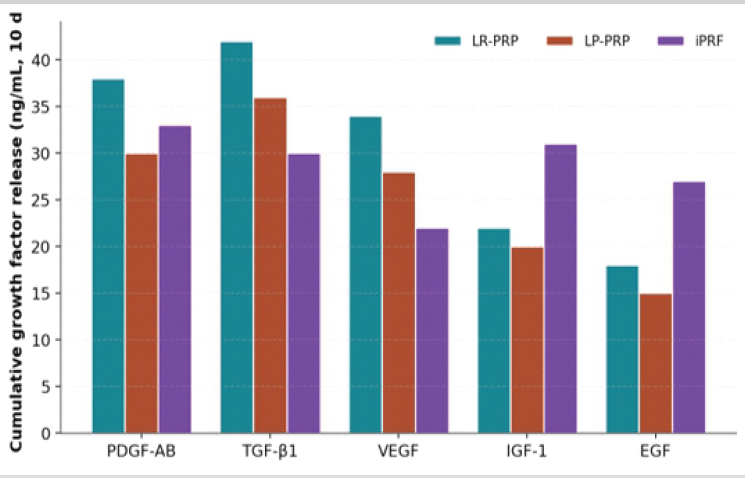
Figure 3: Comparative cumulative growth factor release of leukocyte-rich platelet-rich plasma, leukocyte-poor platelet-rich plasma and injectable platelet-rich fibrin over 10 days.
Safety
There were no serious adverse events, infections or systemic complications noted. The only adverse events were minor, self-limiting swelling and pain, which were most common in the LR-PRP arm and indicative of leucocyte-mediated inflammation. In contrast, LP-PRP and iPRF were better tolerated (Table 4). This safety pattern agrees with comparative leucocyte examination of joint disease. No corticosteroid-associated metabolic events were noted in the study period.
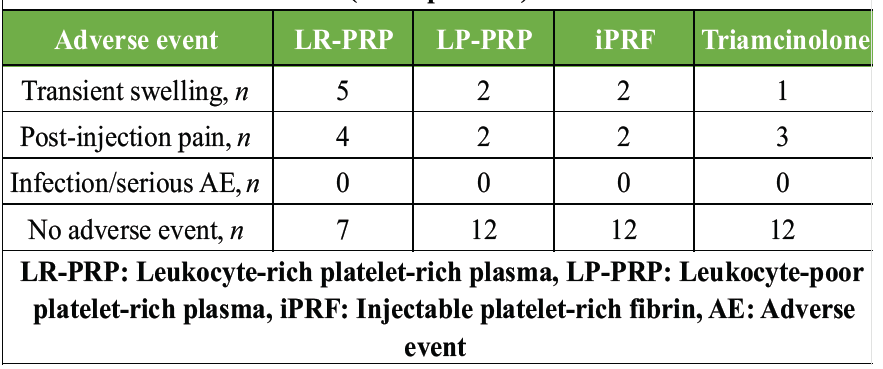
Table 4: Distribution of adverse events by treatment arm over 12 months (n=16 per arm)
A 4-arm double-blinded RCT compared the three platelet concentrates with corticosteroid in periarthritis of the shoulder. The main finding is a reversal in the relative efficacy by 6 and 12 months, with the platelet concentrates (specifically iPRF and LP-PRP) producing better and more lasting pain and functional outcomes than corticosteroids [12]. This is like the prospective randomized open-blind evaluation (PROBE) study by Somisetty et al., in which triamcinolone was found to be superior at 12 weeks, and PRP was superior at 24 weeks, and the meta-analytical evidence that PRP is superior to corticosteroids in terms of longer duration and safety. It also aligns with network and pharmacological reviews of early-stage frozen shoulder [13].
There are clear biological explanations for this disparity. Corticosteroids cause lasting but temporary anti-inflammatory action, but do not treat the underlying capsular fibrosis, and are discontinued as inflammation returns [14]. By contrast, platelet concentrates provide a cascade and synergy of growth factors that stimulate angiogenesis, modulate fibroblasts and organize matrix remodeling and are beneficial over months [15]. The better 12-month results of iPRF may be attributed to the fact that it is an anticoagulant-free fibrin matrix, which extends the release of the growth factors and continues to maintain tissue regeneration [16].
Leukocyte-poor preparations have a biological advantage [17]. Leukocytes provide benefits against microbes. Still, their catabolic and pro-inflammatory mediators may worsen the intra-articular environment, and LR-PRP has been linked to an increase in post-injection swelling and pain [18]. Some good trials, however, report that leukocyte content does not make a significant difference to efficacy or safety, so the question remains up for debate [19]. Our safety data support LP-PRP and iPRF as intra-articular treatments of choice when a reduction in inflammation is desired, and are consistent with the inflammatory signal that LR-PRP produces [20].
The three concentrates have unique growth factor profiles that may account for the observed hierarchy of response [21]. LR-PRP containing leukocytes contains high levels of PDGF and TGF-β1 early, but also contains catabolic pro-inflammatory mediators, which can dampen intra-articular benefit and may trigger early flares [22]. LP-PRP carries the anabolic payload of the platelets and reduces this inflammatory burden, and iPRF adds a favorable long-term release of IGF-1 and EGF with a fibrin scaffold, which ensures bioactivity for a prolonged period [23]. The arms iPRF and LP-PRP improve continuously over time, consistent with these profiles, whereas corticosteroid is symptomatically effective but fails to produce long-lasting tissue remodeling [24].
The findings have practical implications. Corticosteroid still has a place, though somewhat limited, when rapid symptom control is critical, such as in the setting of a critical functional demand, or when the patient requires rapid relief, such as before a critical functional demand occurs or when rapid symptom control is of primary importance [25]. A single application of either iPRF or LP-PRP injection is a promising, safe, and cost-effective treatment method, particularly significant for the high incidence of diabetes in the Indian population, where steroid-induced hyperglycemia and chondrotoxicity with repeated doses are a real problem [26]. The platelet concentrates are also autologous and administered as a single injection, which avoids the cumulative risks associated with multiple corticosteroid injections, and are possible within routine orthopedic practice as part of the broader trend toward regenerative orthobiologics [27]. Despite this, they should be adopted in the light of new consensus statements, tiered approaches and regulatory and ethical considerations [28]. The agreement of our findings with other previously completed RCTs and systematic reviews adds to the external validity of the results [29].
Strengths of this study include its prospective double-blinded design, balanced four-arm comparison, complete 12-month follow-up, and use of two validated, complementary outcome measures [30]. The single-center design, relatively small per-arm sample size, which may affect the power for some pairwise comparisons, and lack of objective endpoints for range of motion and imaging are limitations [31]. Further observations of larger multicenter trials, including range of motion, ultrasonographic capsular measurement, and cost-effectiveness analysis, are warranted to confirm and extend these observations [32].
Intra-articular corticosteroid resulted in the quickest early pain reduction, which did not last and was partially reversed after 6 months post-surgery in patients with periarthritis of the shoulder. APCs were more progressive and more enduring, though, with the greatest benefit for VAS pain and DASH function scores at 12 months for injectable PRF and leukocyte-poor PRF, respectively. Leukocyte-poor preparations were also safe and had fewer transient inflammatory adverse events than leukocyte-rich PRP. In contrast, the biologic arms did not have the metabolic and chondrotoxic side effects of repeated corticosteroid use. Intra-articular biologic injection is then a safe, effective, and steroid-sparing option for this common and debilitating condition. For cases where there is a desire for long-term recovery instead of a short-term fix, these approaches (iPRF or LP-PRP) may be recommended over other options. Still, larger multicenter trials with objective range-of-motion endpoints would be required to reinforce these parameters.
• Corticosteroids provide rapid but short-lived relief – triamcinolone showed the best early improvement at one month, but its effect diminished and even regressed by 12 months.
• Platelet concentrates, especially iPRF and LP-PRP, deliver superior long-term outcomes – both achieved sustained pain reduction and functional improvement at 12 months, outperforming corticosteroids and LR-PRP.
• Safety favors leukocyte-poor biologics – LP-PRP and iPRF were better tolerated with fewer transient inflammatory reactions compared to LR-PRP, making them promising steroid-sparing regenerative options for periarthritis of the shoulder.
References
- 1. Li D, St Angelo JM, Taqi M. Adhesive capsulitis (frozen shoulder). In: StatPearls. Treasure Island, FL: StatPearls Publishing; 2026. [Google Scholar] [PubMed]
- 2. Linaker CH, Walker-Bone K. Shoulder disorders and occupation. Best Pract Res Clin Rheumatol 2015;29:405-23. [Google Scholar] [PubMed]
- 3. Dyer BP, Rathod-Mistry T, Burton C, Van Der Windt D, Bucknall M. Diabetes as a risk factor for the onset of frozen shoulder: A systematic review and meta-analysis. BMJ Open 2023;13:e062377. [Google Scholar] [PubMed]
- 4. Poku D, Hassan R, Migliorini F, Maffulli N. Efficacy of hydrodilatation in frozen shoulder: A systematic review and meta-analysis. Br Med Bull 2023;147:121-47. [Google Scholar] [PubMed]
- 5. Guermazi A, Hunter DJ, Kloppenburg M. Debate: Intra-articular steroid injections for osteoarthritis – harmful or helpful? Osteoarthr Imaging 2023;3:100163. [Google Scholar] [PubMed]
- 6. Jain A, Nagar M, Jain S, Barasker SK. Suprascapular nerve block is faster and as effective as hydrodistension in relieving frozen shoulder-associated pain and disability: A prospective, single-blind observational study with a follow-up of 24 weeks. J Anaesthesiol Clin Pharmacol 2023;39:45-50. [Google Scholar] [PubMed]
- 7. Local and Systemic Side Effects of Corticosteroid Injections for Musculoskeletal Indications. Available from: https://www.researchgate.net/publication/376701710_local_and_systemic_side_effects_of_corticosteroid_injections_for_musculoskeletal_indications [Last accessed on 2026 Jun 08]. [Google Scholar] [PubMed]
- 8. Le HV, Lee SJ, Nazarian A, Rodriguez EK. Adhesive capsulitis of the shoulder: Review of pathophysiology and current clinical treatments. Shoulder Elbow 2017;9:75-84. [Google Scholar] [PubMed]
- 9. Rathod V, Shrivastav S, Gharpinde MR. Platelet-rich plasma therapy for rotator cuff injuries: A comprehensive review of current evidence and future directions. Cureus 2024;16:e70042. [Google Scholar] [PubMed]
- 10. Dohan Ehrenfest DM, Andia I, Zumstein MA, Zhang CQ, Pinto NR, Bielecki T. Classification of platelet concentrates (Platelet-rich plasma-PRP, Platelet-rich fibrin-PRF) for topical and infiltrative use in orthopedic and sports medicine: Current consensus, clinical implications and perspectives. Muscles Ligaments Tendons J 2014;4:3-9. [Google Scholar] [PubMed]
- 11. Coucke B, Dilissen E, Cremer J, Schrijvers R, Theys T, Van Gerven L. Leukocyte-and Platelet-rich fibrin for enhanced tissue repair: An in vitro study characterizing cellular composition, growth factor kinetics and transcriptomic insights. Mol Biol Rep 2024;51:954. [Google Scholar] [PubMed]
- 12. Do-Minh N, Nguyen-Trong H, Vu-Bich N, Pham-Van P. Update on the use of platelet-rich plasma in the treatment of osteoarthritis: New supporting evidence. Biomed Res Ther 2024;11:6556-64. [Google Scholar] [PubMed]
- 13. Somisetty TK, Seenappa H, Das S, Shanthappa AH. Comparing the efficacy of intra-articular platelet-rich plasma and corticosteroid injections in the management of Frozen shoulder: A randomized controlled trial. Cureus 2023;15:e39728. [Google Scholar] [PubMed]
- 14. Coutinho AE, Chapman KE. The anti-inflammatory and immunosuppressive effects of glucocorticoids, recent developments and mechanistic insights. Mol Cell Endocrinol 2011;335:2-13. [Google Scholar] [PubMed]
- 15. Wu W-S, Chen L-R, Chen K-H: Platelet-Rich Plasma (PRP): Molecular Mechanisms, Actions and Clinical Applications in Human Body. Int J Mol Sci. 2025, 26:10804.</p> [Google Scholar] [PubMed]
- 16. <p>16. Hooda A, Seenappa H, Somisetty Venkata Sai TK, Nagakumar JS, Harish N. Efficacy of Intra-articular platelet-rich fibrin injection for periarthritis of the shoulder: A pilot study. Cureus 2026;18:e103948. [Google Scholar] [PubMed]
- 17. Tang P, Rahmati M, Xiao W, Wen T, Yon DK, Smith L, et al. Differences in the effectiveness of leukocyte-rich platelet-rich plasma compared with leukocyte-poor platelet-rich plasma in the treatment of rotator cuff surgery: An umbrella review of meta-analyses. J Orthop Traumatol 2024;25:50. [Google Scholar] [PubMed]
- 18. Kim JH, Park YB, Ha CW, Roh YJ, Park JG. Adverse reactions and clinical outcomes for leukocyte-poor versus leukocyte-rich platelet-rich plasma in knee osteoarthritis: A systematic review and meta-analysis. Orthop J Sports Med 2021;9:23259671211011948. [Google Scholar] [PubMed]
- 19. Romandini I, Boffa A, Di Martino A, Andriolo L, Cenacchi A, Sangiorgi E, et al. Leukocytes do not influence the safety and efficacy of platelet-rich plasma injections for the treatment of knee osteoarthritis: A double-blind randomized controlled trial. Am J Sports Med 2024;52:3212-22. [Google Scholar] [PubMed]
- 20. Xiong Y, Gong C, Peng X, Liu X, Su X, Tao X, et al. Efficacy and safety of platelet-rich plasma injections for the treatment of osteoarthritis: A systematic review and meta-analysis of randomized controlled trials. Front Med (Lausanne) 2023;10:1204144. [Google Scholar] [PubMed]
- 21. Luo H, Liu W, Zhou Y, Jiang X, Liu Y, Yang Q, et al. Concentrated growth factor regulates the macrophage-mediated immune response. Regen Biomater 2021;8:rbab049. [Google Scholar] [PubMed]
- 22. Martins T, Carneiro BD, Faria CS, Pozza DH. Platelet-rich plasma versus injectable platelet-rich fibrin in the management of temporomandibular joint osteoarthritis: A narrative review. Biologics 2026;6:16. [Google Scholar] [PubMed]
- 23. Middleton KK, Barro V, Muller B, Terada S, Fu FH. Evaluation of the effects of platelet-rich plasma (PRP) therapy involved in the healing of sports-related soft tissue injuries. Iowa Orthop J 2012;32:150-63. [Google Scholar] [PubMed]
- 24. Alshahir N, Alsanawi HA, Alanezi M, Ekram J, Aldkhyyal M, Al Sherieqi M, et al. Comparative efficacy of platelet-rich plasma and corticosteroid injections for rotator cuff injury management: A systematic review and meta-analysis. Orthop Rev (Pavia) 2025;17:143581. [Google Scholar] [PubMed]
- 25. Hodgens A, Sharman T. Corticosteroids. In: StatPearls. Treasure Island, FL: StatPearls Publishing; 2026. [Google Scholar] [PubMed]
- 26. Barman A, Mukherjee S, Sinha MK, Sahoo J, Viswanath A. The benefit of platelet-rich plasma injection over institution-based physical therapy program in adhesive capsulitis patients with diabetes mellitus: Prospective observational cohort study. Clin Shoulder Elb 2021;24:215-23. [Google Scholar] [PubMed]
- 27. Mariani E, Pulsatelli L. Platelet concentrates in musculoskeletal medicine. Int J Mol Sci 2020;21:1328. [Google Scholar] [PubMed]
- 28. Rathi SK, D’Souza P. Rational and ethical use of topical corticosteroids based on safety and efficacy. Indian J Dermatol 2012;57:251-9. [Google Scholar] [PubMed]
- 29. Rex SS, Kottam L, McDaid C, Brealey S, Dias J, Hewitt CE, et al. Effectiveness of interventions for the management of primary frozen shoulder: A systematic review of randomized trials. Bone Joint Open 2021;2:773-84. [Google Scholar] [PubMed]
- 30. Challoumas D, Biddle M, McLean M, Millar NL. Comparison of treatments for frozen shoulder: A systematic review and meta-analysis. JAMA Netw Open 2020;3:e2029581. [Google Scholar] [PubMed]
- 31. Mir M, Mohebbi R, Mohammadnezhad G, Raeissadat SA, Parhizgar A, Esmaily H. Intra-articular injection of high versus low molecular weight hyaluronic acid in adhesive capsulitis; randomized trial. Future Sci OA 2026;12:2581460. [Google Scholar] [PubMed]
- 32. Wu WT, Chang KV, Mezian K, Ricci V, Gonzalez-Suarez CB, Özçakar L. Ultrasound in adhesive capsulitis: A narrative exploration from static imaging to contrast-enhanced, dynamic and sonoelastographic insights. Diagnostics (Basel) 2025;15:1924. [Google Scholar] [PubMed]






Related Articles in Journal of Orthopaedic Case Reports
 August 1, 2026 Outcome Analysis of Leukocyte-Rich Platelet-Rich Plasma, Leukocyte-Poor Platelet-Rich Plasma, and Injectable Platelet-Rich Fibrin in the Management of Chronic Plantar Fasciitis: A Prospective Comparative Study
 December 1, 2025 Functional Outcome of Intra-articular Platelet-Rich Plasma in the Treatment of Frozen Shoulder
 April 1, 2025 Comparative Study of Functional Outcome of Intra-articular Injection of Platelet-Rich Plasma versus Corticosteroid in Treatment of Osteoarthritis of Knee
 September 1, 2026 Clinical Outcomes of Clinico-radiologically Predetermined Patient Specific Multi-site Steroid Injection in Primary Frozen Shoulder: A Prospective Case Series