

Early recognition and surgical excision of posterior scapular osteochondroma in children prevent functional impairment and potential malignant transformation.
Dr Amrith K Nath, Department of Orthopaedics, Bangalore Baptist Hospital, Bengaluru, Karnataka, India. E-mail: amrithknath@gmail.com
Abstract
Introduction: Osteochondroma is the most common benign bone tumour, usually arising from long bones. Scapular involvement is uncommon, and posterior surface presentation is particularly rare. Such lesions may lead to pain, cosmetic deformity, disturbance of scapulothoracic mechanics, and have a relatively higher risk of malignant transformation.
Case Report: A 6-year-old boy presented with a progressively enlarging bony swelling over the posterior aspect of the left scapula associated with recent-onset pain and restriction of shoulder movements. Radiographs revealed a well-defined exophytic lesion with cortical and medullary continuity and a thin cartilage cap. Complete surgical excision was performed, and histopathology confirmed osteochondroma. Post-operative recovery was uneventful with symptomatic improvement.
Conclusion: Posterior scapular osteochondroma in children is rare but clinically relevant. Early diagnosis and timely surgical excision of symptomatic lesions result in excellent outcomes.
Keywords: Osteochondroma, scapula, paediatric, posterior scapula, exostosis.

Osteochondroma is a cartilage-capped bony projection arising from the external surface of bone and accounts for approximately 20–50% of all benign bone tumours [1,2,3]. Scapular osteochondromas represent a small proportion of shoulder girdle tumours [1,4]. Most lesions arise from the anterior surface and present earlier due to scapulothoracic impingement or snapping scapula syndrome [4,5].
A 6-year-old male child presented with a swelling over the left upper back, first noticed at 6 months of age. The swelling gradually increased in size over the past year, with recent pain and restriction of shoulder movements.
Clinical examination:
A solitary, well-defined bony swelling measuring 9 × 6 × 4 cm was noted over the medial aspect of the spine of the left scapula (Fig. 1). It was non-tender, bony hard, and moved with scapular movements.
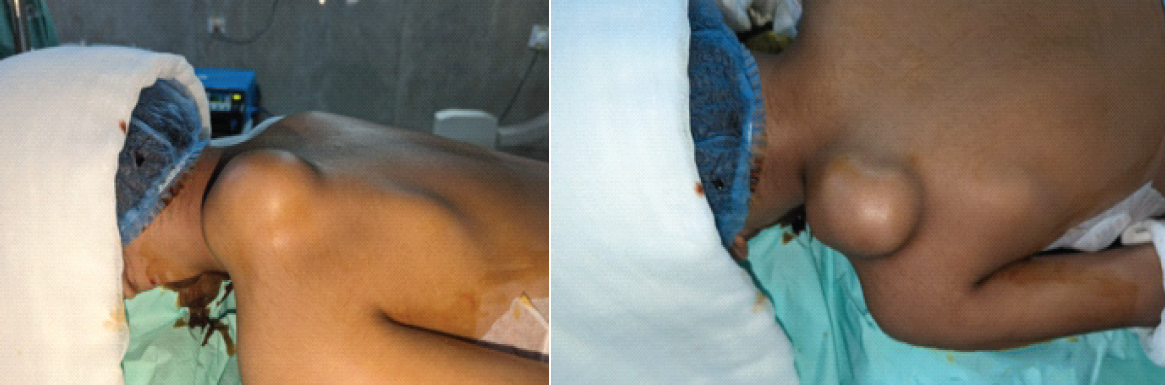
Figure 1: Clinical photograph showing swelling over the posterior aspect of the left scapula.
Radiological findings:
Plain radiographs showed a well-defined exophytic lesion with cortical and medullary continuity and a thin cartilage cap measuring 2.5 mm. Magnetic resonance imaging revealed a well-defined heterointense exophytic lesion arising from the posterior margin of the left scapula at the junction of the body and spine, with no evidence of infiltration and a thin cartilage cap measuring approximately 2.5 mm (Fig. 2).
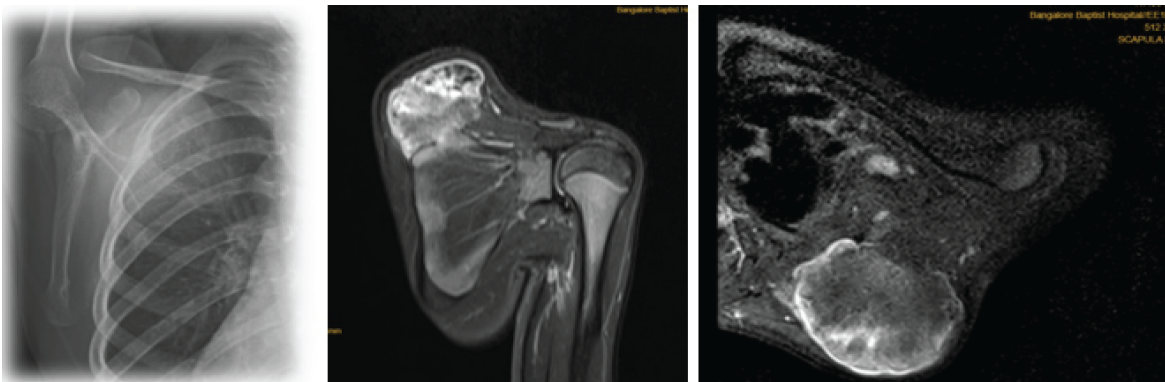
Figure 2: Preoperative radiograph showing an exophytic lesion with cortical continuity.
Surgical management:
Complete excision was performed through a posterior approach. Post-operative radiographs confirmed complete removal (Fig. 3).
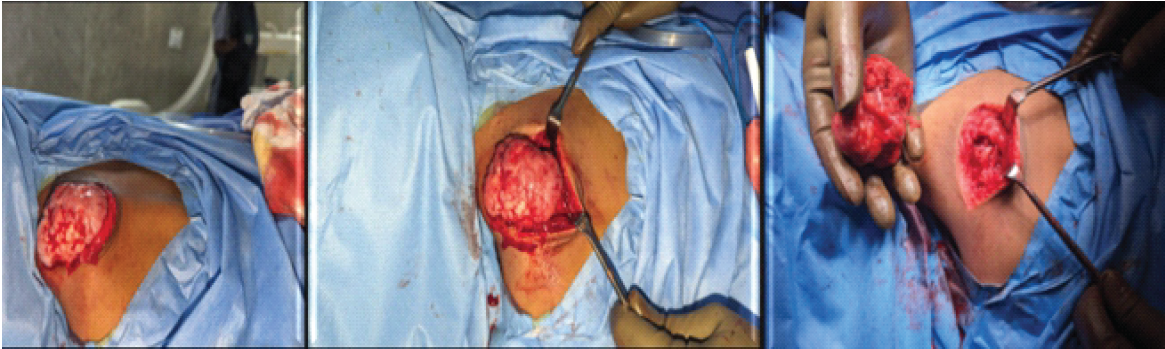
Figure 3: Intraoperative image showing excised mass.
Histopathology:
Sections showed mature hyaline cartilage cap with endochondral ossification and underlying trabecular bone (Fig. 4). No malignant features were noted.
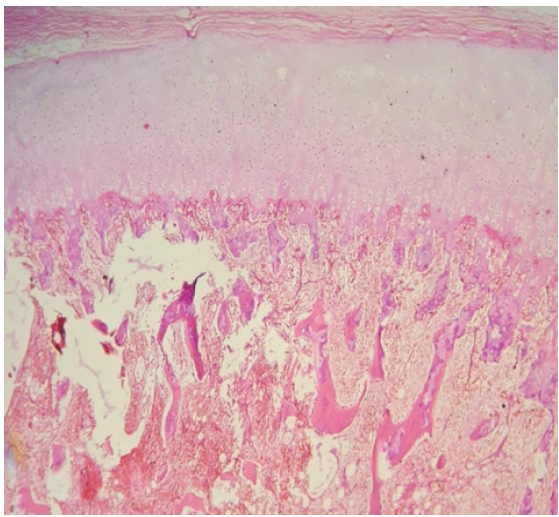
Figure 4: Histopathological image showing cartilage cap and trabecular bone.
Scapular osteochondromas are clinically significant, as they may disrupt scapulothoracic rhythm [2,5]. Flat bones such as the scapula have a relatively higher risk of malignant transformation [6]. The risk of malignant transformation, although low, has been well documented in literature [7,8]. Surgical excision is recommended for symptomatic lesions with good functional outcomes [9,10].
Posterior scapular osteochondroma in paediatric patients is rare. Awareness and timely surgical management lead to excellent outcomes.
Posterior scapular osteochondroma should be considered in children presenting with dorsal scapular swellings.
References
- 1. Clement ND, Ng CE, Porter DE. Shoulder exostoses in hereditary multiple exostoses: Probability of surgery and malignant change. J Shoulder Elbow Surg 2011;20:290-4. [Google Scholar] [PubMed]
- 2. Kitsoulis P, Galani V, Stefanaki K, Paraskevas G, Karatzias G, Agnantis NJ, et al. Osteochondromas: Review of the clinical, radiological and pathological features. In Vivo 2008;22:633-46. [Google Scholar] [PubMed]
- 3. Unni KK, Inwards CY. Dahlin’s Bone Tumours: General Aspects and Data on 10,165 Cases. 6th Philadelphia, PA: Lippincott Williams and Wilkins; 2010. [Google Scholar] [PubMed]
- 4. Altwaijri NA, Fakeeha J, Alshugair I. Osteochondroma of the scapula: A case report and literature review. Cureus 2022;14:e30558. [Google Scholar] [PubMed]
- 5. Murphey MD, Choi JJ, Kransdorf MJ, Flemming DJ, Gannon FH. Imaging of osteochondroma: Variants and complications with radiologic-pathologic correlation. Radiographics 2000;20:1407-34. [Google Scholar] [PubMed]
- 6. Garrison RC, Unni KK, McLeod RA, Pritchard DJ, Dahlin DC. Chondrosarcoma arising in osteochondroma. Cancer 1982;49:1890-7. [Google Scholar] [PubMed]
- 7. Wodajo FM, Crawford EA, Healey JH. Malignant transformation of osteochondroma. J Am Acad Orthop Surg 2010;18:168-77. [Google Scholar] [PubMed]
- 8. Bovée JV. Multiple osteochondromas. Orphanet J Rare Dis 2008;3:3. [Google Scholar] [PubMed]
- 9. Bottner F, Rodl R, Kordish I, Winklemann W, Gosheger G, Lindner N. Surgical treatment of symptomatic osteochondroma: A three- to eight-year follow-up study. J Bone Joint Surg Br 2003;85:1161-5. [Google Scholar] [PubMed]
- 10. Ozaki T, Hillmann A, Blasius S, Winkelmann W. Surgical treatment of osteochondroma: Indications and results. J Surg Oncol 1997;65:75-80. [Google Scholar] [PubMed]




Related Articles in Journal of Orthopaedic Case Reports
 August 6, 2024 Dorsal Scapular Osteochondroma in a Young Male: A Case Report and Literature Review
 October 1, 2026 Recurrent Ventral Scapular Osteochondroma Presenting with Pseudo-winging in an Adolescent: A Case Report and Follow-up of a Previously Published Case
 August 1, 2026 Vanishing Osteochondromas of the Distal Femur and Proximal Humerus: A Two-Case Report
 April 1, 2026 Osteochondroma of Dorsal Spine: A Rare Clinical Entity