

Arthroscopic ACL reconstruction with hamstring autograft yields good stability and function even in chronic, delayed-presenting ACL injuries.
Dr. Vishal Sharma, Department of Orthopaedics, Max Healthcare, Bathinda, Punjab, India. E-mail: vishal4145@hotmail.com
Abstract
Introduction: Anterior cruciate ligament (ACL) rupture is a common cause of knee instability. While arthroscopic ACL reconstruction is well established, most studies focus on acute or sports-related injuries. Data on functional outcomes following reconstruction in chronic ACL tears, particularly those due to road traffic accidents, are limited.
Objective: The objective of this study was to evaluate functional outcomes and knee stability following arthroscopic ACL reconstruction using an autologous hamstring tendon graft in patients with chronic ACL injuries.
Materials and Methods: This prospective study included 25 patients with clinically and radiologically confirmed ACL tears who underwent arthroscopic ACL reconstruction using a semitendinosus–gracilis tendon autograft. A standardised rehabilitation protocol was followed. Functional outcomes were assessed at 6 months using the International Knee Documentation Committee (IKDC) score, and knee stability was evaluated using the Lachman test.
Results: The mean age was 26.88 years with male predominance (24:1). Road traffic accidents were the most common mechanism of injury (60%). The mean duration from injury to surgery was 9.31 months. At final follow-up, 84% of patients had normal or nearly normal IKDC grades, with a mean IKDC score of 85.38. The Lachman test was negative in 84% of patients. All grafts were intact, and no graft failures occurred.
Conclusion: Arthroscopic ACL reconstruction using autologous hamstring tendon autografts provides good functional outcomes and knee stability in chronic ACL injuries at short-term follow-up.
Keywords: Anterior cruciate ligament, arthroscopy, hamstring autograft, chronic anterior cruciate ligament injury, International Knee Documentation Committee score.

The anterior cruciate ligament (ACL) plays a pivotal role in maintaining knee stability, and its rupture is associated with functional impairment and long-term morbidity if left untreated. ACL injuries are increasingly common because of high-energy trauma and sports activities [1]. Arthroscopic ACL reconstruction is the standard of care to restore knee stability and function [2]. Hamstring tendon autografts are widely used because of reduced donor-site morbidity and reliable functional outcomes [3,4,5]. Recent prospective studies have demonstrated excellent short-term knee function and stability with quadrupled hamstring autografts [6]. Systematic reviews have also shown significant improvements in the International Knee Documentation Committee (IKDC) and the Lysholm scores following hamstring tendon ACL reconstruction [7]. Most studies, however, focus on acute sports-related ACL injuries. In developing countries, chronic ACL tears with delayed presentation are common, particularly following road traffic accidents. Limited data are available on functional outcomes in such patients [7]. This study evaluates functional outcomes and knee stability following arthroscopic ACL reconstruction using hamstring tendon autografts in a predominantly chronic ACL injury cohort.
Study design and setting:
A prospective study was conducted at a tertiary care orthopaedic centre over a period of 18 months.
Patient selection:
Inclusion criteria:
The following inclusion criteria were used to select participants for the study.
- Complete ACL rupture (acute or chronic)
- Symptomatic knee instability
- Age 17–50 years
- Magnetic resonance imaging (MRI)-confirmed ACL tear.
Exclusion criteria:
The following exclusion criteria were used to exclude participants from the study.
- Tibial spine avulsion
- Multiligament injuries
- Neuromuscular disorders
- Knee osteoarthritis
- Active infection
- Fixed knee stiffness.
Pre-operative evaluation:
Clinical assessment included Lachman, anterior drawer, and pivot-shift tests. Associated injuries were excluded using clinical examination and MRI [8].
Surgical technique:
Under spinal anaesthesia, the semitendinosus and gracilis tendons were harvested through a 3-cm incision over the pes anserinus. The tendons were whip-stitched and folded to form a five-strand graft (Figs. 1a, 1b, 1c, 1d). Femoral and tibial tunnels were drilled anatomically, and graft fixation was performed using an adjustable-loop endobutton on the femoral side and an interference screw on the tibial side (Fig. 2). Post-operative radiographs confirmed tunnel position and hardware placement (Fig. 3) [9].
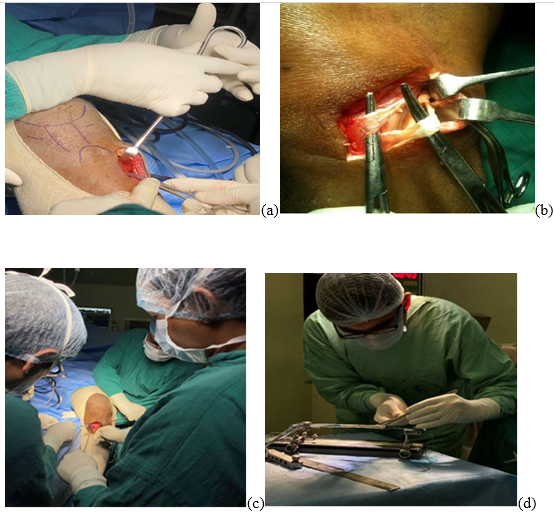
Figure 1: Graft harvesting and preparation. (a) Incision for graft harvest, (b) identification of semitendinosus and gracilis tendons, (c) tendon harvest using, and (d) graft preparation and tensioning.
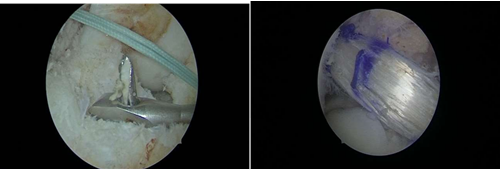
Figure 2: Intraoperative arthroscopic images.
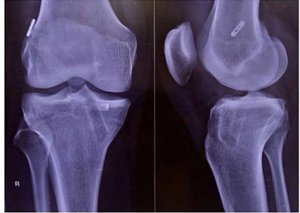
Figure 3: Post-operative anteroposterior radiograph showing proper tunnel placement and fixation device on the lateral femoral condyle following arthroscopic anterior cruciate ligament reconstruction.
Post-operative rehabilitation and follow-up:
Early mobilisation with continuous passive motion was initiated on the 1st post-operative day. A knee brace was used for 4 weeks. Progressive range-of-motion and strengthening exercises were introduced, and return to sports was permitted after 6 months. Follow-up evaluations were performed at 1, 2, 3, and 6 months.
Demographics and injury pattern:
A total of 25 patients were included in the study. The mean age was 26.88 years (range, 17–38 years), with a male-to-female ratio of 24:1. Road traffic accidents accounted for 15 patients (60%), sports injuries for 9 patients (36%), and other trauma for 1 patient (4%). The mean duration from injury to surgery was 9.31 months. The right knee was involved in 16 patients (64%) and the left knee in 9 patients (36%).
Intraoperative findings:
Six patients (24%) had associated meniscal tears, of which five were lateral and one was medial; all were treated with partial meniscectomy. No significant cartilage lesions requiring additional procedures were noted.
Graft characteristics:
The mean graft length was 88.6 mm (range 82–95 mm). The mean graft diameter was 8.12 mm on the femoral side and 8.8 mm on the tibial side (Tables 1, 2, 3). All grafts were positioned anatomically and confirmed radiographically (Fig. 3).
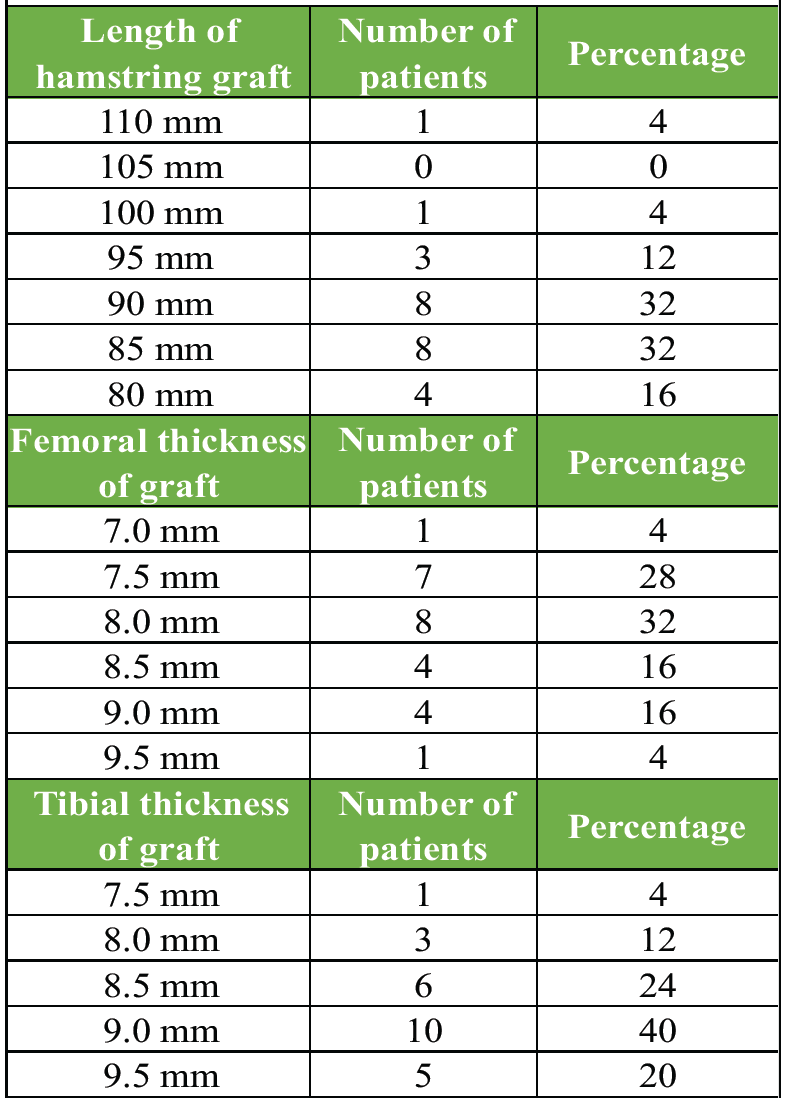
Table 1: Length of hamstring graft, femoral thickness, and tibial thickness of graft
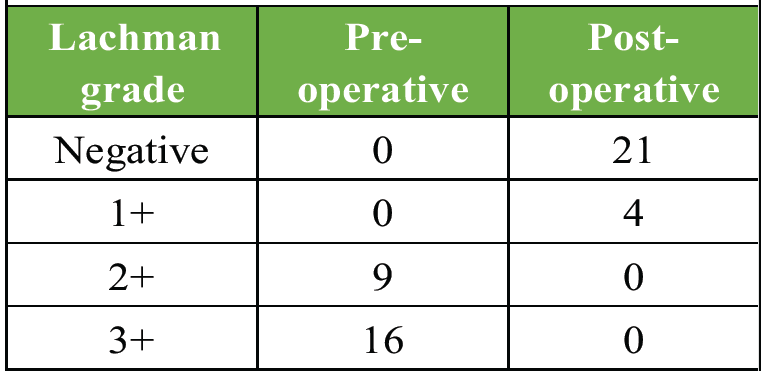
Table 2: Lachman test pre-operative versus post-operative
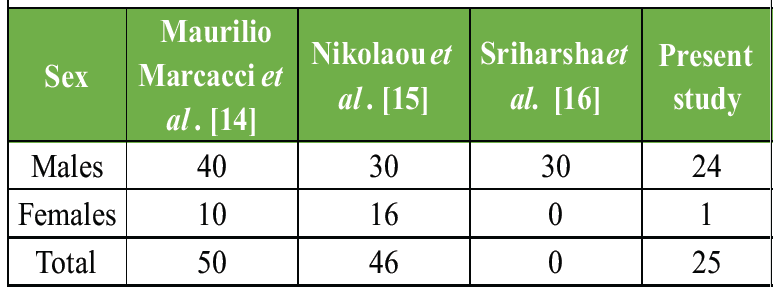
Table 3: Comparison of sex distribution
Functional outcomes:
- The Lachman test was negative in 21 patients (84%), whereas 4 patients (16%) demonstrated grade 1+ laxity (Table 4).
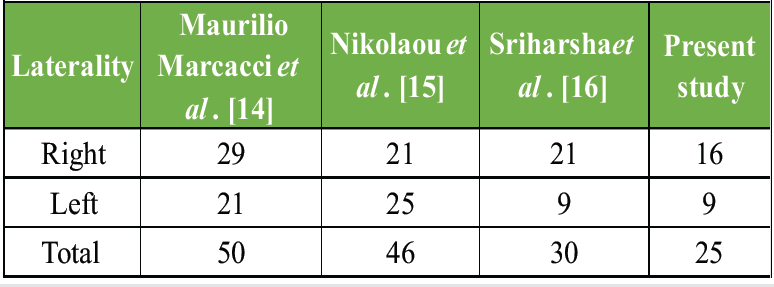
Table 4: Comparison of laterality
- IKDC grading showed normal results in 13 patients (52%), nearly normal in 8 patients (32%), and abnormal in 4 patients (16%), with a mean IKDC score of 85.38 (Table 5) (Fig. 4).
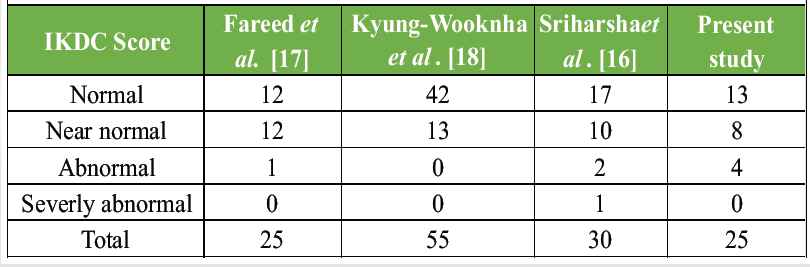
Table 5: Comparison of International Knee Documentation Committee score
- Twenty-two patients (88%) returned to their pre-injury activity level, whereas three patients (12%) were limited to recreational activities due to mild stiffness or apprehension.
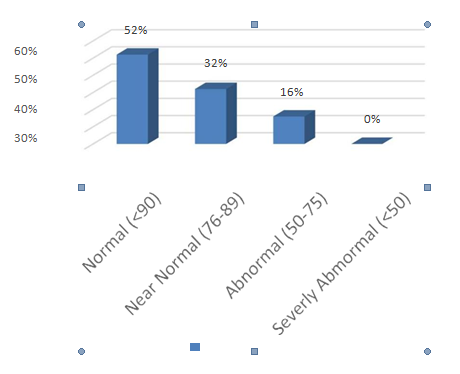
Figure 4: International Knee Documentation Committees score.
Complications:
One patient (4%) developed post-operative knee stiffness and was managed with manipulation under anaesthesia. Two patients (8%) had mild effusion, which resolved with aspiration and physiotherapy. One patient (4%) developed hemarthrosis requiring arthroscopic lavage. No graft failures or infections were observed. Overall, most patients (84%) achieved normal or nearly normal IKDC grades, and satisfactory knee stability was restored in the majority of cases.
The present study evaluated functional outcomes following arthroscopic ACL reconstruction using hamstring tendon autografts in a predominantly chronic ACL injury cohort. The principal finding was that the majority of patients achieved satisfactory functional recovery and restoration of knee stability at short-term follow-up despite delayed surgical intervention. At 6 months, 84% of patients demonstrated normal or nearly normal IKDC grades, with a mean IKDC score of 85.38. In addition, the Lachman test was negative in 84% of patients, indicating successful restoration of anterior knee stability following reconstruction. The functional outcomes observed in this study are comparable with those reported in previously published literature evaluating hamstring tendon autograft reconstruction. Hosseinzadeh et al. reported significant improvements in IKDC scores and knee stability following anatomic ACL reconstruction using quadrupled hamstring autografts at short-term follow-up [8]. Similarly, systematic reviews evaluating ACL reconstruction outcomes have consistently demonstrated substantial improvement in functional scores such as IKDC and Lysholm scores following reconstruction with hamstring tendon grafts [9]. Long-term studies have also shown that hamstring autografts provide reliable functional outcomes with durable knee stability in active individuals [10]. The mean IKDC score observed in the present study is therefore consistent with previously reported functional outcomes after arthroscopic ACL reconstruction. An important observation in the present study was the predominance of road traffic accidents as the mechanism of injury, accounting for 60% of cases. This pattern differs from many previously reported series in which sports injuries represent the most common cause of ACL rupture. Such differences reflect regional variations in injury epidemiology. In many developing countries, high-energy trauma related to road traffic accidents is a major cause of ligamentous knee injuries. Consequently, ACL tears may occur in individuals who are not necessarily competitive athletes but still require restoration of knee stability to return to normal occupational and daily activities. Another distinctive feature of this study was the chronic nature of ACL injuries in the study population. The mean duration between injury and surgery was more than 9 months, indicating delayed presentation in most patients. Delayed surgical intervention is frequently encountered in clinical practice in developing healthcare systems due to factors such as delayed diagnosis, financial constraints, or limited access to specialized orthopedic care. Despite these delays, the majority of patients in the present study achieved good functional outcomes following reconstruction. This finding suggests that satisfactory knee stability and functional recovery can still be achieved even when reconstruction is performed several months after the initial injury. The effectiveness of delayed ACL reconstruction observed in this study is consistent with findings from previous investigations evaluating outcomes in chronic ACL deficiency. Chronic instability may predispose patients to recurrent giving-way episodes and secondary meniscal injuries; however, reconstruction remains capable of restoring the mechanical stability of the knee joint. Gifstad et al. demonstrated that patients undergoing ACL reconstruction using hamstring autografts maintained satisfactory functional outcomes even at long-term follow-up [10]. Similarly, other clinical studies have reported that delayed reconstruction can still provide meaningful improvement in knee stability and patient-reported functional outcomes [11]. The results of the present study support these findings and further reinforce the role of surgical reconstruction in patients presenting late with symptomatic instability. The graft characteristics observed in this study were also within the recommended range for successful reconstruction. Adequate graft diameter and proper tunnel placement are important determinants of graft stability and long-term success. Hamstring tendon grafts provide favorable biomechanical properties, including high tensile strength and the ability to create multistrand constructs that approximate the structural characteristics of the native ACL. These biomechanical advantages contribute to the reliable restoration of knee stability following reconstruction. Furthermore, the absence of graft failure in the present study indicates satisfactory graft incorporation during the early post-operative period. Another relevant consideration is the comparison of hamstring tendon autografts with other graft options used in ACL reconstruction. Several studies have evaluated the outcomes of alternative graft sources such as quadriceps tendon and peroneus longus tendon grafts. Comparative analyses have generally demonstrated similar functional outcomes and knee stability across these graft options [12,13]. Nevertheless, hamstring autografts remain widely used because of their technical familiarity, favorable biomechanical properties, and relatively low donor-site morbidity. The satisfactory outcomes observed in the present study further support the continued use of hamstring tendon autografts as a reliable option for primary ACL reconstruction. The novelty of the present study lies in its focus on outcomes following ACL reconstruction in a predominantly chronic injury cohort resulting largely from road traffic accidents. Much of the existing literature originates from sports medicine centers where early surgical intervention following athletic injuries is common. In contrast, the present study reflects a real-world clinical scenario frequently encountered in many developing regions, where patients present with long-standing knee instability after trauma. Demonstrating favorable functional outcomes despite a mean injury-to-surgery interval of more than 9 months provides clinically relevant evidence supporting the effectiveness of arthroscopic ACL reconstruction in delayed presentations.
From a clinical standpoint, the findings of this study highlight that delayed presentation should not be considered a contraindication for ACL reconstruction. Many patients with chronic ACL injuries continue to experience instability that limits daily activities, occupational work, and recreational participation. The results of this study indicate that surgical reconstruction can still restore knee stability and functional capacity in such patients when appropriate surgical technique and structured rehabilitation are employed. The present study has certain limitations. The sample size was relatively small, which may limit the generalizability of the findings. The duration of follow-up was limited to 6 months, and therefore, long-term functional outcomes and the development of degenerative changes could not be evaluated. In addition, objective instrumented laxity measurements were not performed, and knee stability assessment relied primarily on clinical examination. Future studies with larger patient cohorts, longer follow-up periods, and additional functional outcome measures would further strengthen the evidence regarding outcomes of ACL reconstruction in chronic injury populations. In summary, the findings of this study demonstrate that arthroscopic ACL reconstruction using hamstring tendon autografts can achieve satisfactory functional outcomes and restoration of knee stability even in patients presenting with delayed or chronic ACL injuries. These results support the role of surgical reconstruction in managing chronic ACL instability and provide clinically relevant data for healthcare settings where delayed presentation after knee trauma is common.
Arthroscopic ACL reconstruction using autologous hamstring tendon grafts provides good functional outcomes and satisfactory knee stability in patients with chronic ACL injuries. With appropriate surgical technique and a structured rehabilitation protocol, favorable short-term recovery can be achieved even in cases with delayed presentation.
Arthroscopic ACL reconstruction with hamstring tendon autograft is an effective option for restoring knee stability and function in patients presenting late with chronic ACL injuries, particularly following road traffic accidents.
References
- 1. Arnoczky SP. Anatomy of the anterior cruciate ligament. Clin Orthop Relat Res 1983;172:19-25. [Google Scholar] [PubMed]
- 2. Gordon MD, Steiner ME. Anterior cruciate ligament injuries. In: Griffin LY, editor. Orthopaedic Knowledge Update: Sports Medicine III. Rosemont: American Academy of Orthopaedic Surgeons; 2004. p.169-81. [Google Scholar] [PubMed]
- 3. Mascarenhas R, MacDonald PB. Anterior cruciate ligament reconstruction: A look at prosthetics–past, present and possible future. Mcgill J Med 2008;11:29-37. [Google Scholar] [PubMed]
- 4. Lipscomb AB, Johnston RK, Snyder RB, Warburton MJ, Gilbert PP. Evaluation of hamstring strength following use of semitendinosus and gracilis tendons to reconstruct the anterior cruciate ligament. Am J Sports Med 1982;10:340-2. [Google Scholar] [PubMed]
- 5. Adachi N, Ochi M, Uchio Y, Iwasa J, Ryoke K, Kuriwaka M. Hamstring muscle strength after anterior cruciate ligament reconstruction. Arch Orthop Trauma Surg 2003;123:460-5. [Google Scholar] [PubMed]
- 6. Freeman JW, Kwansa AL. Recent developments in ligament tissue engineering for anterior cruciate ligament reconstruction. Recent Pat Biomed Eng 2008;1:18-23. [Google Scholar] [PubMed]
- 7. Nha KW, Lee DY, Park SJ, Kim HJ, Ahn HS, Wang JH, et al. Functional outcomes after anatomic single-bundle anterior cruciate ligament reconstruction. Knee Surgery & Related Research 2015;27:117-23. [Google Scholar] [PubMed]
- 8. Hosseinzadeh N, Mohammadpour M, Moghtadaei M, Farahini H, Khazanchin A, Nasiri S, et al. Evaluation of the short-term outcomes of anatomic ACL reconstruction with hamstring autograft in patients with generalized joint laxity: A retrospective case-control study. Eur J Orthop Surg Traumatol 2023;33:2049-55. [Google Scholar] [PubMed]
- 9. Annamalai R, Venkatramanaiah C, Sujhithra A, Vignesh N, Danis Vijay D. Functional outcome of anterior cruciate ligament reconstruction with hamstring tendon autograft in Indian population: A systematic review and meta-analysis. J Clin Orthop Trauma 2024;59:102805. [Google Scholar] [PubMed]
- 10. Gifstad T, Drogset JO, Viset AT, Grøntvedt T. Long-term functional outcomes after anterior cruciate ligament reconstruction using hamstring tendon autograft. Knee Surg Sports Traumatol Arthrosc 2013;21:117-24. [Google Scholar] [PubMed]
- 11. Crawford SN, Waterman BR, Lubowitz JH. Long-term failure of anterior cruciate ligament reconstruction. Arthroscopy 2013;29:1566-71. [Google Scholar] [PubMed]
- 12. Song Q, Zhang B, Gao A, Shao Z, Pang X, Liu Q, et al. High return to sports and favorable long-term clinical outcomes in professional elite skiers following anterior cruciate ligament reconstruction utilizing hamstring tendon autografts. BMC Musculoskeletal Disorders 2025;26:915. [Google Scholar] [PubMed]
- 13. Sharma P, Kumar N, Singh R, Gupta A, Mehta V, Joshi D, et al. Comparative outcomes of hamstring versus peroneus longus tendon graft in anterior cruciate ligament reconstruction. Journal of Arthroscopic Surgery and Sports Medicine 2025;6:174-8. [Google Scholar] [PubMed]
- 14. Marcacci M, Molgora AP, Zaffagnini S, Vascellari A, Iacono F, Presti ML. Anatomic double-bundle anterior cruciate ligament reconstruction with hamstrings. Arthroscopy 2003;19:540-6. [Google Scholar] [PubMed]
- 15. Nikolaou VS, Chronopoulos E, Savvidou C, Plessas S, Giannoudis P, Efstathopoulos N, et al. MRI efficacy in diagnosing internal lesions of the knee: A retrospective analysis. J Trauma Manag Outcomes 2008;2:1-10. [Google Scholar] [PubMed]
- 16. Sriharsha DY, Yaratapalli SR, Varaprasad G. Functional outcome of arthroscopic anterior cruciate ligament reconstruction by anatomical single bundle hamstring allograft – A prospective study. IOSR J Dent Med Sci 2018;17:34-63. [Google Scholar] [PubMed]
- 17. Fareed H, Dionellis P, Paterson FW. Arthroscopic ACL reconstruction using 4 strand hamstring tendon graft. Orthop Proc 2003;85 Suppl III:231. [Google Scholar] [PubMed]
- 18. Nha KW, Han JH, Kwon JH, Kang KW, Park HJ, Song JG. Anatomical single-bundle anterior cruciate ligament reconstruction using a freehand transtibial technique. Knee Surg Relat Res 2015;27:117. [Google Scholar] [PubMed]





Related Articles in Journal of Orthopaedic Case Reports
 August 1, 2026 Intra-articular Ganglionic Cysts of Knee: A Cause for Anterior Knee Pain
 August 1, 2026 Comparative Outcomes of Hamstring Tendon versus Peroneus Longus Tendon Autograft in Arthroscopic Single-Bundle Anterior Cruciate Ligament Reconstruction: A Prospective Comparative Study
 May 1, 2026 All-Inside Anterior Cruciate Ligament Reconstruction: A Minimally Invasive Bone Preserving Approach with Promising Functional Outcomes
 March 1, 2026 Femoral-Sided Avulsion Fracture Treated with a Novel Arthroscopic Physeal-Sparing Method in a Skeletally Immature Patient